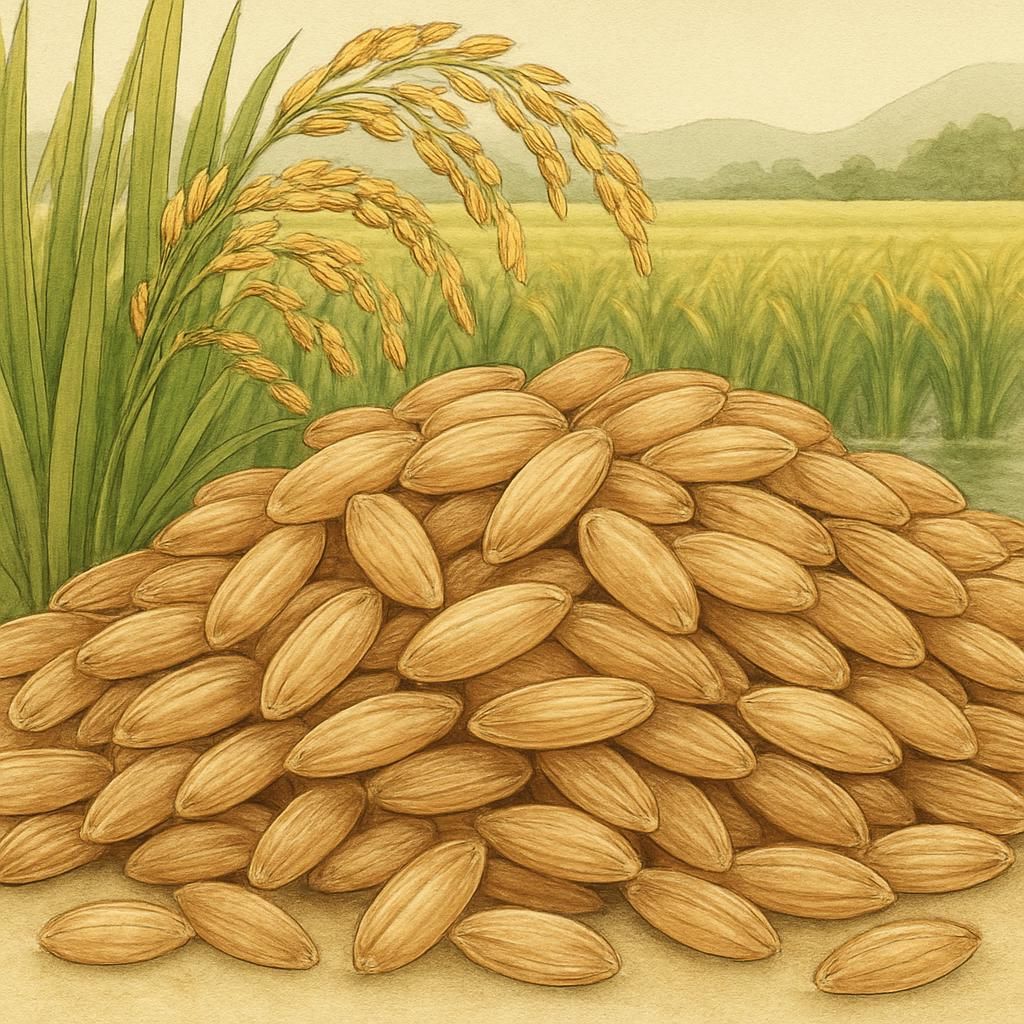
Introduction to Brown Rice (Koshihikari)
Brown Rice, specifically the variety known as Koshihikari, is a sushi-grade rice cherished in culinary circles for its uniquely sweet flavor and perfect texture for various cuisines. Originating in Japan in the 1950s, Koshihikari has since become a symbol of premium rice across the globe.
Botanical Profile of Brown Rice (Koshihikari)
Koshihikari (Oryza sativa) is a short-grain Japonica rice, characterized by its sticky texture and subtle sweetness. This particular rice is cultivated primarily in Japan's Niigata Prefecture and other eastern Asian regions, where the climate and soil conditions offer ideal growth.
Soil, pH, and Climate Requirements for Brown Rice (Koshihikari)
Koshihikari rice has specific growth requirements that include a warm climate and nutrient-rich soils to thrive effectively. Below is a structured table detailing the ideal growing conditions:
| Parameter | Ideal Condition |
|---|---|
| Soil Type | Loamy, Well-drained |
| pH Level | 5.5 - 6.5 |
| Temperature Range | 20°C - 35°C (68°F - 95°F) |
| Rainfall Requirements | 1000mm - 2000mm annually |
For more insights on soil preparation, visit our Spring Soil Prep: 9 Organic Steps to Prime Small Farms for Explosive Growth.
Step-by-Step Planting & Propagation
Seed Selection and Pretreatment: Start with high-quality Koshihikari seeds. Pre-soak them in water for 24 hours before planting to enhance germination.
Planting: Transplant seedlings into prepared fields after 2-3 weeks in a nursery setting. Maintain a spacing of 15-20 cm between plants.
Direct Sowing: In regions with suitable weather, direct sow into prepared soil beds.
Nutrient Management: Apply a balanced organic fertilizer before and after planting to ensure strong plant health.
Care & Maintenance Regimes for Brown Rice (Koshihikari)
Koshihikari rice requires regular maintenance for optimal growth, including irrigation, fertilization, and pest control. Adhere to the following care schedule:
| Care Task | Schedule/Method |
|---|---|
| Watering | Regular flooding, check weekly |
| Fertilizer | N-P-K 16-16-8 formulation; every mo. |
| Pruning | Remove weeds bi-weekly |
Ensure regular monitoring for pest activity to avoid crop losses, particularly in the humid growing season.
Pests, Diseases & Organic Management
The key to thriving Koshihikari yields lies in effective pest and disease management. The major threats include:
- Pests: Spider Mites, Rice Borers.
- Diseases: Blast, Sheath Blight.
Organic management techniques, such as neem oil application and introducing natural predators like predatory beetles, can effectively control these threats. For expanded pest management strategies, refer to Fall Pest Siege: 9 Organic Defenses to Shield Small Farms from Invading Armies.
Harvesting, Curing & Optimal Storage
Harvesting: Koshihikari rice is generally ready for harvest four months after planting. Ensure all grains are golden and firm at harvest time. Use a sickle or mechanical harvester for efficient collection.
Curing: Post-harvest, dry rice to reduce moisture content to below 14% — vital for preventing spoilage.
Storage: Store in a cool, dry space. Employ airtight containers to protect from moisture and pests.
Companion Planting for Brown Rice (Koshihikari)
Companion planting can enhance both rice yields and soil health. Potential companion crops include:
- Clover: Enhances nitrogen fixation.
- Water Spinach: Reduces weed competition.
Learn more about successful pairings in Summer Companion Planting: 10 Organic Pairings to Boost Small Farm Resilience.
Ensure the success of your Koshihikari rice by adhering closely to the guidelines provided here, adapting specifically to your regional climate conditions. For more refined insights, view Rice and adapt accordingly to your growth conditions.