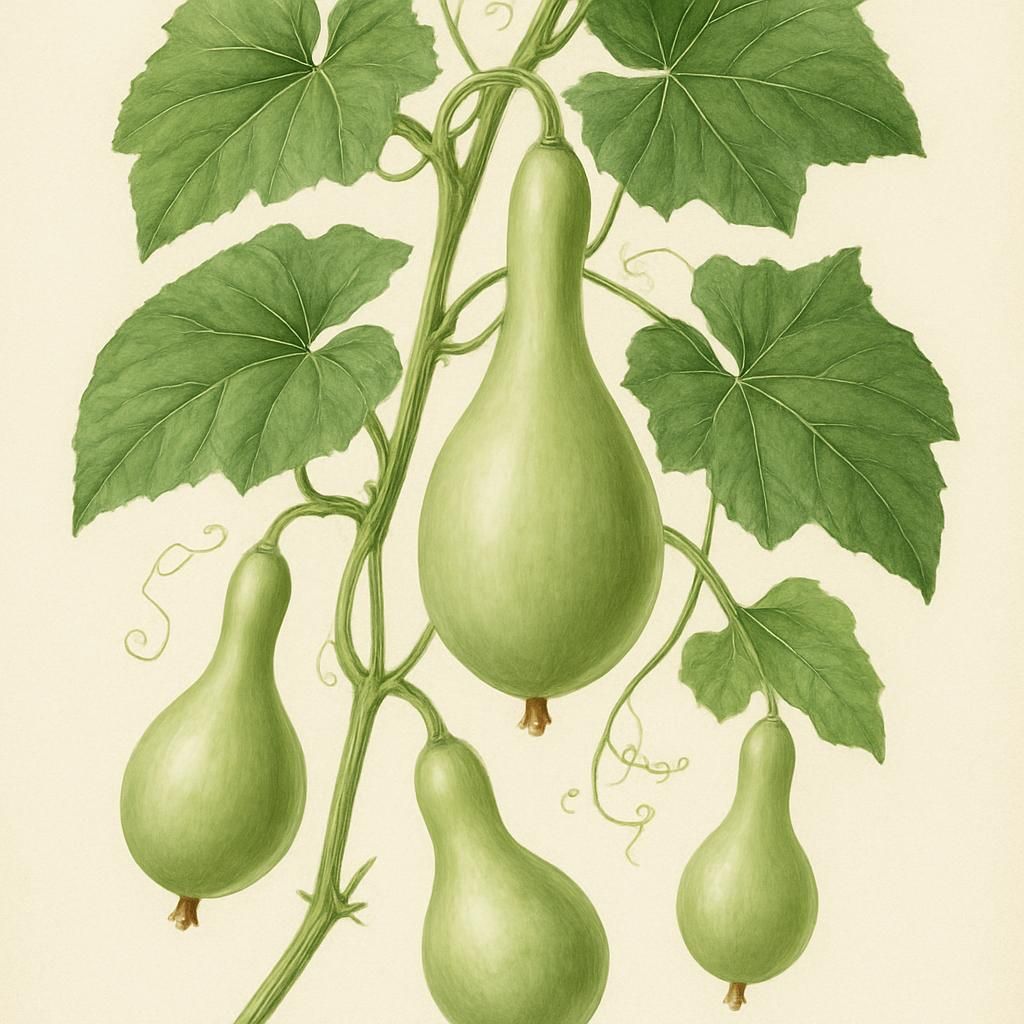
Introduction to Bottle Gourd (Lau)
Bottle Gourd, also known as Lau in several languages, is a widely grown vegetable in tropical and subtropical regions. It is appreciated for its versatility, being used in culinary dishes, traditional medicine, and even crafting containers and musical instruments. The elongated fruit is light green, smooth-skinned, and can be harvested early for tender flesh or later for mature gourds that have a hard shell.
Botanical Profile of Bottle Gourd (Lau)
Bottle Gourd belongs to the Cucurbitaceae family and is scientifically named Lagenaria siceraria. This annual vine grows quickly with a twining habit, sprawling across the ground or climbing supports with its tendrils. The leaves are heart-shaped, and the plant produces large, white flowers, often attracting bees for pollination.
Soil, pH, and Climate Requirements for Bottle Gourd (Lau)
Bottle Gourd thrives under specific soil and climatic conditions, which are detailed in the table below:
| Parameter | Ideal Conditions |
|---|---|
| Soil Type | Well-drained loamy soil |
| Soil pH | 6.0 - 6.8 |
| Temperature Range | 20°C to 30°C (68°F to 86°F) |
| Sunlight | Full sunlight |
| Water Requirements | Consistently moist soil without waterlogging |
Step-by-Step Planting & Propagation
- Site Selection: Choose a sunny location with well-drained soil.
- Soil Preparation: Loosen the soil to about 12 inches deep and mix in plenty of organic matter.
- Planting: Sow seeds directly in the garden, placing them 1 inch deep and 3 feet apart.
- Germination: Expect germination in 7 to 10 days.
- Support Structures: Use trellises or stakes to support the vines and improve fruit quality.
Care & Maintenance regimes for Bottle Gourd (Lau)
Proper care involves regular watering, fertilization, and pruning. Refer to the table below for a schedule:
| Activity | Schedule |
|---|---|
| Watering | 1-2 inches per week |
| Fertilizing | Monthly with balanced NPK |
| Pruning | Remove excess and diseased leaves regularly |
Pests, Diseases & Organic Management
Bottle Gourd is vulnerable to pests like Aphids and Spider Mites, and diseases such as Powdery Mildew. Employ organic management strategies like introducing beneficial insects, using neem oil, and practicing crop rotation to mitigate these issues. For more detailed strategies, consider reading the blog on 7 Summer Pest Traps That Sabotage Small Farm Harvests.
Harvesting, Curing & Optimal Storage
Harvest immature gourds when they are about 6 to 12 inches long, ensuring they are tender. Use a sharp knife or pruners to avoid damaging the plant. If storing, keep harvested gourds in a cool, dry place, ensuring good air circulation to prevent mold.
Companion Planting for Bottle Gourd (Lau)
Bottle Gourd pairs well with Corn and Beans, both of which thrive under similar conditions and help deter pests. For additional insights on companion planting, explore Summer Companion Planting: 10 Organic Pairings to Boost Small Farm Resilience.