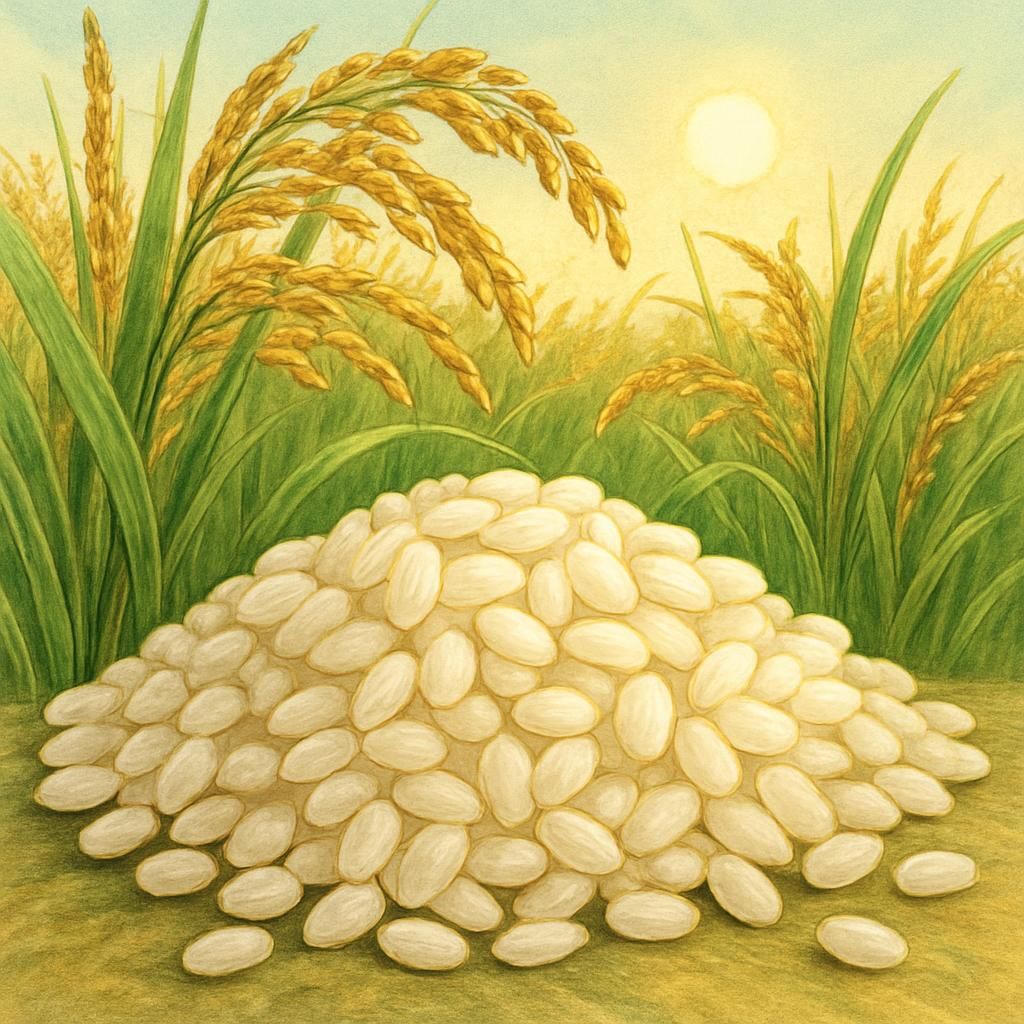
Introduction to Bomba Rice
Bomba rice, a unique cultivar of Oryza sativa, is a staple in Spanish cuisine, particularly for making authentic paella. Renowned for its ability to absorb liquid and flavor up to three times its volume, Bomba rice maintains a firm texture and distinct grain even under high cooking temperatures.
Botanical Profile of Bomba Rice
Bomba rice is a variety of Oryza sativa, characterized by its short and round grains. The plant thrives in flooded fields and has a growing cycle that typically spans from March to September. Bomba rice fields are primarily found in the eastern coastal regions of Spain, with the Mediterranean climate providing ideal growing conditions.
Soil, pH, and Climate Requirements for Bomba Rice
To achieve optimal growth, Bomba rice requires specific environmental conditions conducive to its development and high yield.
| Attribute | Ideal Conditions |
|---|---|
| Soil Type | Clayey and slightly acidic soils |
| pH Range | 5.5 to 7.0 |
| Temperature | 20-30°C (68-86°F) |
| Rainfall | 200-400 mm (preferably in growing cycle) |
| Humidity | Moderate to high |
Step-by-Step Planting & Propagation
- Select the Site: Choose a location with full sunlight and the ability to control water levels. Bomba rice benefits from flat terrains that can be easily flooded and drained.
- Prepare the Soil: Clear any weeds and till the soil to a fine tilth. Incorporate organic matter and ensure the pH is adjusted to the desired range with lime or sulfur as needed.
- Seeding: Bomba rice is typically direct-seeded into flooded fields. Seeds can also be pre-germinated by soaking for 24 hours before planting.
- Water Management: Maintain a water level of around 5 cm above the soil, crucial during the initial growth phases to suppress weed growth and provide necessary nutrients.
- Transplanting: In some cases, seedlings are raised in nurseries and then transplanted to main fields after 20-30 days.
Care & Maintenance regimes for Bomba Rice
Proper care and maintenance are vital to ensuring the healthy growth and high productivity of Bomba rice.
| Task | Schedule |
|---|---|
| Watering | Flooded, maintain consistent water level |
| Fertilizing | NPK ratio 4:1:2 every 4-6 weeks |
| Pruning | Not applicable due to the nature of the crop |
Pests, Diseases & Organic Management
Bomba rice, like other rice crops, can face several pest challenges, including Stink bugs and Stem borers. Some common diseases may include blast and sheath blight.
- Spider Mites: Use neem oil and encourage natural predators like ladybugs.
- Sheath Blight: Improve field drainage and encourage air circulation.
- Stem Borers: Utilize pheromone traps and maintain a flooded field to control larvae.
For more pest control measures, see 7 Summer Pest Traps That Sabotage Small Farm Harvests.
Harvesting, Curing & Optimal Storage
Bomba rice is typically harvested when the grains are fully matured, usually 6 months post-planting. The fields are drained 2 weeks before harvesting to facilitate easy drying. Post-harvest, grains are sun-dried for 3-5 days, ensuring moisture content is reduced to about 13% for storage.
Store Bomba rice in a cool, dry place in airtight containers to preserve its quality and prevent infestation.
Companion Planting for Bomba Rice
Due to the aquatic nature of Bomba rice fields, companion planting is not commonly practiced. However, integrating legumes such as Soybeans or clover around the field borders can enhance soil nitrogen content and biodiversity.
Strategic companion planting can boost crop resilience as explained in Summer Companion Planting: 10 Organic Pairings to Boost Small Farm Resilience.