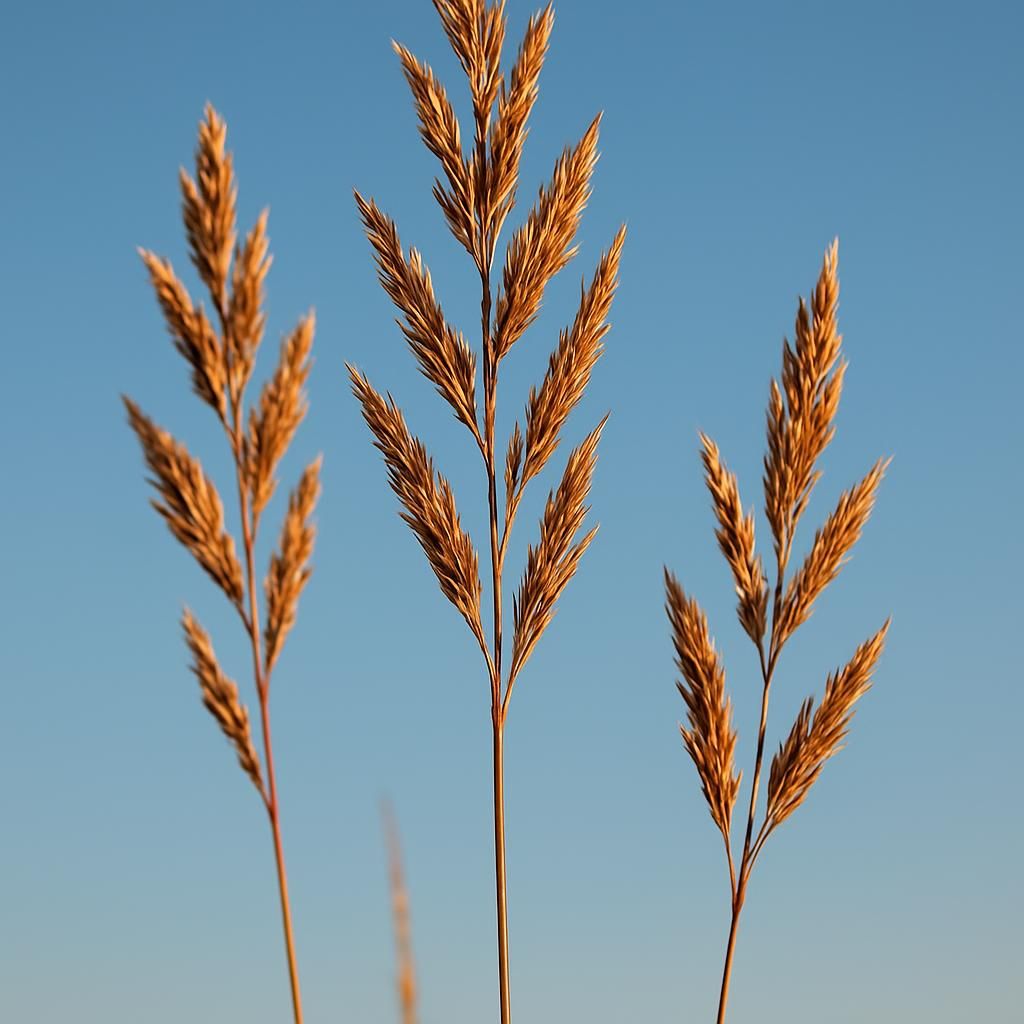
Introduction to bluestem grasses
Bluestem grasses encompass several species within the Andropogon and Schizachyrium genera, most notably big bluestem (Andropogon gerardii) and little bluestem (Schizachyrium scoparium). These warm-season perennials are foundational components of North American tallgrass prairies and are increasingly valued in sustainable agriculture for their drought tolerance, soil-building capacity, and multi-use potential. Farmers and land managers turn to bluestem grasses for pasture renovation, conservation buffers, biomass production, and low-maintenance landscaping because the grasses require minimal fertilizer and persist for decades once established.
Big bluestem can reach 4–8 feet in height with distinctive three-part seed heads that resemble a turkey’s foot, while little bluestem typically grows 2–4 feet tall and develops striking reddish-bronze fall color. Both species develop extensive fibrous root systems that can extend more than 10 feet deep, enabling them to access moisture and nutrients unavailable to shallow-rooted crops. Their C4 photosynthetic pathway allows efficient growth during hot summer months when cool-season grasses go dormant.
Beyond forage and erosion control, bluestem grasses support pollinators and grassland birds while sequestering significant amounts of carbon in deep prairie soils. Because they are native, they integrate well into regenerative systems and reduce the need for synthetic inputs compared to many introduced forage species.
Botanical Profile of bluestem grasses
Big bluestem (Andropogon gerardii) belongs to the Poaceae family and is characterized by coarse stems, glaucous blue-green foliage, and a distinctive inflorescence consisting of three to six racemes. Little bluestem (Schizachyrium scoparium) features finer stems and narrower leaves that turn copper-red in autumn. Other regionally important species include broomsedge bluestem (Andropogon virginicus) and caucasian bluestem (Bothriochloa bladhii).
These grasses are long-lived perennials that spread primarily by seed and short rhizomes. Flowering occurs from mid-summer into early fall, with seed maturity typically 30–45 days after anthesis. The seeds are small, lightweight, and wind-dispersed, though commercial cultivars are often selected for improved germination and stand uniformity.
Soil, pH, and Climate Requirements for bluestem grasses (MUST INCLUDE A MARKDOWN TABLE OF IDEAL CONDITIONS)
Bluestem grasses thrive across a wide range of soil textures but perform best on deep, well-drained loams to sandy loams. They tolerate low fertility and drought once established, yet respond positively to moderate organic matter levels. Soil pH between 5.5 and 7.5 supports optimal nutrient uptake, while established plants endure brief flooding or extended dry periods.
| Parameter | Ideal Range | Notes |
|---|---|---|
| Soil Texture | Loam to sandy loam | Tolerates clay if well-drained |
| Soil pH | 5.5 – 7.5 | Slightly acidic to neutral preferred |
| Organic Matter | 2 – 5 % | Higher OM improves establishment |
| Temperature Range | 70 – 95 °F daytime | C4 metabolism peaks in midsummer |
| Annual Rainfall | 20 – 45 inches | Supplemental irrigation only during Year 1 |
| USDA Hardiness Zones | 3 – 9 | Excellent cold and heat tolerance |
| Drainage | Well-drained | Avoid prolonged standing water |
Step-by-Step Planting & Propagation
Site preparation begins with soil testing and correction of major nutrient deficiencies, particularly phosphorus and potassium. Remove existing sod or heavy weed pressure through tillage, mowing, or targeted herbicide application followed by a waiting period. Bluestem seed is most often drilled or broadcast at 6–10 lb pure live seed (PLS) per acre in late spring when soil temperatures reach 60 °F.
Seed-to-soil contact is critical; therefore, a cultipacker or roller should follow broadcasting. For small areas, transplants or container-grown plugs can be spaced 12–18 inches apart. Germination typically occurs within 7–21 days under adequate moisture. First-year growth is primarily vegetative, with full stand density achieved by year two or three.
Care & Maintenance regimes for bluestem grasses (MUST INCLUDE A MARKDOWN TABLE OF WATER, FERTILIZER, AND PRUNING SCHEDULES)
Established bluestem stands require minimal intervention. During the establishment year, supplemental irrigation of 0.5–1 inch per week may be needed if rainfall is insufficient. Nitrogen fertilization is generally unnecessary after the first season unless biomass removal is intensive. Mowing or prescribed burning every 2–4 years controls woody encroachment and recycles nutrients.
| Practice | Establishment Year (Year 1) | Mature Stands (Year 2+) | Frequency & Notes |
|---|---|---|---|
| Water | 0.5–1 inch/week if <0.5" rain | None required except extreme drought | Deep infrequent watering preferred |
| Fertilizer | 30–40 lb N/acre at 4–6 weeks | 0–20 lb N/acre only if hay removed | Use soil test; avoid excess N that favors weeds |
| Pruning/Mow | Mow to 6–8" once at season end | Burn or mow every 2–4 years | Late winter/early spring timing optimal |
Pests, Diseases & Organic Management
Bluestem grasses are relatively pest-resistant. Occasional outbreaks of grasshoppers or armyworms may occur during drought, but damage rarely warrants intervention. Fungal issues such as leaf spot diseases can appear in overly dense, humid stands but are usually cosmetic. Cultural practices—proper spacing, avoiding excess nitrogen, and timely mowing—form the backbone of organic management. Beneficial insects and birds provide additional natural suppression of potential pests.
Harvesting, Curing & Optimal Storage
Forage harvest occurs at the boot to early heading stage for highest nutritive value, typically once or twice per season. Cut to a 6–8 inch stubble height to protect growing points and maintain stand longevity. Field-dry hay to 15–18 % moisture before baling. Store bales under cover or in ventilated structures to prevent mold. Seed harvest requires combining when seed heads are fully mature and dry (moisture <12 %), followed by cleaning and cool, dry storage in sealed containers.
Companion Planting for bluestem grasses
Bluestem grasses pair well with native legumes such as clover and hairy vetch to enhance nitrogen fixation and forage quality. In conservation plantings, mixing with sunflower or yarrow increases pollinator support and biodiversity. Avoid aggressive cool-season grasses that can outcompete seedlings during establishment. Rotational grazing with compatible species such as switchgrass or indiangrass improves utilization and stand health over time.