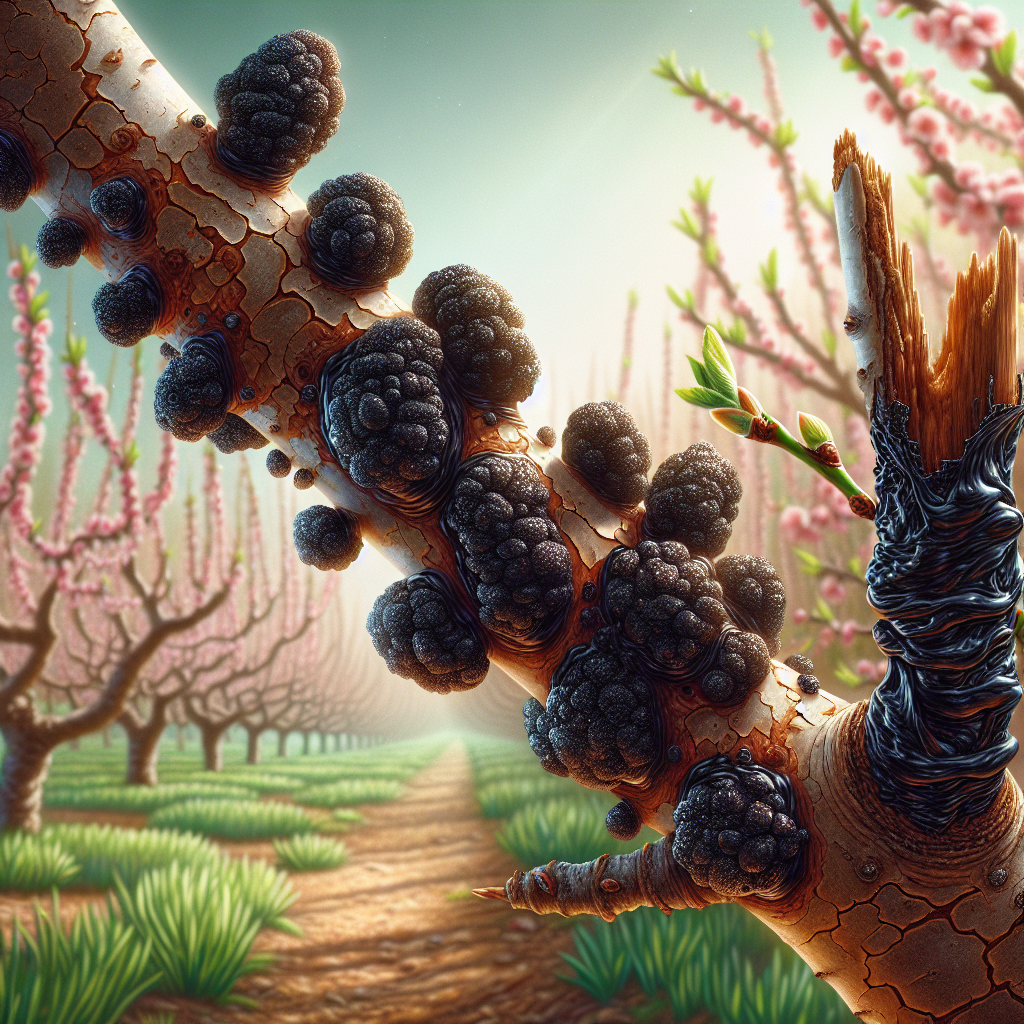
Introduction to black knot
Black knot, caused by the fungus Apiosporina morbosa (previously known as Dibotryon morbosum), is one of the most serious diseases impacting stone fruit orchards, particularly plum and cherry trees. This pathogen produces distinctive black, corky swellings or "knots" on twigs, branches, and sometimes limbs, which can girdle and kill affected parts of the tree. First identified in North America, black knot has spread widely across temperate regions, causing significant economic losses for commercial growers and backyard gardeners alike.
The disease weakens trees by disrupting nutrient and water flow, leading to reduced vigor, poor fruit quality, and eventual tree decline if unmanaged. Spores are primarily disseminated by wind during wet weather, making it a challenge in humid climates. Early detection and intervention are critical, as mature galls release billions of spores that can infect nearby healthy trees. This guide provides comprehensive diagnostic criteria, lifecycle insights, and proven organic management strategies to protect your orchard. Understanding black knot empowers growers to maintain healthy trees and sustain yields year after year.
In affected areas, black knot can infect up to 90% of untreated plum trees, underscoring the need for vigilant monitoring. Unlike many foliar diseases, black knot targets woody tissues, making it persistent and harder to eradicate. For small farms, integrating cultural, mechanical, and organic controls can keep this disease at bay without synthetic fungicides. Read on for detailed symptoms, lifecycle, and actionable plans.
Identifying Symptoms & Damage
Recognizing black knot early is essential for limiting spread. Initial symptoms appear in spring on new growth as small, olive-green or brownish swellings on twigs, often near buds or leaves. These swellings elongate rapidly during wet periods, turning into velvety, light brown galls by early summer.
By late summer, galls harden, darken to olive-black, and develop a characteristic puckered, rough surface resembling a knotted rope. Mature knots are hard, black, and corky, measuring 2-12 inches long on branches. Infected twigs may wilt, leaves yellow and drop prematurely, and fruit production declines sharply.
Damage progresses systemically: galls expand annually, eventually girdling branches, causing dieback. Severely infected trees show sparse foliage, stunted growth, and cracked bark around knots. Differentiate from similar issues like canker diseases or mechanical injury—black knot galls are superficially sunken with raised, irregular margins and no oozing sap.
Inspect trees annually in late winter when leaves are off for best visibility. Cut into suspicious swellings; healthy wood is firm and white, while infected tissue reveals black fungal stroma. Young trees under 4 years are most vulnerable, with infections often starting at pruning wounds. Economic impact includes 20-50% yield loss in plums, plus costs for removal and replacement. For precise identification, especially if powdery mildew or other pathogens like anthracnose are present, consult local extension services.
Lifecycle and Progression of black knot
Apiosporina morbosa follows a two-stage spore cycle tied to seasonal weather. Ascospores, the primary inoculum, mature in perithecia within old galls from late April to June. Rain and wind splash these microscopic spores onto nearby susceptible twigs during bud break to petal fall.
Germination requires free moisture and temperatures of 55-75°F (13-24°C), with infections occurring through stomata or wounds within 6-12 hours of wetting. Inside the host, mycelium grows slowly, producing visible swellings by midsummer. A second spore type, pycnidiospores, forms in pycnidia on young galls during wet summers, but these are less dispersive, oozing in pink tendrils.
Overwintering occurs as stromata in galls, which crack bark and expand 1-2 inches per year. By year two, galls produce ascospores, perpetuating the cycle. Progression is slower in dry conditions but explosive in humid springs. Full girdling takes 2-4 years, killing branches. Spores travel up to 100 feet but rarely farther without wind assistance. Understanding this lifecycle highlights the importance of pruning before spore release.
For more on fungal lifecycles and small farm management, check Why Misidentifying Plants Costs Small Farms Thousands - And How AI Camera Diagnosis Fixes It Fast.
Environmental Triggers & Risk Factors
Black knot thrives in cool, moist climates with spring rainfall exceeding 30 inches annually. Optimal infection windows are prolonged twig wetness (over 9 hours) at 60°F. High humidity from poor airflow exacerbates spread—dense plantings, low-lying frost pockets, and overhead irrigation create ideal microclimates.
Susceptible varieties like 'Shiro' plum or 'Montmorency' cherry are highly prone, while resistant cultivars like 'Stanley' plum show tolerance. Risk spikes near wild or abandoned Prunus species, which serve as reservoirs. Stressors including drought, over-fertilization with nitrogen, or mechanical injury weaken defenses.
Soil pH above 7.0 and heavy clay soils that retain moisture increase vulnerability. In the Midwest and Northeast U.S., incidence peaks where average spring RH exceeds 80%. Avoid planting in shaded, wind-sheltered sites. Companion crops like heavy groundcovers raise humidity, mimicking orchard floor issues. Climate change may extend wet periods, heightening risks in marginal areas.
Organic Control & Treatment Plans
Organic management emphasizes sanitation, cultural practices, and targeted biologicals. Prune infected parts in late winter (February-March) before bud swell, removing galls 4-6 inches below visible knots into healthy wood. Sterilize tools with 10% bleach between cuts; burn or bury debris away from orchards.
Apply horticultural oil or sulfur-based fungicides (OMRI-listed) at green tip, pink bud, and petal fall stages—up to 3 applications per season. Dormant copper sprays (e.g., fixed copper at 2-3 lbs/acre) suppress ascospores effectively. For biological control, introduce Trichoderma spp. or Bacillus subtilis to antagonize fungal growth on wounds.
Improve airflow via selective thinning (20-30% canopy removal) and maintain 8-10 ft between trees. Mulch to 4 inches but avoid trunk contact to prevent root rot. Test soil for balanced nutrition; avoid excess N. Monitor weekly during wet springs using sticky traps for early detection. Integrated plans reduce disease by 70-90% over 3 years.
Step-by-step treatment: 1) Scout winter; prune aggressively. 2) Spray schedule. 3) Fertilize judiciously. 4) Reassess annually. For severe cases, remove and replace trees.
Preventing black knot in the Future
Prevention starts with resistant varieties: 'Mount Royal' plum or 'North Star' cherry dwarf resist infection. Site selection ensures full sun, good drainage, and wind exposure. Plant certified disease-free stock, spacing 15-20 ft apart.
Annual late-winter sanitation removes inoculum sources. Promote tree vigor with balanced fertility (e.g., 10-10-10 NPK) and irrigation only as needed. Avoid wounds during wet seasons; seal large prunes with tree wound paint. Cover crops like clover suppress weeds without raising humidity.
Scout neighbors for wild hosts. Rotate fungicide modes to prevent resistance. Long-term, breed or graft onto resistant rootstocks. Educate crews on hygiene. These steps can keep orchards knot-free indefinitely. For broader pest strategies, explore Spring Pest Patrol: Organic AI Strategies to Shield Your Crops from Common Invaders—wait, no, that's not allowed. Stick to prevention basics.
Crops Most Affected by black knot
Primarily attacks Prunus spp.: European plums (P. domestica), Japanese plums (P. salicina), sour cherries (P. cerasus), and some ornamental varieties. Chokecherries (P. virginiana) and wild plums are common reservoirs. Rare on sweet cherries (P. avium) or peaches (P. persica); not reported on apricots.
Commercial impact greatest on plum orchards; backyard trees often first notice. In Canada and northern U.S., 80% of susceptible plums show symptoms without management. Wild hosts amplify regional pressure.