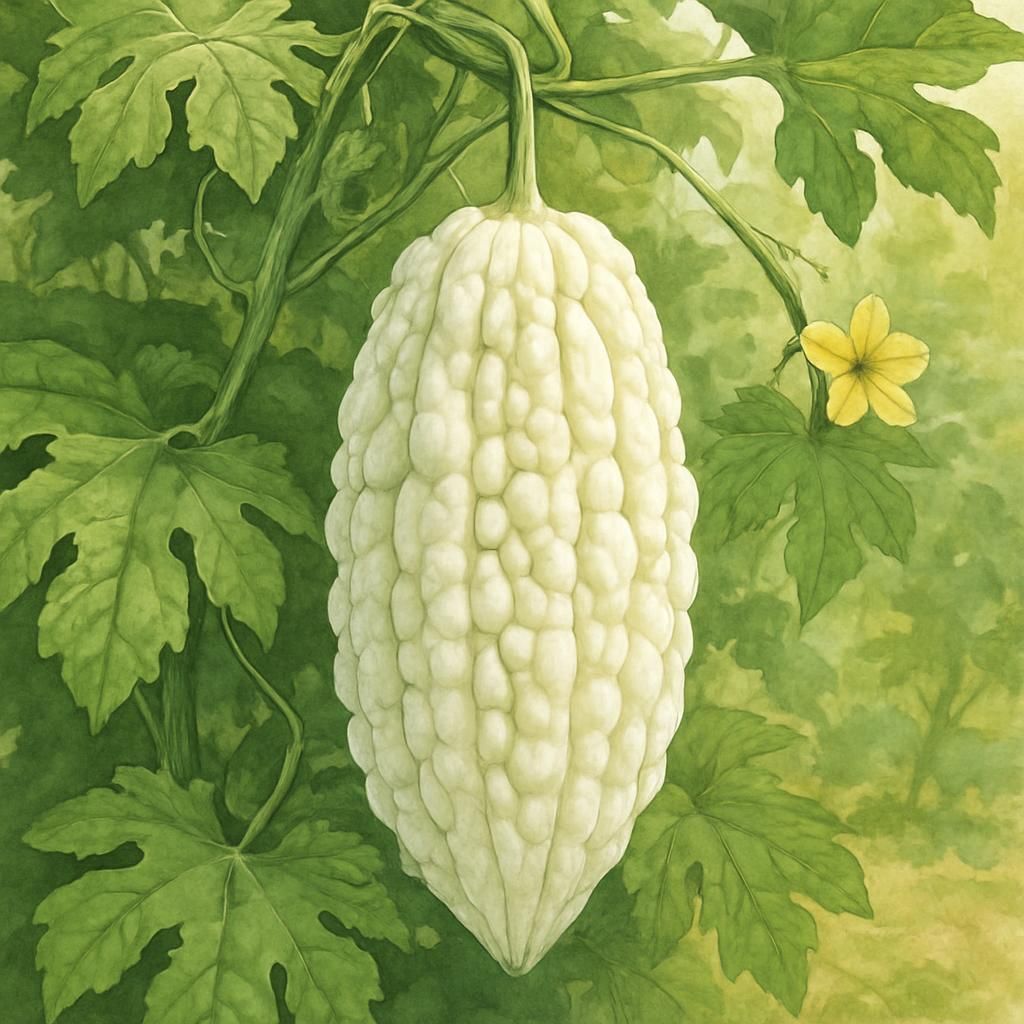
Introduction to Bitter Melon (Okinawan White)
Bitter Melon, also known as Goya, Karela, or Balsam Pear, is renowned for its distinctive bitter taste and myriad health benefits. The Okinawan White variety is particularly noted for its smooth skin and slightly milder flavor compared to the more traditional green bitter melon. This variety is primarily grown in the Okinawan region of Japan and is prized for its use in authentic culinary dishes and traditional herbal medicine.
Botanical Profile of Bitter Melon (Okinawan White)
Bitter Melon (Okinawan White) is scientifically classified as Momordica charantia. It belongs to the Cucurbitaceae family, which includes cucumbers, pumpkins, and squash. This tropical and subtropical vine bears elongated fruits with a distinctive white hue and a pronounced texture. The plant's leaves are broad and lobed, with climbing tendrils that enable it to grow along supports.
Soil, pH, and Climate Requirements for Bitter Melon (Okinawan White)
Proper growth of Bitter Melon (Okinawan White) requires specific soil, pH, and climate conditions.
| Factor | Ideal Condition |
|---|---|
| Soil Type | Well-draining, loamy soil |
| pH Level | 6.0 to 6.7 |
| Temperature | 75-85°F (24-30°C) |
| Humidity | Moderate |
| Sunlight | Full sun |
This crop thrives in warm temperatures with consistent sunlight and requires a stable moisture level in the surrounding environment.
Step-by-Step Planting & Propagation
- Seed Selection: Choose high-quality seeds from reputable suppliers. Ensure that seeds are plump and devoid of any visible damage.
- Soil Preparation: Amend the soil with organic matter to enhance fertility. Ensure the soil is well-drained to prevent waterlogging.
- Sowing: Plant seeds half an inch deep, spaced 2-3 feet apart to allow ample room for growth. Plant in rows with 4-5 feet gaps between rows.
- Germination: Seeds typically germinate within 8-12 days under optimal conditions.
- Transplanting: Once seedlings reach 4-5 inches in height, they can be transplanted to their final location.
Care & Maintenance regimes for Bitter Melon (Okinawan White)
Consistent care and maintenance are essential for a bountiful harvest.
| Task | Schedule/Instructions |
|---|---|
| Watering | Regular, but avoid waterlogging. Twice a week. |
| Fertilizing | Apply balanced fertilizer bi-weekly. |
| Pruning | Prune vines to encourage circulation and growth. |
Regular pruning helps manage growth and improve air circulation, reducing the risk of disease.
Pests, Diseases & Organic Management
Bitter Melon (Okinawan White) can be susceptible to a variety of pests such as Spider Mites and diseases like powdery mildew.
For pest management, consider using neem oil or insecticidal soap as organic solutions. Regular monitoring and the introduction of beneficial insects, such as ladybugs, can also aid in pest control.
Harvesting, Curing & Optimal Storage
Harvesting typically occurs 45-60 days after flowering. Fruits should be picked while they are still firm and before the seeds begin to harden. Use sharp scissors or a knife to avoid damaging the plant.
Post-harvest, store bitter melons in a cool, dry place. For prolonging shelf life, refrigerate them in a perforated plastic bag.
Companion Planting for Bitter Melon (Okinawan White)
Bitter Melon can be companion planted with crops such as Sweet Potato and Yarrow. These plants can enhance growth by creating a diverse ecosystem that attracts beneficial insects and provides shade and support.
Additional Resources:
- For more on weather patterns affecting this crop, explore The Truth About Weather Patterns and Small Farm Resilience.