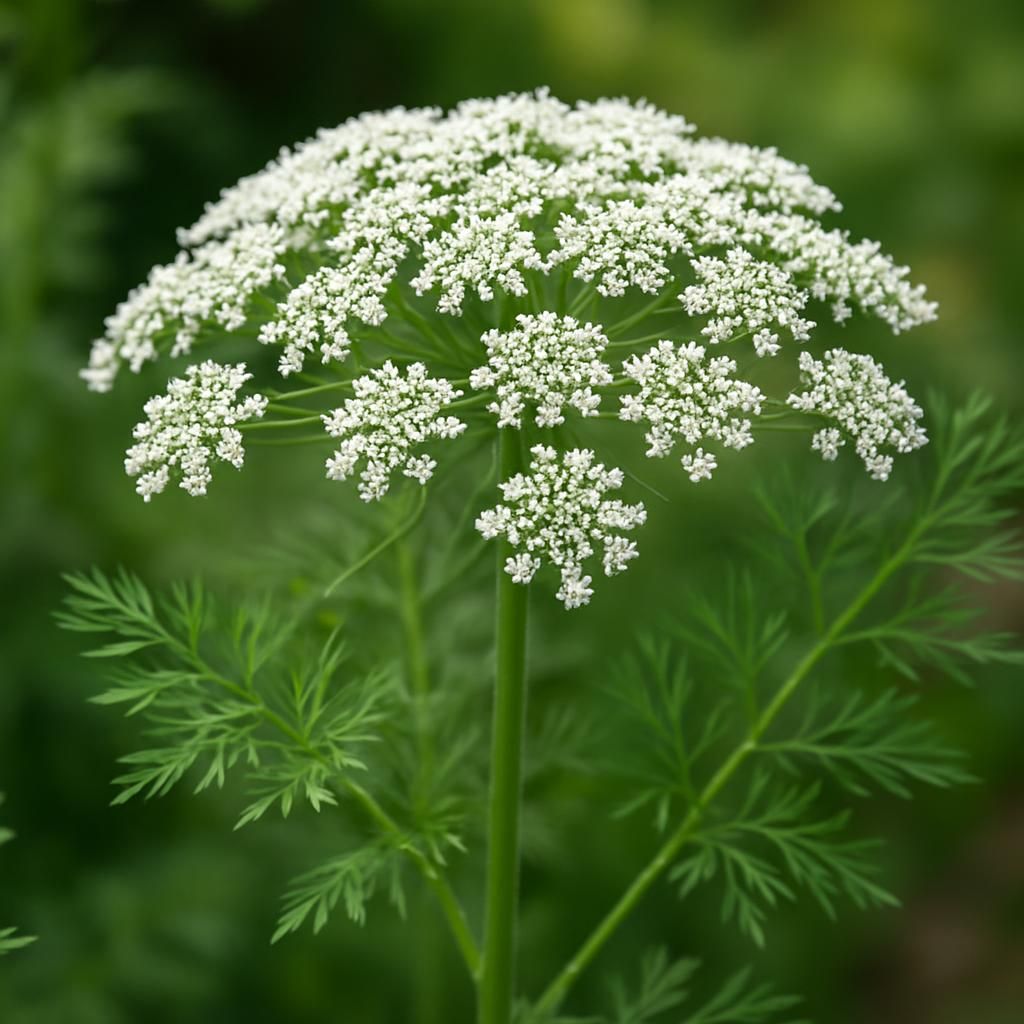
Introduction to Bishop's weed
Bishop's weed, scientifically known as Ammi majus, is a fast-growing annual in the Apiaceae family prized by commercial cut-flower growers and home gardeners alike. Its flat-topped umbels of pure white flowers appear from late spring through early autumn, providing extended color and attracting beneficial insects. The plant reaches 60–90 cm in height with finely divided, fern-like foliage that creates an airy texture in borders and mixed plantings. In addition to ornamental value, the seeds have historical use in traditional medicine and the essential oil industry.
Botanical Profile of Bishop's weed
Ammi majus is an erect, branched annual with hollow, ribbed stems and compound leaves that are 2–3 times pinnately divided into narrow segments. The inflorescence consists of compound umbels 5–10 cm across bearing numerous tiny white flowers with five petals. Fruits are small, oblong schizocarps that split into two mericarps at maturity. The species is native to the Mediterranean region, North Africa, and parts of Western Asia but has naturalized in many temperate zones.
Soil, pH, and Climate Requirements for Bishop's weed
Bishop's weed performs best in deep, fertile loam with excellent drainage. Heavy clay soils should be amended with organic matter or raised beds to prevent waterlogging. The crop tolerates a wide pH range but yields highest-quality stems and flowers when soil pH is maintained between 6.0 and 7.5. It requires full sun (minimum 6–8 hours daily) and thrives in USDA zones 5–9 with moderate temperatures.
| Parameter | Ideal Range | Notes |
|---|---|---|
| Soil Type | Loamy, well-drained | Avoid compacted or waterlogged soils |
| Soil pH | 6.0–7.5 | Optimal nutrient uptake and stem quality |
| Temperature (Day) | 18–26 °C | Cool nights improve flower longevity |
| Temperature (Night) | 10–15 °C | Prevents bolting and legginess |
| Sunlight | Full sun (6–8+ hours) | Essential for strong stems and umbels |
| USDA Hardiness Zones | 5–9 | Annual in colder zones; may self-sow |
Step-by-Step Planting & Propagation
- Site Preparation: Clear weeds and incorporate 5–8 cm of well-rotted compost or aged manure. Perform a soil test and adjust pH if below 6.0 with agricultural lime.
- Sowing: Direct sow seeds 3 mm deep in rows 30–45 cm apart when soil reaches 10 °C. Thin seedlings to 20–25 cm spacing once they have two true leaves.
- Succession Planting: Sow every 3–4 weeks from early spring through midsummer for continuous bloom.
- Transplant Option: Start seeds indoors 4–6 weeks before last frost in 128-cell trays; transplant at 10–15 cm height.
- Irrigation at Planting: Water gently after sowing to settle soil; maintain even moisture until germination (7–14 days).
Care & Maintenance regimes for Bishop's weed
Consistent moisture and balanced nutrition produce the longest, strongest stems. Mulch with 5 cm of straw or shredded leaves to suppress weeds and retain moisture. Stake tall varieties in windy sites. Remove spent flower heads to encourage secondary flushes unless seed is desired.
| Task | Frequency / Rate | Timing | Notes |
|---|---|---|---|
| Watering | 2.5–4 cm per week | Throughout growing season | Deep, infrequent irrigation preferred |
| Fertilizer (NPK) | 10-10-10 at 50 g/m² or fish emulsion | At planting and every 4 weeks | Avoid excess nitrogen to prevent lodging |
| Pruning / Pinching | Remove faded umbels weekly | From first bloom onward | Promotes branching and extended harvest |
| Mulching | 5 cm organic layer | After thinning | Reduces weeds and conserves moisture |
| Support | Bamboo stakes or netting | When plants reach 40 cm | Necessary in exposed locations |
Pests, Diseases & Organic Management
Common issues include aphids, spider mites, and powdery mildew during humid periods. Monitor undersides of leaves weekly. Use strong water sprays or insecticidal soap for aphids; introduce predatory mites for spider mite control. Improve air circulation and avoid overhead watering to reduce fungal pressure. Crop rotation with non-hosts every 2–3 years minimizes soil-borne diseases.
Harvesting, Curing & Optimal Storage
Harvest when 50–70 % of florets in the umbel are open for longest vase life. Cut stems early morning, immediately place in cool water, and recut underwater. Store at 2–5 °C with 80–90 % humidity for up to 7–10 days. Dry seed heads upside-down in paper bags for 2–3 weeks before cleaning and storing in airtight containers in a cool, dark place.
Companion Planting for Bishop's weed
Pair Bishop's weed with Nasturtium and Marigold to deter aphids and attract pollinators. It also benefits from proximity to Thyme and Yarrow, which improve biodiversity and provide habitat for beneficial insects. Avoid planting near Fennel or other strong-scented Apiaceae that may cross-pollinate or compete for resources.