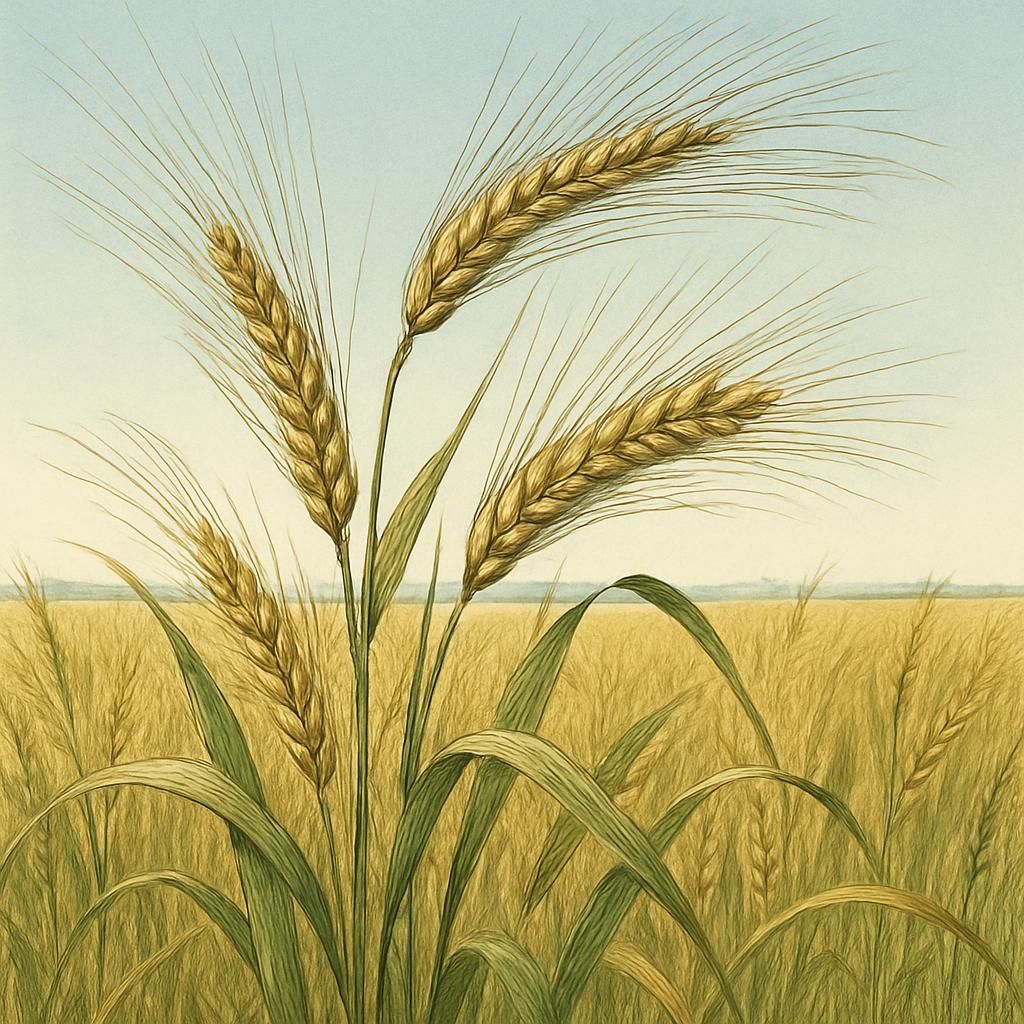
Introduction to Barley (Two-row Conlon)
Barley (Two-row Conlon) is a robust and versatile cereal grain recognized for its two distinct rows of seed on each stem. It is predominantly utilized in brewing, livestock feed, and a variety of food products. The Two-row Conlon variety is especially valued for its consistent grain size and quality, which contributes to its wide application in the malt industry.
Botanical Profile of Barley (Two-row Conlon)
The Two-row Conlon Barley (Hordeum vulgare) belongs to the Poaceae family. Its distinguishing feature is the two rows of kernels on each head, which typically results in larger kernels compared to six-row varieties. The plant reaches a height of approximately 70-100 cm and has a lifecycle of about 90-120 days from planting to harvest.
Soil, pH, and Climate Requirements for Barley (Two-row Conlon)
Barley is adaptable to a variety of soil types, but it thrives best in well-drained loamy soils. Ideal pH levels range from slightly acidic to neutral. As a cool-season crop, it grows optimally in temperate climates.
| Condition | Ideal Range |
|---|---|
| Soil Type | Loamy, well-drained |
| Soil pH | 6.0-7.5 |
| Temperature | 15-25°C (59-77°F) |
| Rainfall | 350-500 mm annually |
Step-by-Step Planting & Propagation
- Seed Selection: Use certified seeds to ensure quality and disease resistance.
- Soil Preparation: Plow and harrow the field to a fine tilth. Incorporate organic matter if necessary.
- Planting Time: Sow seeds in early spring or late fall, depending on climate.
- Sowing Method: Drill seeds at a depth of 3-5 cm in rows spaced 20-25 cm apart.
- Germination: Ensure adequate soil moisture for uniform germination.
Care & Maintenance regimes for Barley (Two-row Conlon)
| Care Aspect | Recommended Practice |
|---|---|
| Watering | Moderate, avoid waterlogging; 1 inch per week |
| Fertilization | Nitrogen-rich fertilizer; apply at tillering and heading |
| Pruning | Not applicable for barley; monitor for uniform growth |
Pests, Diseases & Organic Management
Barley, like other grains, is susceptible to various pests and diseases. Common pest threats include Spider Mites and aphids, while diseases such as Fusarium head blight can occur. For organic management:
- Use crop rotation to reduce pathogen build-up
- Encourage predatory insects to control aphid populations
- Apply biological fungicides for disease management
For more detailed strategies, visit our blog on Crop Diseases Under the Microscope.
Harvesting, Curing & Optimal Storage
Barley is typically ready for harvest when the grains are hard and the stems yellow. Harvest efficiently using combine harvesters for larger fields. Post-harvest, dry the grains thoroughly to 12-14% moisture content for safe storage. Store barley in a cool, dry place in grain silos or sealed containers to prevent pest infestations.
Companion Planting for Barley (Two-row Conlon)
Barley can be a beneficial companion plant in enhancing soil structure and managing weed growth. Consider planting with legumes like Peas which can fix nitrogen, thus benefiting the barley crop. Rotational planting with crops like Soybeans can also improve soil fertility.
Companion planting insights can be enriched by exploring Summer Companion Planting: 10 Organic Pairings to Boost Small Farm Resilience.