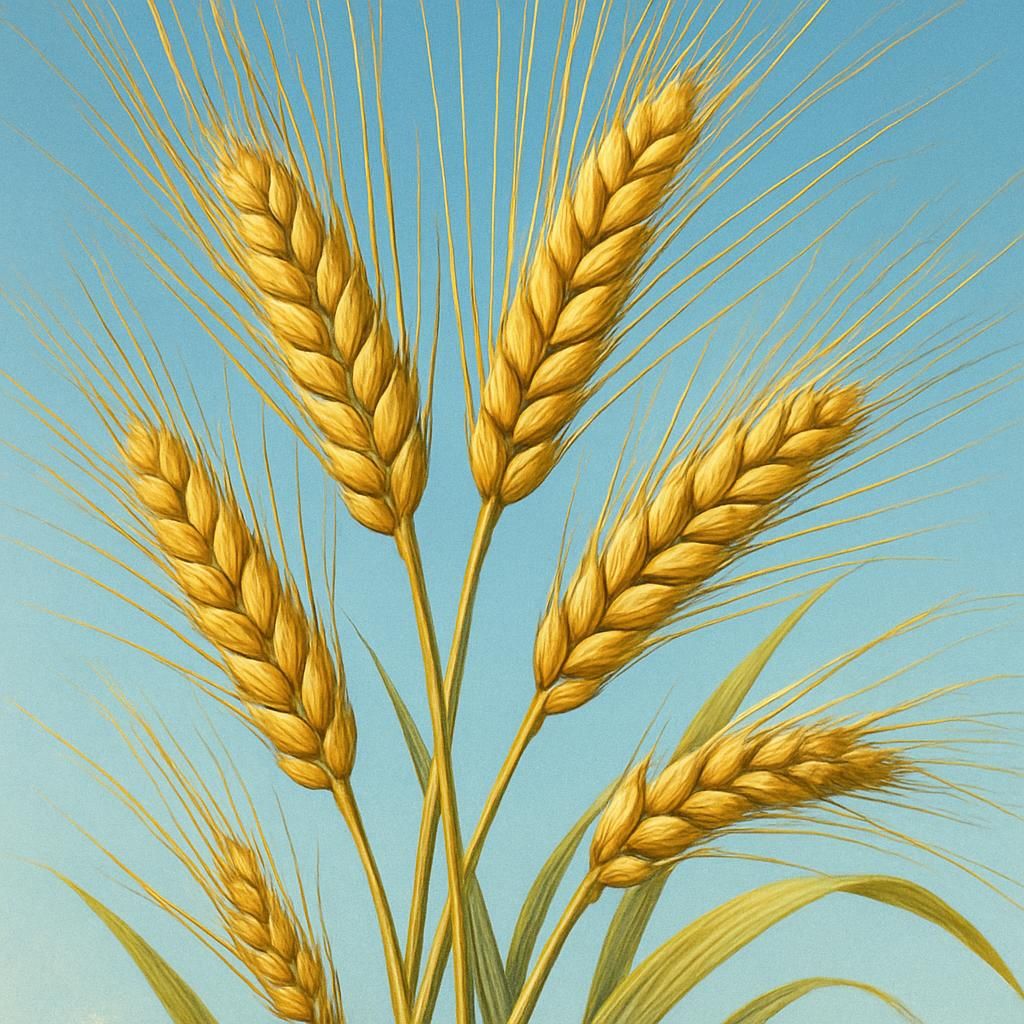
Introduction to Barley (Maris Otter)
Barley, specifically the Maris Otter variety, is a distinguished grain used primarily for malt production in brewing and whisky industries. Renowned for its rich flavor profile, Maris Otter has been a staple for brewers looking to create traditional English ales. Developed in the UK during the 1960s, Maris Otter's robustness and malting efficiency make it an essential crop for both small-scale farms and larger agricultural enterprises.
Botanical Profile of Barley (Maris Otter)
Scientifically known as Hordeum vulgare var. Maris Otter, this barley cultivar belongs to the grass family Poaceae. It is an annual plant, typically growing up to 0.9 meters tall. Maris Otter is recognized for its two-row configuration of heads, which differentiates it from other barley varieties that may have six rows. The grains are valued for their high extract yield and favorable enzymatic activity, key characteristics that contribute to its popularity in malt production.
Soil, pH, and Climate Requirements for Barley (Maris Otter)
Barley is quite adaptable but performs best under specific conditions that optimize its growth and yield.
| Parameter | Ideal Conditions |
|---|---|
| Soil Type | Well-drained loamy soil |
| pH Level | 6.0 - 7.5 |
| Temperature Range | 10°C - 24°C |
| Rainfall | 500mm - 700mm annually |
| Sunlight | Full sun |
Barley requires well-draining soil with a neutral to slightly alkaline pH. It thrives in temperate regions where sunlight is abundant and seasonal rainfall meets its moderate water requirements. Maris Otter can tolerate some drought, but optimum yields require sufficient moisture.
Step-by-Step Planting & Propagation
- Site Selection: Choose an area with full sun and well-drained soil to prevent waterlogging.
- Soil Preparation: Till the soil to a depth of 15-20 cm. Amend with organic matter, like compost, to improve soil fertility and texture.
- Sowing: Sow seeds 2-3 cm deep, spacing them 12-15 cm apart in rows that are 25 cm apart for optimal air circulation.
- Timing: Plant Maris Otter either in early spring or autumn, depending on local climate conditions. This flexibility allows growers to exploit different growth periods for varied results.
Care & Maintenance Regimes for Barley (Maris Otter)
Proper care techniques can greatly influence the health and yield of Maris Otter barley.
| Activity | Frequency | Details |
|---|---|---|
| Watering | Weekly, more if dry | Ensure soil remains moist but not soggy |
| Fertilizing | Initial and midseason | Use nitrogen-rich fertilizers initially, then phosphorus and potassium later |
| Weeding | Bi-weekly | Maintain weed-free rows to reduce competition |
Pruning & Thinning
Barley does not require pruning, but early thinning may be beneficial to prevent overcrowding and to ensure stronger individual plants.
Pests, Diseases & Organic Management
Maris Otter barley is susceptible to various pests and diseases, including Hessian fly and Cereal leaf beetle. To manage these issues organically:
- Pest Management: Regularly monitor your crop for pests and use neem oil or insecticidal soap as treatment.
- Disease Control: Rotate with non-host crops to prevent buildup of soil-borne pathogens and use fungicides like sulfur or copper-based solutions.
Consult resources like "Crop Diseases Under the Microscope: 9 Organic Fixes for Small Farm Resilience" for additional strategies.
Harvesting, Curing & Optimal Storage
Harvest barley when the heads are golden-brown, and the grains are hard to the touch.
- Curing: Post-harvest, allow barley to dry in the field for a few days to reduce moisture content.
- Threshing: Use a combine harvester or manually thresh the barley to separate grains from the chaff.
- Storage: Store in a cool, dry place with airtight containment to limit pest infestations.
For long-term storage, ensure moisture levels are reduced to below 12% to prevent spoilage.
Companion Planting for Barley (Maris Otter)
Companion planting can play a significant role in pest control and yield improvement. Maris Otter barley pairs well with legumes such as Peas or Clovers, which can improve soil nitrogen content through fixation processes. Avoid planting near other cereal grains to prevent pest and disease crossover.
Refer to "Summer Companion Planting: 10 Organic Pairings to Boost Small Farm Resilience" for more ideas on effective pairings.