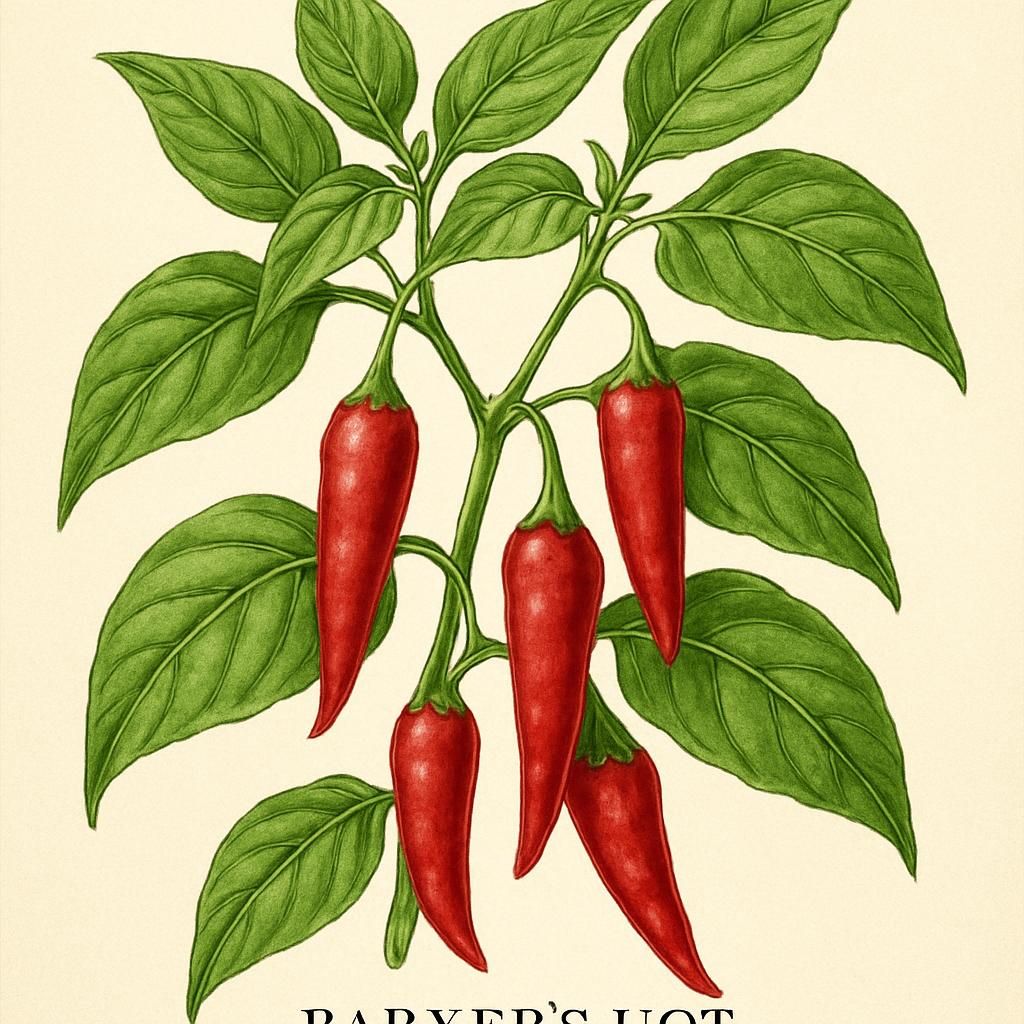
Introduction to Barker's Hot Chili
Barker's Hot Chili is a popular variety of chili pepper renowned for its hot, tangy flavor and vigorous growth. Native to the southwestern United States, it thrives in warm climates, making it a favorite choice for both home gardeners and commercial growers. This guide provides detailed insights into cultivating, maintaining, and harvesting Barker's Hot Chili.
Botanical Profile of Barker's Hot Chili
The Barker's Hot Chili belongs to the Capsicum annuum species, which includes many well-loved chili varieties. It is recognized for its elongated, thin-walled fruits that turn from green to red as they mature. These chilies pack a punch with their heat level, which can range between 15,000 to 30,000 Scoville Heat Units (SHU).
Soil, pH, and Climate Requirements for Barker's Hot Chili
To ensure the successful growth of Barker's Hot Chili, understanding its soil and climate needs is essential. Here are the ideal growing conditions:
| Factor | Ideal Conditions |
|---|---|
| Soil Type | Loamy, well-drained |
| Soil pH | 6.0 - 7.5 |
| Temperature | 70°F - 85°F (21°C - 29°C) |
| Sunlight | Full sun, at least 6-8 hours/day |
| Humidity | Moderate |
Step-by-Step Planting & Propagation
- Seed Selection: Choose high-quality Barker's Hot Chili seeds from a reputable source to ensure the best results.
- Propagation: Start seeds indoors 8-10 weeks before the last frost date. Sow seeds in seed-starting mix, keeping them warm and moist.
- Transplanting: Once seedlings have two sets of true leaves and all danger of frost has passed, harden them off by gradually exposing them to outdoor conditions.
- Planting: Transplant seedlings outdoors into well-prepared soil. Space plants 18-24 inches apart in rows 24-36 inches apart.
Care & Maintenance Regimes for Barker's Hot Chili
Proper care is crucial for healthy chili plants. Below is a schedule for maintaining Barker's Hot Chili:
| Task | Frequency |
|---|---|
| Watering | 1-2 inches/week, more during dry periods |
| Fertilizing | Balanced fertilizer every 4-6 weeks |
| Pruning | As needed to remove dead/diseased foliage |
Water the plants consistently but avoid waterlogging. Fertilize with a balanced fertilizer or compost tea to promote healthy growth and fruiting.
Pests, Diseases & Organic Management
Barker's Hot Chili is susceptible to pests like Spider Mites and diseases such as Leaf spot diseases. Use organic pest management strategies like neem oil or insecticidal soap. Companion planting with Marigold can help deter insects naturally.
Harvesting, Curing & Optimal Storage
Harvest Barker's Hot Chili when the fruits turn red. Use a sharp knife or scissors to avoid damaging the plant. Once harvested, chilies can be dried, pickled, or stored fresh in a cool, dry place. For long-term storage, freezing or drying is recommended.
Companion Planting for Barker's Hot Chili
Barker's Hot Chili thrives when planted alongside certain crops that deter pests or aid growth. Good companions include Basil and Garlic. Avoid planting with Fuerte Avocado or crops that demand more nutrients than chilies.