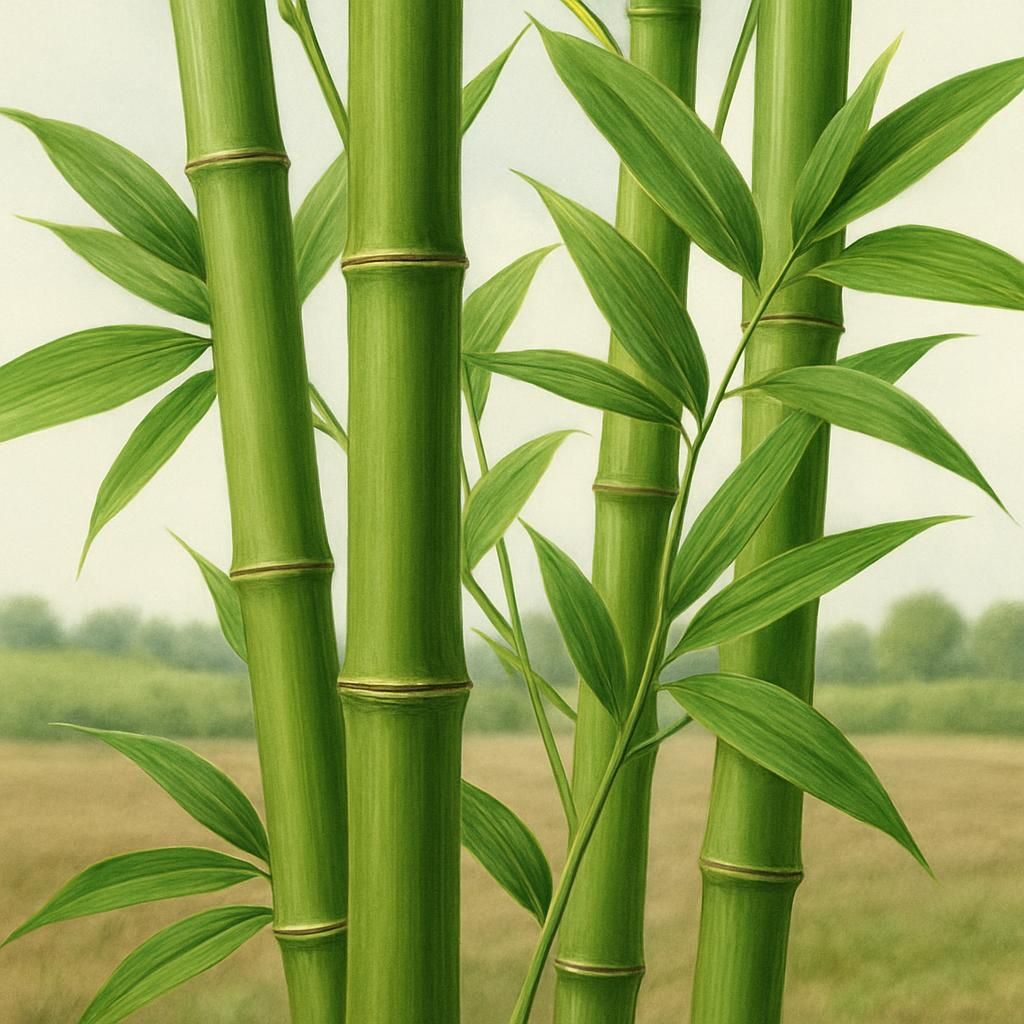
Introduction to Bamboo
Bamboo ranks among the fastest-growing plants on Earth, capable of producing harvestable culms within three to five years. Its versatility spans structural timber, paper pulp, textiles, and high-value edible shoots. Professional growers appreciate bamboo for its perennial nature, soil-stabilizing rhizomes, and ability to sequester carbon at rates exceeding many tree species.
Successful bamboo enterprises require careful species selection, site preparation, and ongoing rhizome management. Both clumping (pachymorph) and running (leptomorph) types are cultivated commercially, with running types offering higher biomass but demanding stricter containment. Market demand for sustainably sourced poles and shoots continues to expand globally.
Botanical Profile of Bamboo
Bamboo belongs to the grass family Poaceae and the subfamily Bambusoideae. Culms emerge from an extensive underground rhizome network that stores carbohydrates and produces new shoots annually. Most commercial timber species reach 15–25 m in height with culm diameters of 8–15 cm. Leaves are lanceolate and arranged in whorls; flowering occurs infrequently, often at intervals of 30–120 years, after which the stand may die back.
Soil, pH, and Climate Requirements for Bamboo
Bamboo thrives in deep, well-drained loamy soils rich in organic matter. It tolerates a range of textures provided drainage prevents waterlogging. Optimal fertility supports rapid culm elongation and multiple flushes of edible shoots.
| Parameter | Ideal Range | Notes |
|---|---|---|
| Soil Type | Loam to sandy loam | Heavy clay requires raised beds or drainage tiles |
| Soil pH | 5.5–7.0 | Slightly acidic to neutral; avoid saline soils |
| Temperature | 15–30 °C daytime | Protect young plants from frost below –5 °C |
| Annual Rainfall | 1000–2500 mm | Supplemental irrigation needed in dry seasons |
| Altitude | 0–1500 m | High-altitude species exist for cooler climates |
| Sunlight | Full sun to partial shade | Running species prefer full sun for maximum biomass |
Step-by-Step Planting & Propagation
- Site selection: Choose level or gently sloping land with reliable water access and wind protection.
- Soil testing and amendment: Incorporate 10–15 cm of well-rotted compost and adjust pH if below 5.5 with agricultural lime.
- Rhizome or division selection: Source healthy, disease-free divisions with at least three buds and intact roots.
- Planting holes: Dig 60 cm wide by 60 cm deep; backfill with amended soil and position rhizome horizontally 10–15 cm below surface.
- Spacing: Running species at 3–4 m between rows; clumping species at 2–3 m.
- Initial irrigation: Water thoroughly after planting and maintain consistent moisture for the first six months.
- Mulching: Apply 10 cm organic mulch to suppress weeds and conserve soil moisture.
Care & Maintenance regimes for Bamboo
Bamboo responds well to structured annual care. Irrigation, nutrition, and selective thinning maintain productivity and prevent overcrowding.
| Task | Schedule | Details |
|---|---|---|
| Watering | Weekly 25–40 mm during growth | Increase to 50 mm in first two summers; reduce in dormancy |
| Fertilizer | Early spring & mid-summer | Apply 10-10-10 NPK at 200 g per mature clump; supplement with compost tea |
| Pruning | Late winter (dormant season) | Remove dead, damaged, or spindly culms; thin to 8–12 strong culms per m² |
Pests, Diseases & Organic Management
Bamboo is generally resilient but can suffer from aphids, mites, and occasional fungal issues. Regular scouting and cultural practices form the first line of defense.
- Aphid colonies on new shoots respond to strong water sprays and releases of lady beetles.
- Spider mites appear during hot, dry periods; overhead irrigation and neem oil applications provide control.
- Fungal culm rot is prevented by avoiding waterlogged soils and removing infected material promptly.
- Rodents may girdle young culms; install hardware cloth barriers around high-value plantings.
Harvesting, Curing & Optimal Storage
Harvest timber culms when three to five years old, indicated by uniform color and hardened nodes. Cut at ground level during the dry season to minimize starch content and reduce borer risk. Season poles horizontally off the ground for 8–12 weeks with good airflow. For edible shoots, harvest when 15–20 cm tall before significant lignification occurs; blanch in boiling water for 10 minutes and store frozen or canned.
Companion Planting for Bamboo
Bamboo benefits from nitrogen-fixing understory species that improve soil fertility without competing heavily for light. Leguminous ground covers such as clover reduce erosion between rows. Shallow-rooted herbs including thyme and rosemary deter certain insects while tolerating partial shade at clump edges. Avoid planting shallow-rooted vegetables directly against running rhizomes to prevent competition and accidental spread.