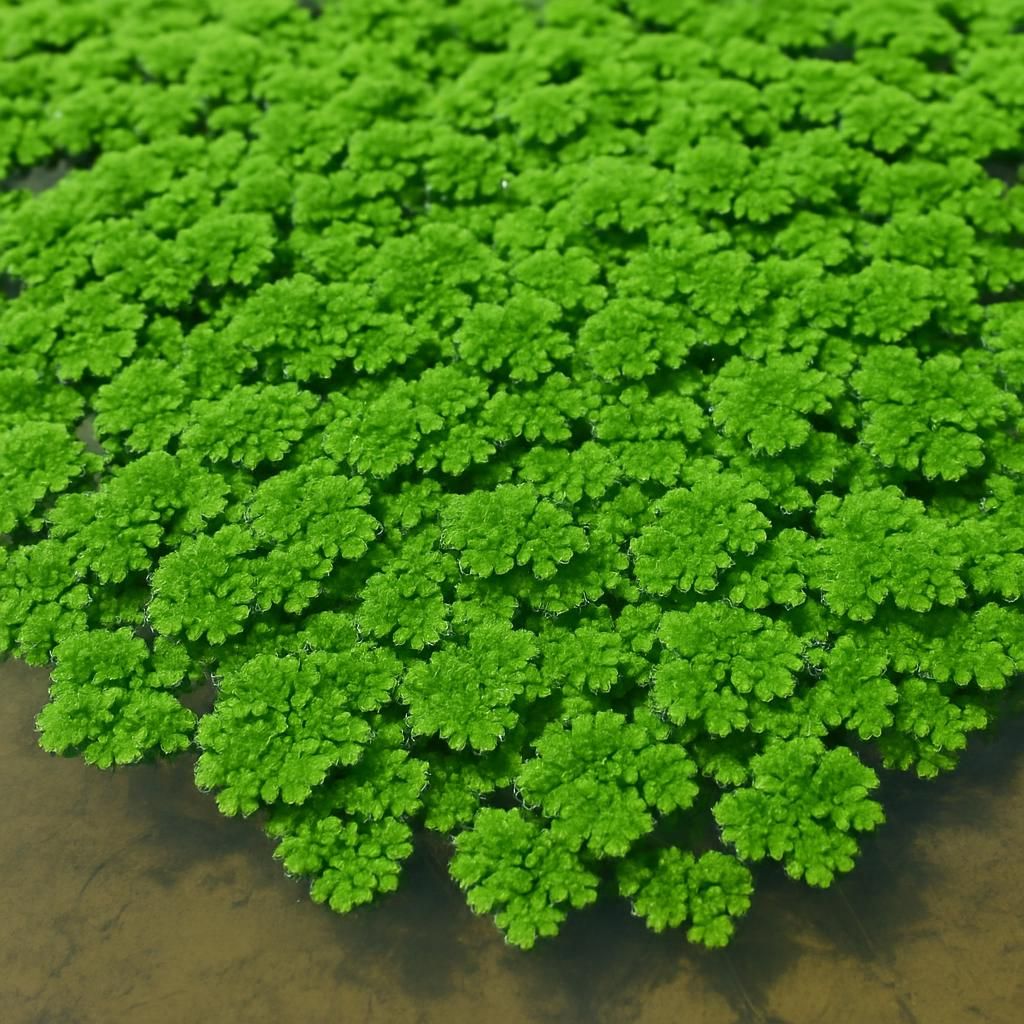
Introduction to Azolla
Azolla is a genus of small, floating aquatic ferns that has been cultivated for centuries as a living fertilizer and high-protein feed. It forms dense mats on the surface of still or slow-moving water, rapidly multiplying through vegetative reproduction. Farmers value Azolla for its ability to fix atmospheric nitrogen in symbiosis with the cyanobacterium Anabaena azollae, often supplying 20–40 kg of nitrogen per hectare in rice paddies. Its high crude protein content (up to 30% dry weight) also makes it an excellent supplement for poultry, fish, and ruminants.
Botanical Profile of Azolla
Azolla pinnata features tiny, overlapping scale-like leaves arranged in two rows along a short, branched stem. Each leaf contains a dorsal lobe that floats and a ventral lobe that remains submerged, housing the nitrogen-fixing symbiont. The plant produces simple roots that hang in the water column. Sporocarps appear under stress conditions, allowing sexual reproduction, although vegetative fragmentation is the dominant propagation method. The fern’s rapid doubling time of 2–5 days under optimal conditions enables explosive surface coverage.
Soil, pH, and Climate Requirements for Azolla
Azolla thrives in shallow, nutrient-rich freshwater bodies with minimal water movement. It prefers slightly acidic to neutral conditions and moderate temperatures that support continuous vegetative growth.
| Parameter | Ideal Range | Notes |
|---|---|---|
| pH | 5.5 – 7.0 | Growth slows above pH 7.5 |
| Water Temperature | 20 – 30 °C | Tolerates 15 – 35 °C; dies below 5 °C |
| Light | Full sun to partial shade | 50–70% sunlight optimal for rapid doubling |
| Water Depth | 5 – 15 cm | Maintain constant level to avoid desiccation |
| Salinity | < 0.5 ppt | Sensitive to brackish conditions |
Step-by-Step Planting & Propagation
- Select a shallow pond, rice field, or lined container with a firm base.
- Fill with clean, non-saline water to 5–15 cm depth.
- Inoculate with 0.5–1 kg fresh Azolla per 10 m² surface area.
- Maintain water temperature between 20–30 °C and provide at least 6 hours of sunlight.
- Add a thin layer of fertile soil or diluted organic fertilizer (e.g., cow dung slurry) to supply phosphorus and micronutrients.
- Allow 7–10 days for the mat to double before first harvest.
Care & Maintenance regimes for Azolla
Consistent water quality and nutrient balance are essential for sustained productivity. The following schedule supports year-round cultivation in tropical and subtropical climates.
| Task | Frequency | Details |
|---|---|---|
| Water Top-up | Daily | Replace evaporated water with clean, non-chlorinated water |
| Phosphorus Application | Every 10–14 days | Apply 2–3 kg superphosphate or 5 kg rock phosphate per 100 m² |
| Organic Manure | Weekly | Add 1–2 kg well-rotted cow dung slurry per 100 m² |
| Harvest/Thinning | Every 5–7 days | Remove 30–50% of biomass to maintain 2–3 kg/m² density |
| pH Monitoring | Weekly | Adjust with agricultural lime if pH drops below 5.0 |
Pests, Diseases & Organic Management
Azolla is relatively resistant to most pests, yet certain insects and environmental stresses can reduce yields. Monitor regularly for Aphids that cluster on leaf margins and Fungus gnats whose larvae feed on roots. Fungal infections such as Pythium may appear in overly stagnant or contaminated water. Organic controls include introducing predatory fish (e.g., tilapia), maintaining water circulation, and removing infected mats. Neem-based sprays at 0.5% concentration provide additional protection without harming the fern or its nitrogen-fixing symbiont.
Harvesting, Curing & Optimal Storage
Harvest Azolla when the mat reaches 3–4 kg/m² fresh weight, typically every 5–7 days. Use fine-mesh nets or rakes to collect biomass without disturbing the water column. Rinse gently to remove debris. For livestock feed, sun-dry to 10–12% moisture on clean tarps for 2–3 days, then store in breathable sacks in a cool, dry place. For green manure, incorporate fresh material directly into soil within 24 hours. Properly dried Azolla retains nutritional value for up to six months when kept below 25 °C and protected from moisture.
Companion Planting for Azolla
Azolla integrates exceptionally well with flooded rice systems. Intercropping with Rice increases grain yield by 15–25% while reducing synthetic nitrogen needs. It also pairs effectively with Water Spinach and Taro in integrated farming ponds, where the fern supplies nitrogen and the taller crops provide partial shade. Avoid planting alongside species that release allelopathic compounds or require deep tillage that disrupts the floating mat.