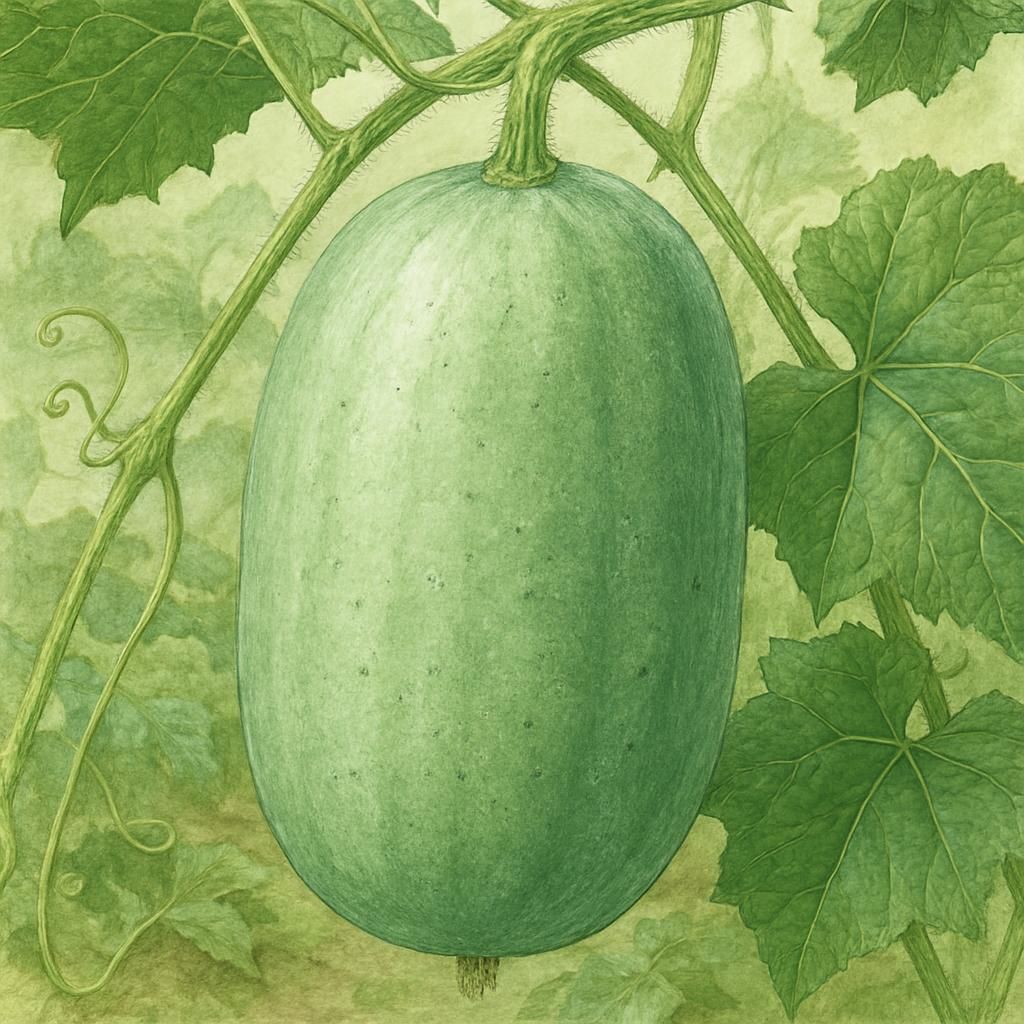
Introduction to Wax Gourd (Large Round)
Wax Gourd, also known as 'Benincasa hispida', is a widely cultivated vegetable in Asia, prized for its adaptability and shelf life. The large, round varieties of wax gourd are particularly valued for their size and fibrous flesh. This crop grows well in warm and tropical climates and is essential in many traditional cuisines. It is also known to have health benefits, including aiding in digestion and reducing inflammation.
Botanical Profile of Wax Gourd (Large Round)
The Wax Gourd is an annual plant belonging to the Cucurbitaceae family. This gourd features a smooth, wax-covered exterior, giving it the namesake 'wax' gourd. The plant is a sprawling vine with large leaves and bears large, green fruits that eventually develop a thick, waxy coat. Wax gourds can grow to about 30 cm in diameter and weigh between 10-40 kg depending on the variety and growing conditions.
Soil, pH, and Climate Requirements for Wax Gourd (Large Round)
Wax Gourd thrives in well-drained, fertile soils. It prefers a pH between 6.0 to 6.8 and requires warm temperatures to develop. The following table outlines the ideal conditions for cultivating Wax Gourd:
| Condition | Ideal Range |
|---|---|
| Soil Type | Well-drained loamy or sandy loam soil |
| Soil pH | 6.0 - 6.8 |
| Temperature | 75°F - 85°F (24°C - 29°C) |
| Sunlight | Full Sun (6-8 hours daily) |
Step-by-Step Planting & Propagation
- Seed Selection and Preparation: Choose high-quality seeds from a reputable supplier. It is vital to ensure seeds are disease-free and viable.
- Sowing: Start seeds indoors 4-6 weeks before the last frost date. Plant seeds 1 inch deep in pots or seed trays filled with rich, well-drained soil.
- Transplanting: Once seedlings develop 2-3 true leaves and the threat of frost has passed, transplant them into prepared beds spaced 3-4 feet apart.
- Direct Sowing: In warmer climates, seeds can be sown directly into the garden once soil temperatures exceed 65°F (18°C).
Care & Maintenance Regimes for Wax Gourd (Large Round)
Wax Gourd requires regular care to ensure healthy growth. Below is a detailed schedule for watering, fertilizing, and pruning:
| Task | Frequency/Notes |
|---|---|
| Watering | 1-2 inches per week, increase during hot spells. |
| Fertilizing | Balanced, slow-release fertilizer every 4 weeks. |
| Pruning | Prune vines to control growth and improve yield. |
Pests, Diseases & Organic Management
Wax Gourd is susceptible to pests like Spider Mites and diseases such as powdery mildew. Organic pest management strategies include:
- Spraying neem oil solution to deter mites.
- Encouraging beneficial insects like ladybugs.
- Applying compost tea to combat fungal infections.
Harvesting, Curing & Optimal Storage
- Harvesting: Wax gourds are ready for harvest when they are fully grown, and their waxy coating develops. Use a sharp knife to cut them from the vine, leaving a small stem attached.
- Curing: Allow gourds to cure in a sunny, dry area for about a week to develop a hard skin.
- Storage: Store cured gourds in a cool, dry location between 50°F to 60°F (10°C to 15°C) to extend shelf life up to 6 months.
Companion Planting for Wax Gourd (Large Round)
Effective companion plants for Wax Gourd include legumes such as Chickpeas that fix nitrogen in the soil, enhancing soil fertility. Marigolds can deter nematodes and other soil-borne pests, promoting healthy growth.
Explore more about sustainable agricultural practices in the Spring Soil Prep: 9 Organic Steps to Prime Small Farms for Explosive Growth.
For more on complementary crops, see our guide on Tomato, which can thrive alongside Wax Gourd due to their similar growing conditions.