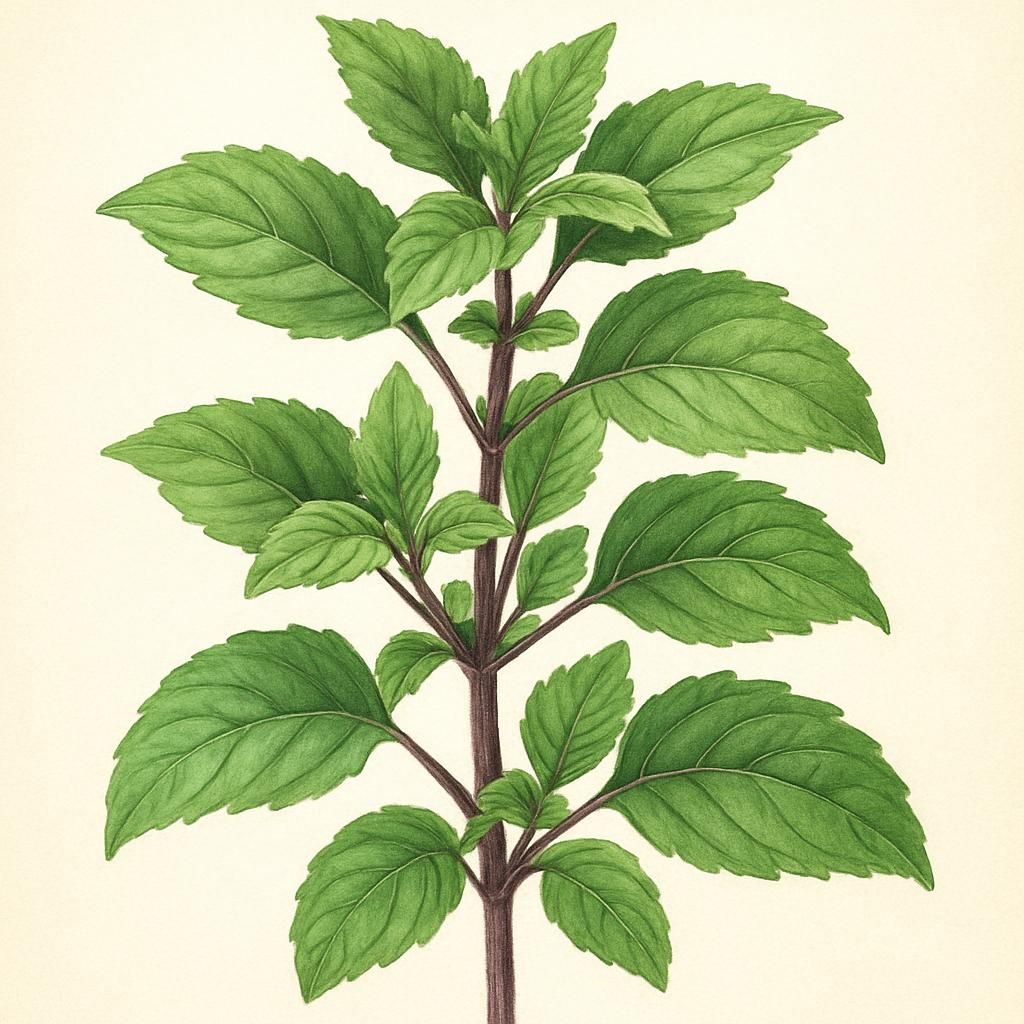
Introduction to Tulsi (Kapoor)
Tulsi, also known as Holy Basil, holds a sacred place in Hindu culture and is often referred to as the "Queen of Herbs" for its numerous medicinal properties. The Kapoor variety is particularly renowned for its compact growth and aromatic leaves, making it a popular choice for home gardeners and herb enthusiasts.
Botanical Profile of Tulsi (Kapoor)
Tulsi (Kapoor) belongs to the Lamiaceae family and is characterized by its small green leaves, purple-tinted stems, and a strong clove-like scent. It's a perennial plant in tropical climates, typically reaching a height of about 1 to 2 feet, and can be grown as an annual in temperate zones.
Soil, pH, and Climate Requirements for Tulsi (Kapoor)
Tulsi thrives best in warm, sunny conditions. It requires well-drained soil, rich in organic matter to grow optimally. Here's a detailed table of its ideal growing conditions:
| Parameter | Ideal Condition |
|---|---|
| Soil Type | Well-drained, loamy |
| Soil pH | 6.0 - 7.5 |
| Temperature Range | 70°F - 90°F (21°C - 32°C) |
| Sunlight | Full sun (6-8 hours of direct sunlight) |
Step-by-Step Planting & Propagation
- Seed Selection: Obtain quality seeds from a reputable source to ensure optimal growth and disease resistance.
- Germination: Start seeds indoors 6-8 weeks before the last expected frost. Sow the seeds on top of well-drained potting mix and lightly cover them. Keep the soil moist until germination.
- Transplanting: When seedlings have developed two sets of true leaves, transplant them into larger pots or directly into the garden, ensuring they are spaced 12-18 inches apart.
- Propagation by Cuttings: For faster results, propagate using cuttings. Cut a 4-5 inch stem just below a leaf node, remove lower leaves, and plant it directly into a potting mix.
Care & Maintenance Regimes for Tulsi (Kapoor)
Tulsi requires consistent care to flourish. Below is a table to guide your care routine:
| Care Aspect | Frequency/Details |
|---|---|
| Watering | Water deeply once a week; allow soil to dry between waterings. |
| Fertilization | Apply a balanced organic fertilizer every 4-6 weeks. |
| Pruning | Pinch off the flower buds to promote bushier growth. |
Pests, Diseases & Organic Management
Despite its resilience, Tulsi can fall prey to pests such as Spider Mites and common diseases like Powdery Mildew. Organic management strategies include:
- Neem Oil: Use neem oil to deter pests.
- Soap Solution: Mild soap solutions can effectively remove pests.
- Proper Air Circulation: Ensures plant health and minimizes fungal diseases. For detailed strategies, refer to our blog post on crop diseases.
Harvesting, Curing & Optimal Storage
Harvest Tulsi leaves early in the morning when the essential oils are most potent. Regular harvesting encourages new growth. Dry the leaves in a shaded, well-ventilated area and store in airtight containers to preserve aroma and medicinal properties.
Companion Planting for Tulsi (Kapoor)
Tulsi (Kapoor) pairs excellently with crops like Tomato and Lemon, which can benefit from its pest-repellent properties. For additional insights, explore the concepts of companion planting further.