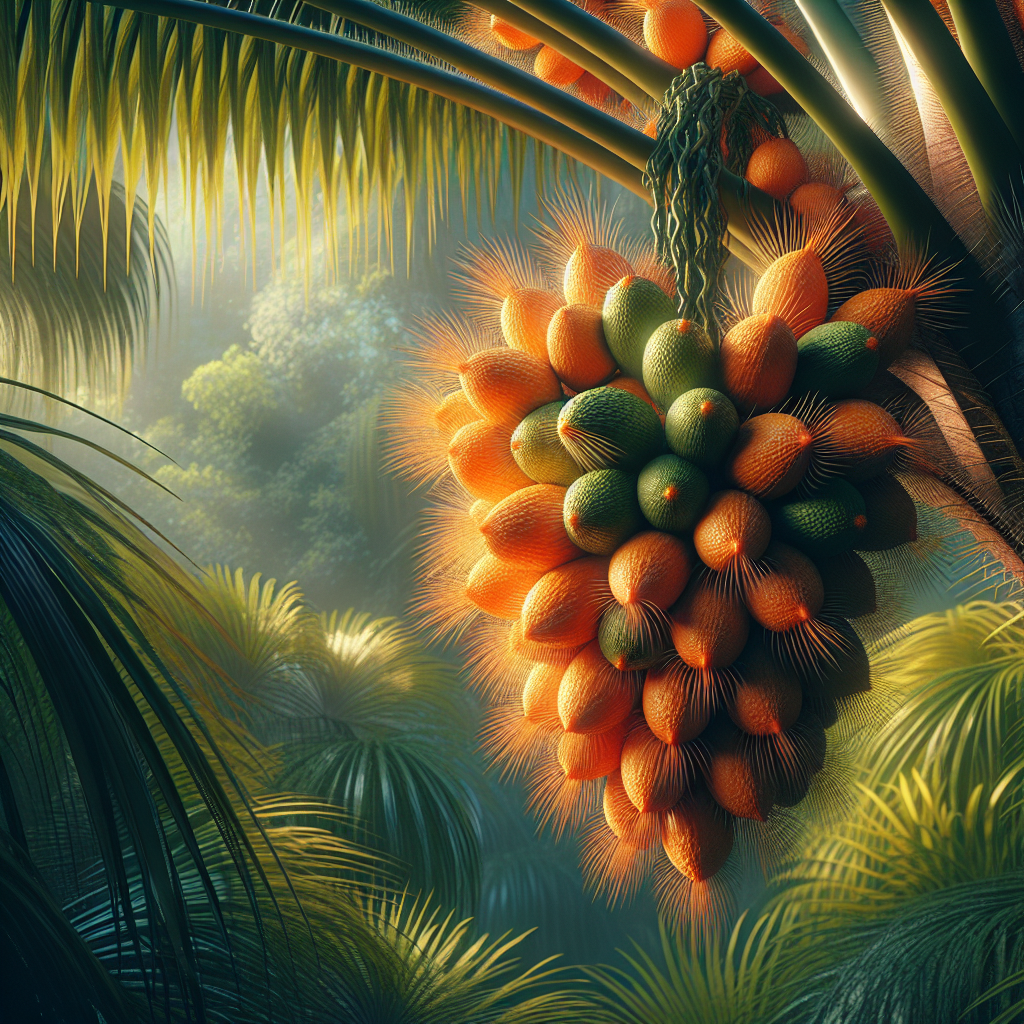
Introduction to Tucuma (Astrocaryum aculeatum)
Tucuma, scientifically known as Astrocaryum aculeatum, is a spiny palm tree native to the Amazon Basin, particularly in Brazil, Peru, and Colombia. Often referred to as the 'Amazonian peach palm,' it is celebrated for its vibrant orange fruit, which is rich in vitamins A and C, and its oil, widely used in cosmetics and food industries. The tree plays a significant role in local economies, providing a sustainable source of income for indigenous and rural communities through fruit and handicraft production from its fibers. Growing Tucuma requires an understanding of its tropical habitat and long-term commitment, as the tree can take several years to bear fruit but can remain productive for decades.
Cultivating Tucuma is not only a venture into agriculture but also an investment in biodiversity and sustainability. Its ability to thrive in poor soils makes it an excellent choice for reforestation projects and agroforestry systems. This comprehensive guide will walk you through the botanical characteristics, environmental needs, planting techniques, care regimes, pest management, harvesting, and companion planting strategies to ensure a thriving Tucuma plantation.
Botanical Profile of Tucuma (Astrocaryum aculeatum)
Tucuma belongs to the Arecaceae family, characterized by its tall, slender trunk covered in sharp, black spines that serve as a natural defense mechanism against herbivores. The tree can grow up to 20 meters (65 feet) in height, with a crown of feathery, pinnate leaves that can reach 4-6 meters (13-20 feet) in length. Its fruit, roughly the size of a small peach, has a tough, fibrous exterior and a pulpy, oily interior encasing a hard seed. The fruit's bright orange color is a visual indicator of its high beta-carotene content.
The tree is monoecious, meaning it bears both male and female flowers on the same plant, facilitating self-pollination, though cross-pollination by insects like bees enhances fruit set. Tucuma typically begins fruiting after 5-8 years and can produce 20-50 kg (44-110 lbs) of fruit per tree annually once mature. Its deep root system allows it to access water and nutrients in nutrient-poor soils, a common feature of its native rainforest environment.
Soil, pH, and Climate Requirements for Tucuma (Astrocaryum aculeatum)
Tucuma thrives in tropical climates with high humidity, consistent rainfall, and temperatures between 22-32°C (72-90°F). It is not frost-tolerant and requires a minimum annual rainfall of 1,800-2,500 mm (70-100 inches), ideally evenly distributed throughout the year. If you are in a region with a pronounced dry season, irrigation will be necessary to maintain soil moisture. The tree can adapt to various altitudes, from sea level up to 1,000 meters (3,280 feet), but optimal growth occurs in lowland tropical zones.
Soil-wise, Tucuma is remarkably adaptable, growing well in sandy, loamy, or even clay-heavy soils, provided they are well-draining. It prefers slightly acidic to neutral pH levels, ranging from 5.5 to 7.0. While it can tolerate poor, infertile soils, incorporating organic matter like compost or well-rotted manure during planting will boost initial growth. Conduct a soil test before planting to ensure proper nutrient balance, and amend with lime if the pH is too low or sulfur if it’s too high. For more insights on maintaining soil health in tropical farming, check out this resource on Soil Health Mastery.
Step-by-Step Planting & Propagation
Seed Selection and Preparation: Tucuma is primarily propagated from seeds, which should be sourced from mature, healthy fruits. After harvesting, remove the pulp and soak the seeds in water for 24-48 hours to soften the hard outer shell. Scarification—lightly sanding or nicking the seed coat—can speed up germination, which otherwise can take 3-6 months.
Germination: Plant seeds in a well-draining nursery mix of sand and compost, burying them 2-3 cm (1 inch) deep. Maintain consistent moisture and warmth (25-30°C or 77-86°F). A shaded nursery bed or greenhouse works best to protect young seedlings from direct sun. Germination rates can be low (30-50%), so plant multiple seeds to ensure viable seedlings.
Transplanting: Once seedlings reach 30-50 cm (12-20 inches) in height, usually after 6-12 months, they are ready for transplanting. Choose a site with partial shade to protect young plants from intense sunlight. Space trees 5-8 meters (16-26 feet) apart to accommodate their wide canopy and root system.
Planting: Dig holes twice the size of the root ball, about 60 cm (2 feet) wide and deep. Mix the excavated soil with organic matter and a balanced fertilizer (10-10-10 NPK) to provide a nutrient boost. Place the seedling in the hole, ensuring the root collar is level with the soil surface, and backfill gently while watering to eliminate air pockets.
Care & Maintenance Regimes for Tucuma (Astrocaryum aculeatum)
Tucuma requires consistent care, especially in its early years, to establish a strong foundation. Water young trees regularly, providing 20-30 liters (5-8 gallons) per tree every 2-3 days during dry periods to maintain soil moisture. Mature trees are more drought-tolerant but still benefit from irrigation during prolonged dry spells. Mulching around the base with organic materials like straw or wood chips helps retain moisture and suppress weeds.
Fertilization should be done annually, using a balanced fertilizer or compost to replenish soil nutrients. Apply 1-2 kg (2-4 lbs) of fertilizer per tree in a ring around the drip line, avoiding direct contact with the trunk to prevent burn. Pruning is minimal; remove dead or damaged fronds to improve air circulation and reduce pest habitats. Be cautious of the spines when handling the tree—protective gloves and long sleeves are recommended.
Weeding is crucial, especially for young trees, as competition for nutrients and water can stunt growth. Clear a 1-2 meter (3-6 feet) radius around each tree, either manually or with a hoe, taking care not to damage surface roots. As the tree matures, its canopy will naturally shade out most weeds.
Pests, Diseases & Organic Management
Tucuma is relatively hardy but can be affected by certain pests and diseases. Common pests include Fruit Flies, which lay eggs in ripening fruit, and Beetles, particularly those targeting the palm heart or roots. Inspect trees regularly for signs of infestation, such as damaged fruit or wilting fronds. Organic control methods include introducing beneficial insects like parasitic wasps for fruit flies and applying neem oil to deter beetles. Physical barriers, such as fruit bagging, can also prevent pest access.
Diseases like Bud Rot, often caused by Phytophthora palmivora, pose a significant threat, especially in overly wet conditions. Symptoms include yellowing fronds and a foul odor from the crown. Prevent bud rot by ensuring good drainage and avoiding overhead irrigation. If detected, remove and destroy affected tissue immediately, and apply copper-based fungicides as a preventative measure. Root rots can also occur in poorly drained soils; improve soil structure with sand or organic matter to mitigate this risk.
Harvesting, Curing & Optimal Storage
Tucuma fruit is ready for harvest 5-8 years after planting, typically between December and May in its native range, depending on local climate. Mature fruit turns bright orange and begins to fall naturally from the tree, a key indicator of readiness. Use a long pole with a hook or basket to collect fruit from tall trees, avoiding direct contact with spines. Each tree can yield multiple bunches, with 50-100 fruits per bunch, so plan for significant labor during peak harvest season.
Post-harvest, the fruit’s pulp must be processed quickly as it is highly perishable. Remove the outer skin and fibrous layer manually or with a small knife to access the edible pulp, which can be consumed fresh or processed into juice, jams, or oil. For oil extraction, the pulp is boiled or pressed to separate the oil, which is then filtered and stored in airtight containers away from light to prevent rancidity.
Store fresh fruit in a cool, shaded area for up to a week, or refrigerate for slightly longer shelf life. Processed products like oil or dried pulp can last several months if stored properly in sealed containers at room temperature. Always label and date stored products to monitor freshness.
Companion Planting for Tucuma (Astrocaryum aculeatum)
Companion planting can enhance Tucuma growth by improving soil fertility, deterring pests, and maximizing land use in agroforestry systems. Planting nitrogen-fixing species like Pigeon Pea near Tucuma provides natural fertilization and supports soil health. Shade-tolerant crops such as cacao or coffee can be grown under the canopy of mature Tucuma trees, utilizing vertical space and reducing weed competition.
Additionally, interplanting with aromatic herbs or flowers can repel pests naturally. These strategies mimic the diverse ecosystem of the Amazon, where Tucuma naturally thrives alongside a variety of plants. By integrating companion planting, growers can create a balanced, sustainable system that benefits both the environment and crop productivity.