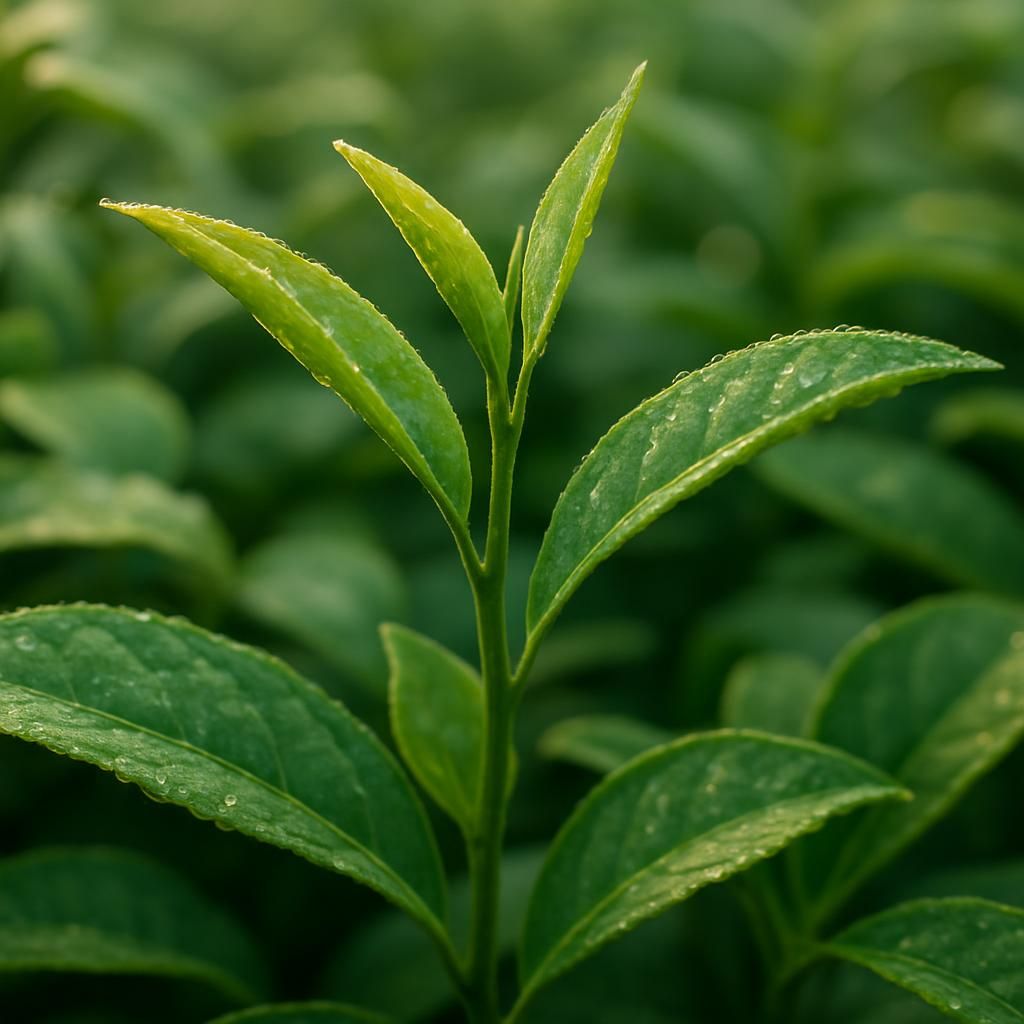
Introduction to Tea (Puerh)
Puerh tea is a post-fermented tea originating from Yunnan Province, China, made from the large-leaf variety of the tea plant. Unlike green or black teas, Puerh undergoes microbial fermentation after initial processing, developing complex earthy flavors prized by connoisseurs. Commercial cultivation requires specific high-elevation subtropical conditions, meticulous pruning, and careful handling during harvest and curing.
Botanical Profile of Tea (Puerh)
The Puerh tea plant belongs to Camellia sinensis var. assamica, characterized by large, leathery leaves up to 20 cm long and vigorous growth reaching 3–5 meters when unpruned. The plant produces white, fragrant flowers and produces seeds in woody capsules. Mature bushes develop deep taproots that support drought tolerance once established.
Soil, pH, and Climate Requirements for Tea (Puerh)
Puerh tea demands well-drained, acidic soils rich in organic matter. High humidity, consistent rainfall, and protection from frost are essential.
| Parameter | Ideal Range | Notes |
|---|---|---|
| Soil pH | 4.5 – 5.5 | Strongly acidic; lime application avoided |
| Temperature | 15–25 °C daytime | Night lows above 10 °C; frost-free |
| Annual Rainfall | 1,500–2,500 mm | Even distribution preferred |
| Elevation | 1,200–2,200 m | Higher elevations improve flavor |
| Relative Humidity | 70–85 % | Fog and mist beneficial |
| Soil Texture | Loamy, well-drained | 20–30 % organic matter recommended |
Step-by-Step Planting & Propagation
- Select healthy cuttings or seedlings from certified mother plants.
- Prepare nursery beds with 30 cm raised beds of acidic, sterilized media.
- Plant cuttings 10 cm deep at 15 cm spacing; maintain 80 % shade for 8 weeks.
- Transplant 12–18-month-old plants at 1.2 m × 1.5 m spacing in field.
- Mulch immediately with 10 cm of rice straw or tea prunings to retain moisture.
Care & Maintenance regimes for Tea (Puerh)
Young plants require frequent irrigation and balanced fertilization. Mature bushes need seasonal pruning to maintain plucking height.
| Operation | Frequency | Details |
|---|---|---|
| Watering | 25–30 mm/week during dry spells | Drip irrigation preferred; avoid waterlogging |
| Fertilizer | 3 applications/year | 120 kg N, 40 kg P₂O₅, 60 kg K₂O per hectare |
| Pruning | Annual light prune + 5-year heavy | Maintain 80–100 cm plucking table |
Pests, Diseases & Organic Management
Common threats include Tea Mosquito Bug, Aphids, and Spider mites. Use neem oil sprays, yellow sticky traps, and release of predatory mites. Maintain field sanitation and remove alternate weed hosts.
Harvesting, Curing & Optimal Storage
Harvest the top two leaves and bud during spring and autumn flushes. Wither leaves 6–12 hours, roll, and sun-dry before piling for microbial fermentation lasting 30–90 days. Store finished cakes in breathable bamboo baskets at 18–22 °C and 60–70 % humidity away from odors.
Companion Planting for Tea (Puerh)
Interplant with Gliricidia for nitrogen fixation and wind protection. Nasturtium and Marigold deter aphids and nematodes. Avoid planting near Coffee due to shared pest pressures.