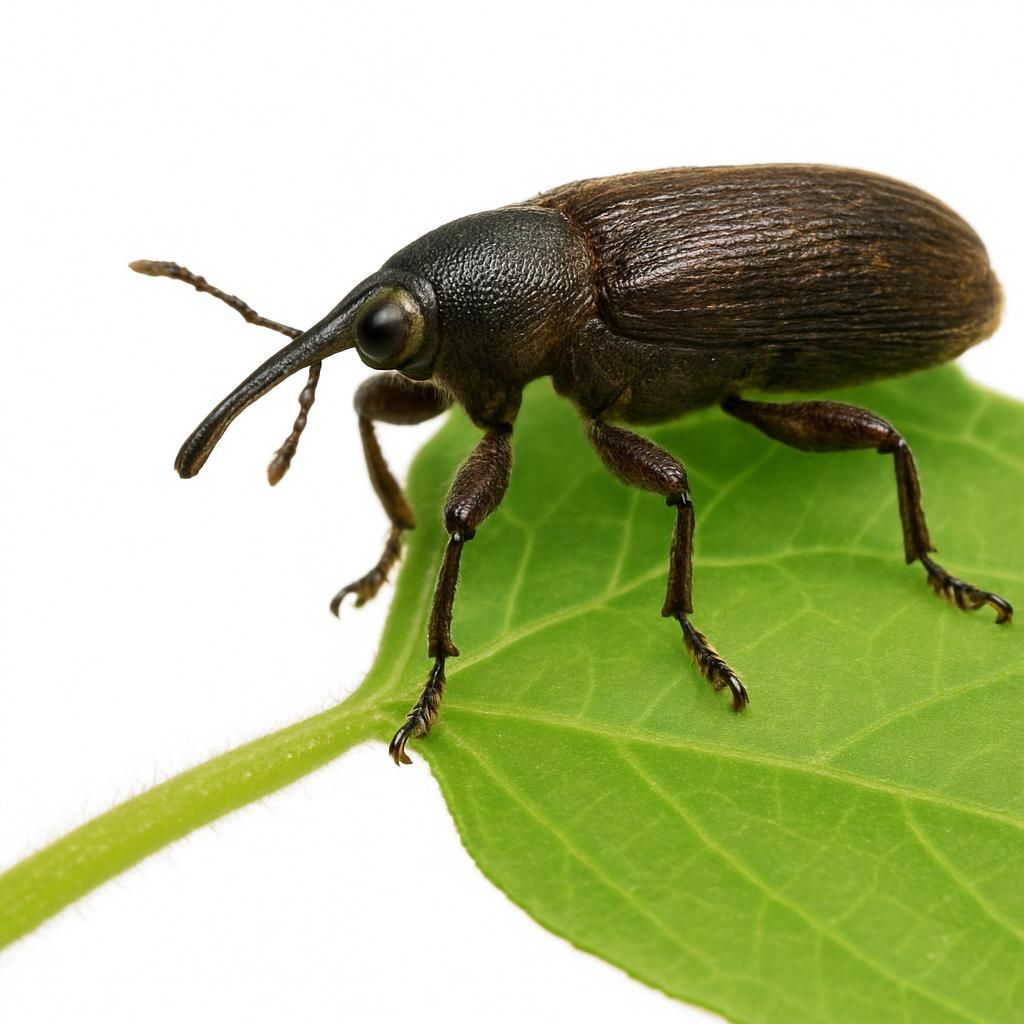
Introduction to sweet potato weevils
Sweet potato weevils (Cylas formicarius) represent the single greatest insect threat to global Sweet Potato production. These small, ant-like beetles have a narrow host range centered on the Convolvulaceae family, yet their impact on tuber quality and yield is devastating. Adult females lay eggs directly into stems and roots, where hatching larvae tunnel extensively, creating characteristic galleries filled with frass. Infested tubers develop a bitter taste and become unmarketable, while severe attacks can destroy entire plantings. Because the pest completes its entire lifecycle inside plant tissue, populations build rapidly in successive crops without intervention. Effective management requires understanding the weevil’s biology, recognizing early symptoms, and deploying a combination of cultural, biological, and targeted chemical tactics.
Identifying Symptoms & Damage
The first visible sign of sweet potato weevil attack is often wilting or yellowing of foliage caused by larval tunneling that disrupts vascular tissue. Close inspection of stems near the soil line reveals small entry holes and dark frass. On tubers, external symptoms include irregular surface cracks, corky patches, and exit holes where adults emerge. Internally, tubers contain winding tunnels packed with brownish frass and sometimes live larvae. A distinctive bitter flavor develops from terpenoid compounds produced in response to feeding. In storage, secondary fungal and bacterial rots frequently follow weevil damage, accelerating spoilage. Farmers should also watch for adult weevils, which are 6–8 mm long, reddish-brown to black with elongated snouts, often found walking on the soil surface at dusk.
Lifecycle and Progression of sweet potato weevils (MUST INCLUDE A MARKDOWN TABLE OF LIFECYCLE STAGES)
Sweet potato weevils undergo complete metamorphosis with four distinct stages. The entire cycle from egg to adult can be completed in 25–35 days under optimal tropical temperatures, allowing multiple generations per year.
| Stage | Duration | Key Characteristics | Optimal Conditions |\n|-------------|-------------------|-------------------------------------------------------------------------------------|-------------------------------------|\n| Egg | 5–8 days | Oval, white, laid singly in stem or root crevices | 25–30 °C, high humidity |\n| Larva | 10–20 days | Legless, creamy-white, C-shaped; feeds and tunnels inside stems and tubers | 27–32 °C, moist soil |\n| Pupa | 5–10 days | Exarate pupa formed inside larval tunnel; immobile | 25–30 °C |\n| Adult | 30–90 days | Reddish-brown to black, 6–8 mm, strong fliers; mates and oviposits repeatedly | Warm nights, presence of host plants |
Environmental Triggers & Risk Factors
Warm temperatures (25–32 °C) and moderate to high soil moisture accelerate weevil development and increase oviposition rates. Continuous sweet potato cropping without rotation creates persistent reservoirs of infested plant debris. Sandy or loose soils facilitate adult movement and larval penetration, while heavy clay soils may slow spread. Transport of infested planting material or tubers is the primary pathway for introducing the pest to new regions. Fields located near storage sheds or cull piles experience higher reinfestation pressure. Drought stress can force weevils to concentrate on remaining succulent tissue, intensifying localized damage.
Organic Control & Treatment Plans (MUST INCLUDE A MARKDOWN TABLE OF TREATMENT OPTIONS AND FREQUENCIES)
Integrated organic management combines sanitation, cultural practices, and approved biological agents. Begin with removal of all crop residues and volunteer plants immediately after harvest. Use only certified weevil-free slips or vine cuttings. Apply floating row covers during the first 30 days after planting to exclude adults. Release predatory ants (Pheidole megacephala) or entomopathogenic nematodes (Heterorhabditis bacteriophora) at recommended rates. When populations exceed economic thresholds, apply neem-based or spinosad sprays during adult flight peaks.
| Treatment Option | Frequency | Application Notes | Efficacy Window |\n|-----------------------------------|------------------------------------|-----------------------------------------------------------------------------------|----------------------------------|\n| Sanitation & residue removal | Post-harvest and pre-planting | Remove all roots, vines, and debris; destroy by burning or deep burial | Prevents 60–80 % carryover |\n| Certified clean planting material| Every planting cycle | Source slips from weevil-free certified nurseries | Foundation of IPM |\n| Floating row covers | Days 0–30 after planting | Secure edges; remove before vines spread | Blocks 95 % adult oviposition |\n| Predatory ants (P. megacephala)| One-time introduction per season | Release 50–100 ants per 10 m² near base of plants | Sustained suppression |\n| Entomopathogenic nematodes | At planting and mid-season | Apply 1 billion IJ/ha in 200 L water; irrigate immediately | 70–85 % larval mortality |\n| Neem oil (azadirachtin 0.15 %) | Every 7–10 days during adult flight | Spray at dusk; target lower stems and soil surface | Repels adults, reduces egg-lay |\n| Spinosad (Entrust SC) | Every 7–14 days as needed | Rotate with neem; observe pre-harvest interval | 80–90 % adult knockdown |
Preventing sweet potato weevils in the Future
Long-term prevention relies on strict crop rotation with non-host crops such as Corn or legumes for at least two seasons. Deep plowing or solarization of infested fields during fallow periods kills pupae and larvae. Store seed tubers in screened facilities at 10–13 °C to slow adult emergence. Implement a community-wide “area-wide” management program that synchronizes planting and harvest dates among neighboring farms. Monitor with pheromone traps placed at field edges starting two weeks before planting; maintain trap counts below 0.5 adults per trap per week. Educate farm workers to recognize early symptoms and report infestations promptly.
Crops Most Affected by sweet potato weevils
While Cylas formicarius primarily attacks Sweet Potato, it also infests other members of the morning glory family including Cassava and several wild Ipomoea species. Occasional records exist on Yam and Taro when planted adjacent to heavily infested sweet potato fields. No significant damage has been documented on solanaceous or brassica crops.