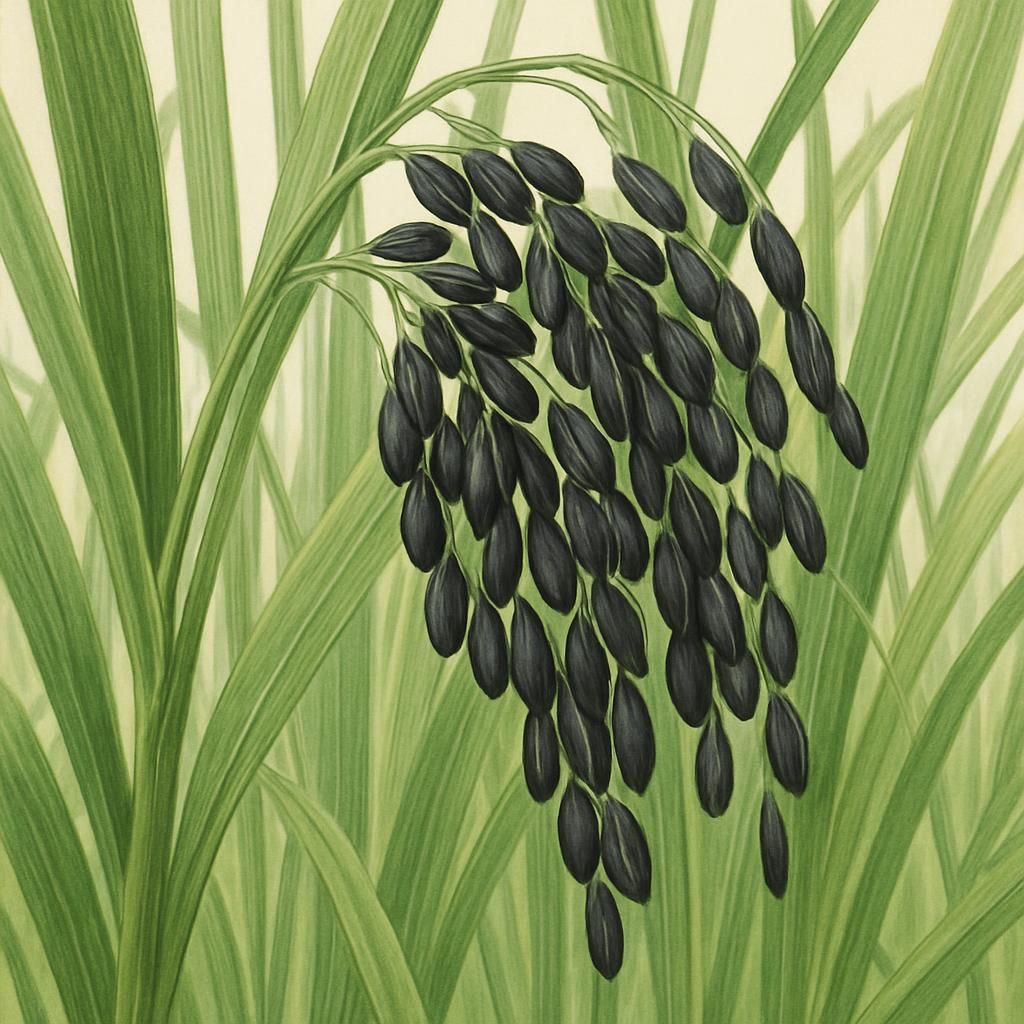
Introduction to Sticky Rice (Black Glutinous)
Sticky Rice, commonly known as Black Glutinous Rice, is an integral part of Asian cuisine, revered for its sweet flavor and distinctly fragrant aroma. It's primarily grown in Southeast Asia, where it holds cultural importance and is used in various traditional dishes.
Botanical Profile of Sticky Rice (Black Glutinous)
The scientific name for Sticky Rice is Oryza sativa var. glutinosa. This type of rice falls under the category of glutinous rice, known for its high amylopectin content, which contributes to its sticky and glue-like texture. Unlike other rice varieties, it contains very low levels of amylose, making it uniquely suitable for desserts and specific dishes.
Soil, pH, and Climate Requirements for Sticky Rice (Black Glutinous)
Sticky Rice requires particular growing conditions to achieve its full potential. The following table outlines the ideal conditions necessary for cultivation:
| Aspect | Optimal Conditions |
|---|---|
| Soil Type | Loamy, Fertile, Well-draining |
| Soil pH | 5.5 to 6.5 |
| Climate | Tropical to Subtropical |
| Temperature | 20°C to 32°C (68°F to 90°F) |
| Rainfall | 1000 mm to 2000 mm annually |
Step-by-Step Planting & Propagation
- Seed Selection: Choose high-quality, certified seeds to ensure proper germination and reduce disease risk.
- Soil Preparation: Amend the soil with organic matter to enhance fertility. Ensure the field is level to facilitate irrigation management.
- Sowing: Plant seeds directly in well-prepared seedbeds or nurseries. Space seeds approximately 20 to 25 cm apart to allow adequate room for plant growth.
- Transplanting: After 20-25 days when seedlings reach 15 cm in height, transplant them into prepared fields, maintaining a plant spacing of around 20 cm.
Care & Maintenance Regimes for Sticky Rice (Black Glutinous)
Consistent care and maintenance are crucial for a successful sticky rice yield. The following table provides a guide:
| Aspect | Schedule |
|---|---|
| Watering | Ensure fields are flooded for most of the growing season. Drain fields once before harvest for complete maturity. |
| Fertilizing | Use a balanced fertilizer before planting. Side-dress with nitrogen-based fertilizers twice: once at tillering and once at panicle initiation. |
| Pruning | Regularly remove weeds manually to prevent competition. |
Pests, Diseases & Organic Management
Sticky Rice is susceptible to pests like Spider Mites and diseases such as blast and sheath blight. Integrated Pest Management (IPM) strategies, such as maintaining field hygiene and utilizing resistant varieties, are recommended. For organic management, introducing natural predators like ladybugs can control pest populations. For more information on pest management, see our blog.
Harvesting, Curing & Optimal Storage
Harvesting occurs when the rice grains fully mature and the stalks turn yellow. It is best to perform harvesting manually to prevent grain loss. Cure the harvested rice dry out for a week under sunlight to reduce moisture. Store in a cool, dry place to prevent mold and pest infestations.
Companion Planting for Sticky Rice (Black Glutinous)
Companion planting can enhance rice cultivation by promoting a beneficial environment. Crops like Lychee and Chickpeas can be intercropped to improve soil nitrogen levels and deter pests naturally.