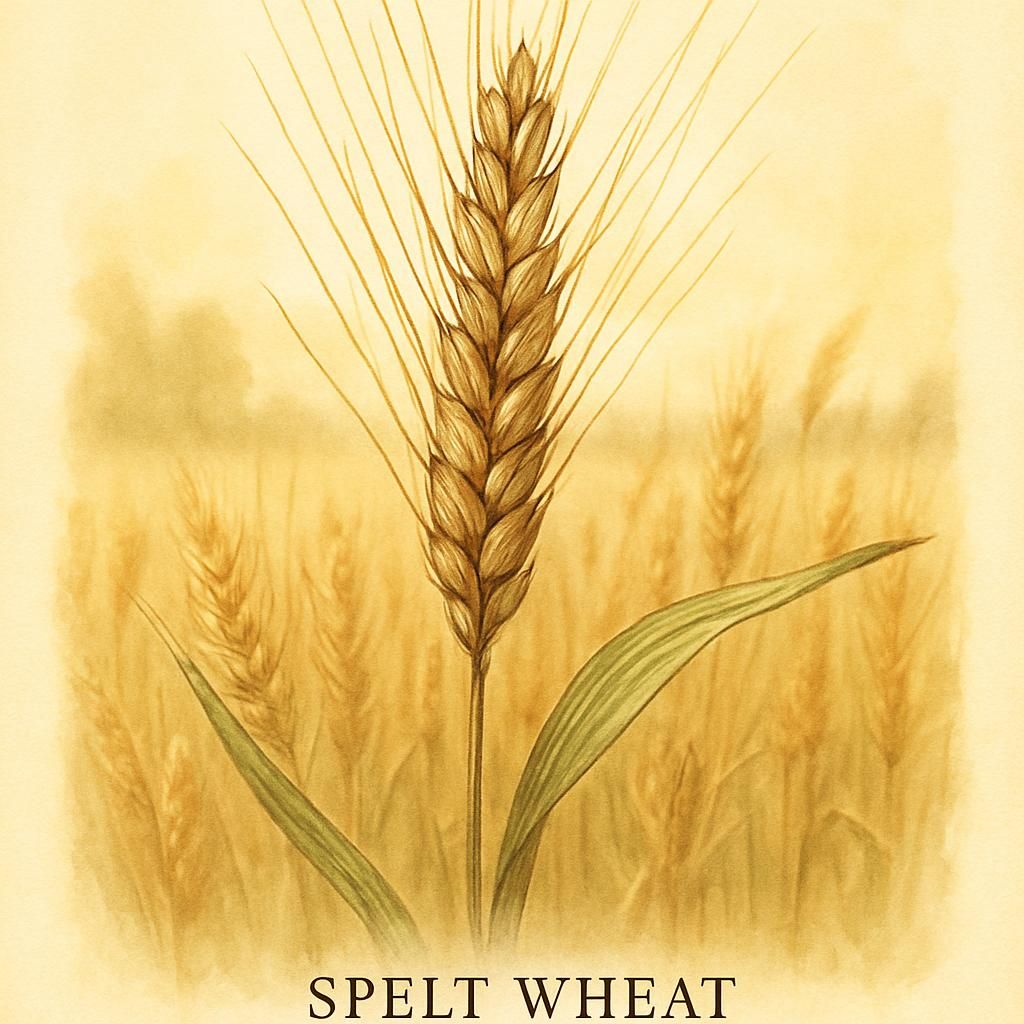
Introduction to Spelt Wheat (Oberkulmer)
Spelt Wheat, particularly the Oberkulmer variety, is an ancient grain that has gained popularity for its health benefits and adaptability to organic farming. This variety is renowned for its robust, nutty flavor and nutritional profile, rich in fiber and essential nutrients. Originating from Europe, Oberkulmer Spelt is a hardy crop that can thrive in less fertile soils compared to modern wheat varieties. Due to its adaptability, spelt is especially favored in organic and regenerative agriculture practices.
Botanical Profile of Spelt Wheat (Oberkulmer)
Belonging to the Poaceae family, Spelt Wheat (Triticum spelta) is an archaic form of wheat with a unique hulled seed structure. Unlike common wheat, spelt’s grains are encased in a tough husk, which protects from pests and environmental damages. This characteristic necessitates a dehulling process before milling but contributes to its resilience and higher disease resistance.
Soil, pH, and Climate Requirements for Spelt Wheat (Oberkulmer)
Spelt Wheat is well-suited for temperate climates and can be cultivated in diverse environmental conditions. To achieve the best results, it is critical to understand the specific soil, pH, and climate requirements:
| Parameter | Ideal Conditions |
|---|---|
| Soil Type | Loamy, well-drained |
| Soil pH | 5.5 to 7.5 |
| Temperature | 10°C to 24°C (50°F to 75°F) |
| Annual Rainfall | 600 to 800 mm |
While spelt is notably tolerant to various soil types, maintaining soil health through crop rotation and organic matter augmentation improves yields significantly.
Step-by-Step Planting & Propagation
Planting Spelt Wheat involves careful consideration of season, soil preparation, and seed handling:
- Season: Plant spelt in the fall or spring, depending on your local climate. Fall planting is preferred for temperate regions to ensure a robust winter crop.
- Seed Preparation: Ensure seeds are clean, disease-free, and pre-treated with an organic fungicide for protection against soil pathogens.
- Land Preparation: Till the soil to incorporate organic matter; spelt thrives with residual fertility from legumes or cover crops.
- Sowing: Sow seeds at a depth of 2-4 cm (0.8-1.6 inches) with a seed drill for uniform coverage, maintaining a spacing of approximately 15-20 cm (6-8 inches) between rows.
- Initial Irrigation: Irrigate lightly to ensure uniform germination, particularly in dry soil conditions.
Care & Maintenance Regimes for Spelt Wheat (Oberkulmer)
Routine care and management practices are essential for achieving high-quality spelt grains:
| Activity | Schedule | Notes |
|---|---|---|
| Watering | Every 7-10 days | Adjust frequency based on rainfall |
| Fertilization | Pre-planting and mid-growth | Use organic fertilizers |
| Pruning | Not required | Regularly check for weed growth |
Consistently monitor the field for weed growth, which can significantly impact crop yield if not controlled. Organic mulching and intercropping can serve as effective weed management strategies.
Pests, Diseases & Organic Management
Spelt Wheat's robust nature provides natural resistance against many common pests and diseases. However, vigilance is crucial to early problem identification:
- Common Pests: Hessian fly, Cereal leaf beetle
- Diseases: Leaf rust, Common bunt
- Management: Utilize organic pesticides like neem oil and strengthen crop resilience through crop rotation and diversity.
For more detailed organic solutions, consider our blog post on 7 Fall Soil Health Oversights That Doom Small Farm Yields for strategies to maintain balance.
Harvesting, Curing & Optimal Storage
Harvesting Spelt Wheat involves monitoring the grain's moisture content to minimize losses. Typically, spelt is ready for harvest when it has a moisture content around 14-16%. Using combine harvesters, thresh the crop carefully to prevent grain losses, considering the presence of its tough husk. After threshing, grains should be cured by drying to a moisture level of approximately 13% for storage. Store spelt in a cool, dry place in airtight containers to prevent contamination.
Companion Planting for Spelt Wheat (Oberkulmer)
Companion planting can enhance the growth environment and provide natural pest deterrents. Consider integrating companions such as:
- Beans: Fix nitrogen in soil, enhancing fertility.
- Clover: Acts as ground cover and suppresses weeds.
For further details on effective companion planting strategies, consult Crop Rotation Realities: 6 Organic Patterns That Deliver for Small Farms.