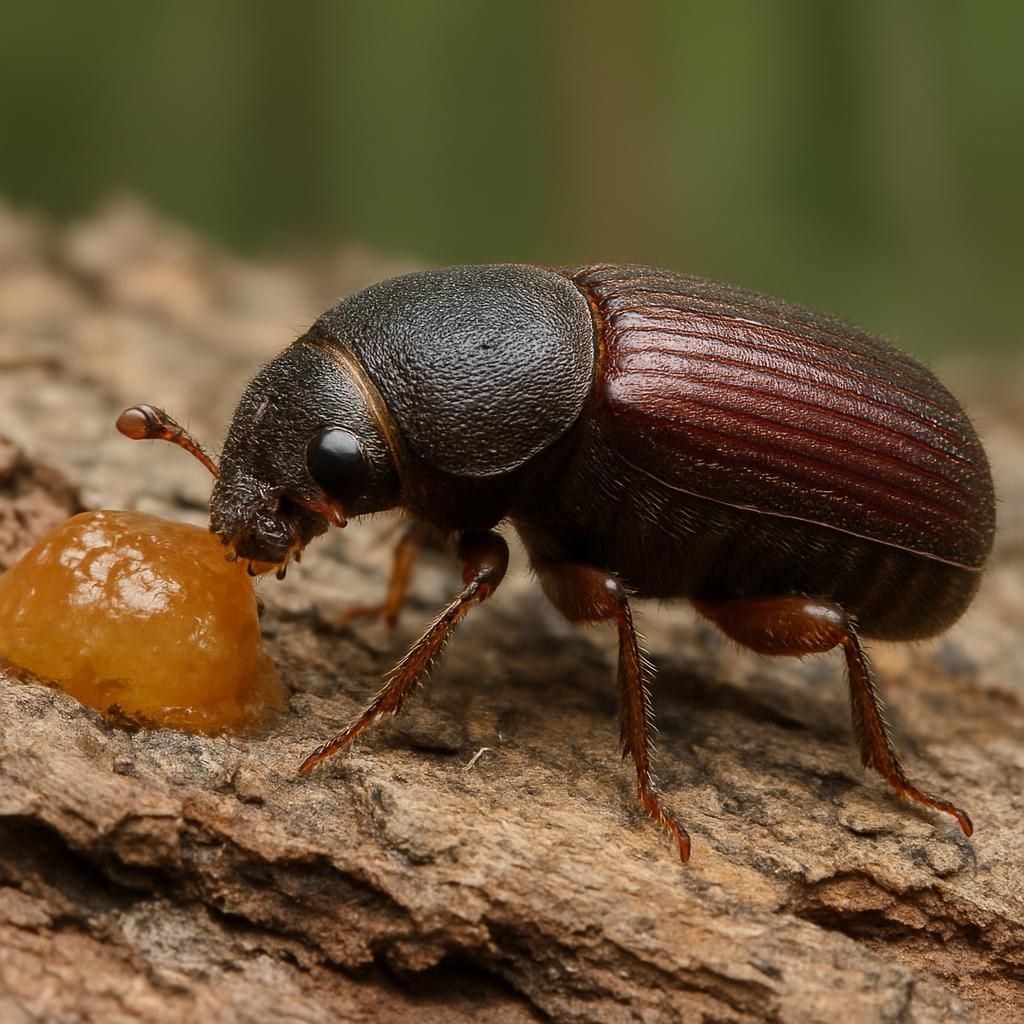
Introduction to Southern pine beetle
The Southern pine beetle (Dendroctonus frontalis) is a native bark beetle that poses a severe threat to pine forests across the southeastern United States and parts of Central America. This small, cylindrical insect measures 2.5–4 mm in length and is distinguished by its reddish-brown to black coloration. It targets stressed or healthy pines alike, often causing rapid tree mortality within weeks of infestation. The beetle's ability to overwhelm trees through coordinated mass attacks makes it a primary concern for foresters, landowners, and agricultural professionals managing pine plantations.
Identifying Symptoms & Damage
Early detection is critical for containing outbreaks. Initial signs include small (2–3 mm) resinous pitch tubes on the outer bark, often accompanied by fine reddish-brown boring dust accumulating at the base of the tree. Needles turn from green to yellow and then reddish-brown within 2–4 weeks as the tree succumbs. Beneath the bark, characteristic S-shaped or winding galleries packed with frass and blue-stain fungi (Ophiostoma minus) are visible upon removal of the outer bark layer. Multiple attack sites around the trunk circumference, along with exit holes from emerging adults, confirm active infestation. In advanced stages, entire stands may exhibit synchronized needle discoloration, signaling widespread mortality.
Lifecycle and Progression of Southern pine beetle (MUST INCLUDE A MARKDOWN TABLE OF LIFECYCLE STAGES)
The Southern pine beetle completes multiple generations per year in warmer climates, with development influenced heavily by temperature. Females initiate attacks by boring into the phloem, releasing aggregation pheromones that attract thousands of beetles. Both sexes construct galleries where females deposit eggs in niches along the sides. Larvae feed outward from the egg gallery, pupate in the outer bark, and adults emerge to disperse. Under optimal conditions (20–30°C), a generation can be completed in 30–45 days.
| Stage | Duration | Key Characteristics | Temperature Range |\n|----------------|-------------------|----------------------------------------------------------|-----------------------| | Egg | 4–10 days | Laid in phloem niches; white, oval | 15–32°C | | Larva | 10–20 days | White, legless; feeds on phloem creating winding galleries| 18–35°C | | Pupa | 5–10 days | Exarate pupa in outer bark chamber | 20–30°C | | Adult | 3–6 weeks active | Dispersal flight; mass attack on new hosts | 15–32°C |
Environmental Triggers & Risk Factors
Outbreaks are strongly linked to environmental stressors that weaken tree defenses. Prolonged drought reduces oleoresin flow, lowering resistance to attack. High stand density, poor soil drainage, and compacted soils further increase susceptibility. Temperatures above 32°C can accelerate development and shorten generation time, while mild winters allow more generations annually. Stands with a high proportion of mature loblolly, shortleaf, or slash pines are particularly vulnerable. Recent thinning, lightning strikes, or wind damage create entry points that facilitate initial colonization.
Organic Control & Treatment Plans (MUST INCLUDE A MARKDOWN TABLE OF TREATMENT OPTIONS AND FREQUENCIES)
Organic management focuses on cultural, mechanical, and biological tactics rather than synthetic insecticides. Sanitation harvesting removes infested trees before beetle emergence. Pheromone-baited traps and trap trees help monitor and reduce local populations. Promoting stand diversity and vigor through selective thinning improves tree resistance. Beneficial nematodes and entomopathogenic fungi offer targeted suppression in high-value areas.
| Treatment Option | Method | Frequency / Timing | Notes |
|---|---|---|---|
| Sanitation harvest | Remove infested trees + buffer | Within 2 weeks of detection | Prevents emergence; dispose of material |
| Pheromone traps | Frontalin + host volatiles | Deploy early spring; check weekly | Monitor populations; reduce attack pressure |
| Trap trees | Bait selected pines with pheromones | Replace every 4–6 weeks | Concentrate beetles for removal |
| Beneficial nematodes | Steinernema spp. application | Apply to base in late summer | Target larvae/pupae in bark |
| Stand thinning | Reduce basal area to 70–80 ft² | Every 5–7 years | Improves vigor and resin flow |
Preventing Southern pine beetle in the Future
Long-term prevention centers on proactive forest management. Maintain appropriate stocking levels through regular thinning to promote individual tree vigor. Diversify species composition by interplanting hardwoods where feasible. Monitor stands during drought periods and promptly address lightning or storm damage. Remove logging slash and stressed trees to eliminate breeding sites. Educate landowners on early symptom recognition to enable rapid response. Integrating these practices reduces the likelihood of large-scale outbreaks.
Crops Most Affected by Southern pine beetle
The Southern pine beetle primarily impacts pine species used for timber production. Loblolly pine (Loblolly Pine), shortleaf pine, slash pine, and longleaf pine are the most commonly attacked hosts. While not a traditional agricultural crop, pine plantations supply lumber, pulp, and resin industries. Secondary effects can include habitat loss for wildlife and increased wildfire risk in dead stands. No major food crops such as Tomato or Corn are directly affected.