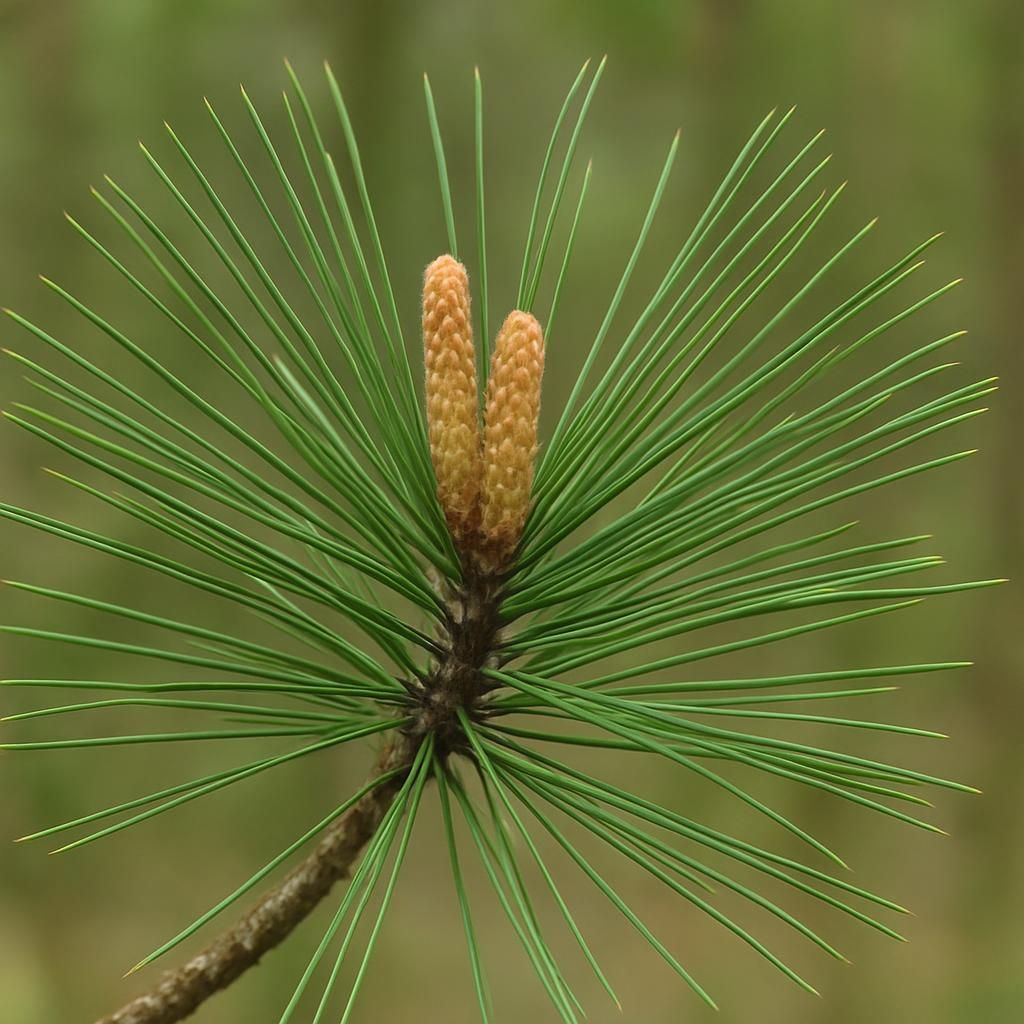
Introduction to Loblolly Pine
Loblolly pine (Pinus taeda) dominates commercial forestry across the southeastern United States, accounting for over half of the region’s pine volume. Its fast growth rate, straight bole, and adaptability to varied soils make it the preferred species for sawtimber, pulpwood, and engineered wood products. Professional plantations typically achieve merchantable size in 20–35 years depending on site quality and management intensity.
Beyond timber, loblolly pine provides critical ecosystem services including watershed protection, carbon sequestration, and wildlife habitat. Modern silviculture integrates improved genetics, mechanical site preparation, and vegetation control to optimize yields while maintaining soil health.
Botanical Profile of Loblolly Pine
Loblolly pine belongs to the Pinaceae family and is characterized by long needles in fascicles of three, measuring 6–9 inches. Cones are 3–6 inches long, serotinous when young, and release winged seeds that germinate readily on mineral soil. Mature trees reach 80–110 feet with diameters of 2–3 feet under optimal conditions.
The species exhibits strong apical dominance and relatively thin bark when young, becoming deeply furrowed with age. Its root system is shallow and wide-spreading, making it susceptible to windthrow on wet sites but responsive to fertilization on nutrient-poor soils.
Soil, pH, and Climate Requirements for Loblolly Pine
Successful establishment begins with matching site conditions to species requirements. Loblolly pine tolerates a broad range of textures but achieves maximum productivity on deep, well-drained sandy loams with moderate fertility.
| Parameter | Ideal Range | Notes |
|---|---|---|
| Soil Texture | Sandy loam to loam | Avoid heavy clays and poorly drained flats |
| Soil pH | 4.5 – 6.0 | Strongly acidic to slightly acidic |
| Annual Precipitation | 40 – 60 inches | Supplemental irrigation rarely needed |
| Mean Annual Temperature | 55 – 75 °F | Frost-free period >200 days |
| Elevation | 0 – 1,500 ft | Performs well on coastal plain sites |
| Drainage Class | Well to moderately well | Seasonal water table <18 inches harmful |
Step-by-Step Planting & Propagation
- Site assessment: Conduct soil tests and drainage evaluation 6–12 months before planting.
- Genetic selection: Choose improved seedlings from orchards with rust resistance and growth traits suited to target end-products.
- Site preparation: Shear, pile, and/or subsoil to reduce competition and improve root penetration.
- Planting window: Late fall through early spring when soils are moist but not saturated.
- Spacing: 8×10 ft (545 trees/acre) for sawtimber; 6×8 ft (908 trees/acre) for pulpwood.
- Planting depth: Root collar at or slightly below soil surface; avoid J-rooting.
- Initial vegetation control: Apply pre-emergent herbicides or mechanical cultivation within the first growing season.
Care & Maintenance regimes for Loblolly Pine
Professional regimes combine vegetation management, nutrition, and density control to reach target product specifications.
| Year | Water Management | Fertilizer Application | Pruning Schedule |
|---|---|---|---|
| 0–1 | Ensure 1 inch/week first summer | 200 lb/ac DAP at planting if P low | None |
| 2–3 | Monitor drought stress | 150–200 lb/ac N at age 2–3 | None |
| 4–8 | Natural rainfall sufficient | 200–300 lb/ac N + micronutrients | Lower 1/3 whorls at age 6–8 |
| 9–15 | None | Mid-rotation N at canopy closure | Prune to 18 ft clear bole |
| 16+ | None | Optional late-rotation N | None |
Pests, Diseases & Organic Management
Major threats include fusiform rust, southern pine beetle, and Nantucket pine tip moth. Integrated management begins with resistant planting stock and timely thinning to reduce stress.
Organic options include promoting beneficial insects, maintaining stand vigor through balanced nutrition, and removing infested material. Pheromone traps and sanitation harvests provide additional beetle suppression without synthetic insecticides.
Harvesting, Curing & Optimal Storage
Harvest timing depends on product class: pulpwood at 15–20 years, chip-n-saw at 20–25 years, and sawtimber at 25–35 years. Mechanized feller-bunchers and grapple skidders minimize soil compaction when used on frozen or dry ground.
Logs are typically transported to mills within 48 hours. For export or long-term storage, ends are sealed with wax emulsion and stacks are elevated on bearers to promote airflow and prevent fungal staining.
Companion Planting for Loblolly Pine
Understory legumes such as clover improve nitrogen availability and reduce erosion on young plantations. Interplanting with southern red oak or longleaf pine on appropriate microsites can enhance biodiversity and reduce pest pressure through mixed-species stands.
Avoid planting heavy competitors such as sweetgum or yellow-poplar within the first five years unless vegetation control budgets are increased.