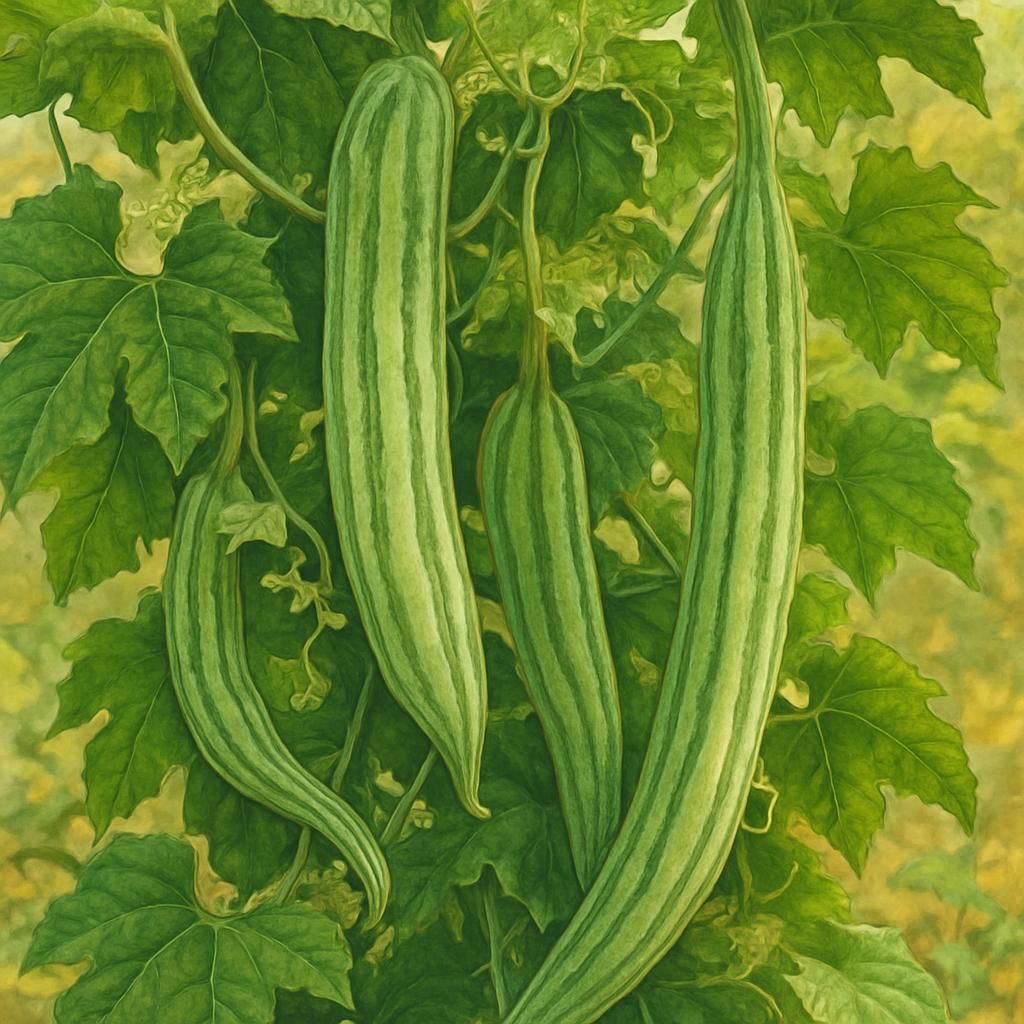
Introduction to Snake Gourd (Chichinda)
Snake Gourd, also known as Chichinda, is a versatile and vigorous climbing vine from the cucumber family. It is renowned for its uniquely elongated, serpentine fruit that can grow up to several feet long. This tropical and subtropical crop is native to India but is grown across Southeast Asia due to its culinary and medicinal usage. The fruit is rich in fiber and low in calories, making it a popular choice for health-conscious individuals.
Botanical Profile of Snake Gourd (Chichinda)
Botanically known as Trichosanthes cucumerina, Snake Gourd belongs to the Cucurbitaceae family, which also includes pumpkins, melons, and cucumbers. It is a fast-growing annual, requiring support for its vines that can reach up to five meters. The plant produces white flowers with a unique, fringed appearance and fruits that range in color from green to red as they mature.
Soil, pH, and Climate Requirements for Snake Gourd (Chichinda)
Snake Gourd thrives in warm and humid climates with well-draining, fertile soil. It is relatively tolerant of a variety of soil conditions, though optimal growth is achieved under specific pH levels and temperature ranges.
| Aspect | Ideal Conditions |
|---|---|
| Soil Type | Sandy loam, well-drained |
| Soil pH | 6.0 to 6.7 |
| Temperature Range | 25°C to 35°C |
| Rainfall | 1000 mm to 1500 mm annually |
Step-by-Step Planting & Propagation
- Seed Sourcing: Choose high-quality seeds or seedlings from a reputable supplier.
- Site Selection: Select a sunny spot with support structures for the climbing vines.
- Soil Preparation: Prior to planting, enrich the soil with organic matter such as compost or well-rotted manure.
- Planting: Sow seeds about 2 cm deep, spacing them 2 to 3 feet apart in rows.
- Germination: Seeds typically germinate within 10 to 15 days. Maintain soil moisture but avoid waterlogging.
Care & Maintenance Regimes for Snake Gourd (Chichinda)
Proper care and maintenance are essential to ensure healthy growth and high yield.
| Activity | Schedule |
|---|---|
| Watering | Twice a week, increase in dry spells |
| Fertilizer | Every five weeks using a nitrogen-rich blend |
| Pruning | Regularly, to remove dead or overcrowded leaves |
Pests, Diseases & Organic Management
Common pests include Spider Mites and aphids, both controllable with neem oil sprays. Diseases such as powdery mildew and mosaic viruses can be managed with appropriate crop rotation and removal of infected plants. Read more about organic pest management in our Crop Diseases Under the Microscope: 9 Organic Fixes for Small Farm Resilience.
Harvesting, Curing & Optimal Storage
Harvest Snake Gourd when the fruits are still immature—around 60 to 75 days post-sowing—for the best taste and texture. Curing is not needed for this crop. Store harvested gourds in a cool, dry place, which can extend freshness for about two weeks.
Companion Planting for Snake Gourd (Chichinda)
Snake Gourd can be strategically planted with peppers, beans, or Cherry Tomato (Sungold) for mutual growth benefits. Such combinations improve soil fertility and reduce pest incidence. Explore more about companion planting benefits in our blog post Summer Companion Planting: 10 Organic Pairings to Boost Small Farm Resilience.