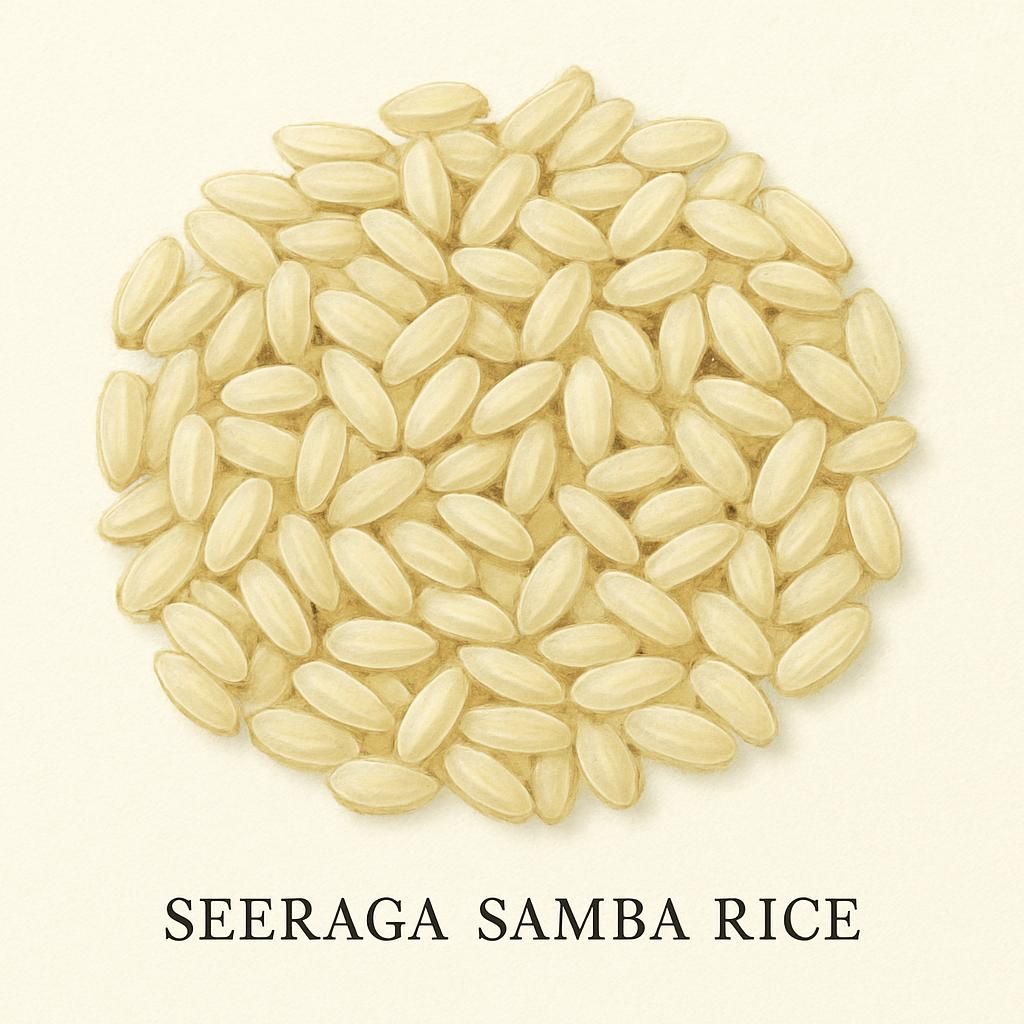
Introduction to Seeraga Samba Rice
Seeraga Samba Rice, renowned for its small size and rich aroma, is a staple in South Indian cuisine, particularly for preparing biryani. This traditional rice variety derives its name from its resemblance to cumin seeds (seeragam in Tamil) and is exclusively grown in the Tamil Nadu region of India.
Botanical Profile of Seeraga Samba Rice
Belonging to the species Rice (Oryza sativa), Seeraga Samba is a short-grain rice that matures in approximately 120 days. Its cultivation is deeply rooted in South Indian tradition, making it a cultural as well as agricultural symbol.
Soil, pH, and Climate Requirements for Seeraga Samba Rice
For optimal growth, Seeraga Samba Rice requires specific soil and climate conditions. This variety thrives in loamy, well-drained soil with a slightly acidic to neutral pH. The climatic needs call for high humidity and a consistent supply of water.
| Parameter | Ideal Condition |
|---|---|
| Soil Type | Loamy, well-drained |
| Soil pH | 6.0 - 7.5 |
| Temperature | 20°C - 25°C |
| Rainfall | 1250 mm annually |
| Humidity | High |
Step-by-Step Planting & Propagation
- Seed Selection: Choose high-quality, disease-free seeds from a reliable source.
- Land Preparation: Properly plow the field and level it for uniform water distribution.
- Sowing: Direct seeding can be used or seedlings can be transplanted.
- Spacing: Maintain row spacing of 20 cm for optimal growth.
- Water Management: Ensure consistent irrigation, especially during the vegetative and reproductive stages.
Care & Maintenance Regimes for Seeraga Samba Rice
Successful cultivation of Seeraga Samba Rice hinges on stringent care and maintenance practices.
| Period | Watering | Fertilizer Application | Pruning |
|---|---|---|---|
| Early Growth | Maintain moisture levels | Nitrogen-rich fertilizers | Not required |
| Mid Growth | Regular flooding | Balanced NPK application | Not required |
| Pre-Harvest | Reduce water levels | Potassium and Phosphorus | Prepare for harvesting |
Pests, Diseases & Organic Management
Common pests like Spider Mites can plague this crop. Diseases include bacterial leaf blight and sheath rot. Organic management strategies include:
- Regular monitoring and maintaining field hygiene.
- Use of neem oil and bio-pesticides as preventive measures.
For additional strategies to combat these issues, consider reading our article on Crop Diseases Under the Microscope: 9 Organic Fixes for Small Farm Resilience.
Harvesting, Curing & Optimal Storage
Harvesting should commence when the grains are fully matured, usually signified by the yellowing of the stalks. Post-harvest, allow the grains to dry in a well-ventilated area to reduce moisture content. Store in a cool, dry place to prevent fungal growth.
Companion Planting for Seeraga Samba Rice
Seeraga Samba Rice can benefit from companion planting to enhance growth and pest resistance. Herbs such as Marigold and spices like Black Pepper are effective companions that naturally deter pests and enhance soil quality.