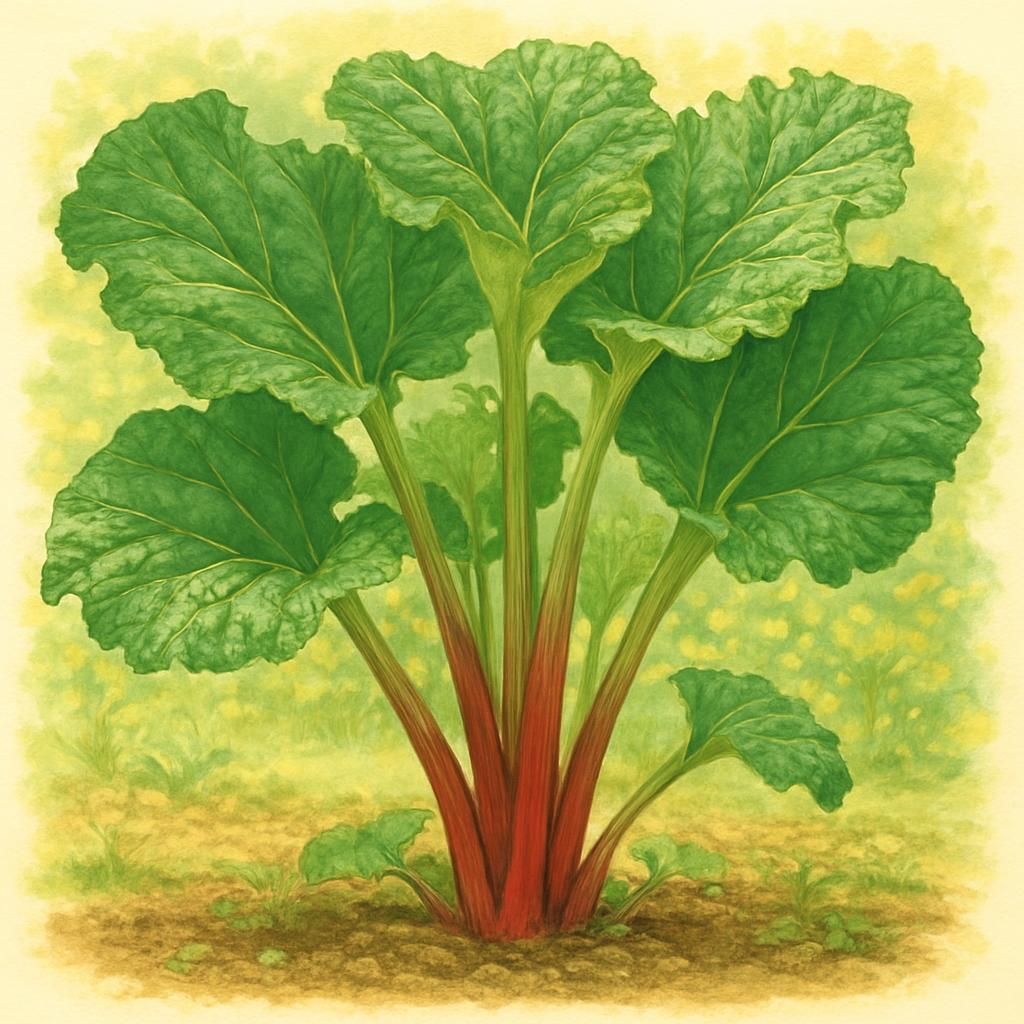
Introduction to Rhubarb (Victoria)
Rhubarb (Victoria) is a perennial plant cherished for its edible stalks that offer a distinct tartness. Often used in pies, sauces, and jams, this crop is beloved in many gardens for its ease of growing and vibrant presence.
Botanical Profile of Rhubarb (Victoria)
Rhubarb, belonging to the family Polygonaceae, is primarily grown for its leaf stalks. The "Victoria" variety is renowned for its robustness and heavy yields. It produces large, greenish-red stalks and can thrive in gardens with the right conditions.
Soil, pH, and Climate Requirements for Rhubarb (Victoria)
Rhubarb (Victoria) flourishes in cooler climates with well-drained fertile soil. It demands a period of winter chill to break dormancy and yield successfully.
| Condition | Ideal Range |
|---|---|
| Soil Type | Well-drained, fertile, high organic matter |
| Soil pH | 6.0 - 6.8 |
| Climate | Cool to temperate |
| Temperature | 40°F - 75°F (5°C - 24°C) |
Step-by-Step Planting & Propagation
- **Site Selection: ** Choose a location with full sun, though partial shade can be tolerated, especially in warmer climates.
- Soil Preparation: Enhance soil with compost or well-rotted manure to improve fertility and drainage.
- Planting: Rhubarb crowns should be planted in early spring or late fall. Space crowns around 3 feet apart.
- Propagation: Use division of established plants in early spring.
- Watering: Keep the soil moist, especially during dry spells.
Care & Maintenance Regimes for Rhubarb (Victoria)
Maintaining a healthy rhubarb crop involves regular care, focusing on weed control and ensuring adequate nutrition and moisture.
| Aspect | Regimen |
|---|---|
| Watering | 1 inch/week; more in dry periods |
| Fertilization | Apply balanced fertilizer in early spring |
| Pruning | Remove flowering stalks to promote growth |
Pests, Diseases & Organic Management
Rhubarb (Victoria) can be affected by pests such as Spider Mites and diseases including crown rot and leaf spot. Using organic management strategies like neem oil for pests and ensuring good air circulation to prevent fungal diseases is advised.
Harvesting, Curing & Optimal Storage
Harvest rhubarb stalks from late spring through summer. Do not harvest in the first year to allow plants to establish.
- Curing: Not required. Stalks should be consumed or processed shortly after harvest.
- Storage: Keep stalks in a cool, humid place, or refrigerate in plastic bags.
Companion Planting for Rhubarb (Victoria)
Planting rhubarb with other crops like Strawberries can be beneficial due to its ability to deter pests and help in diversifying biodiversity in the garden. Consider diversifying your crops as a measure explored in the Summer Companion Planting: 10 Organic Pairings to Boost Small Farm Resilience.