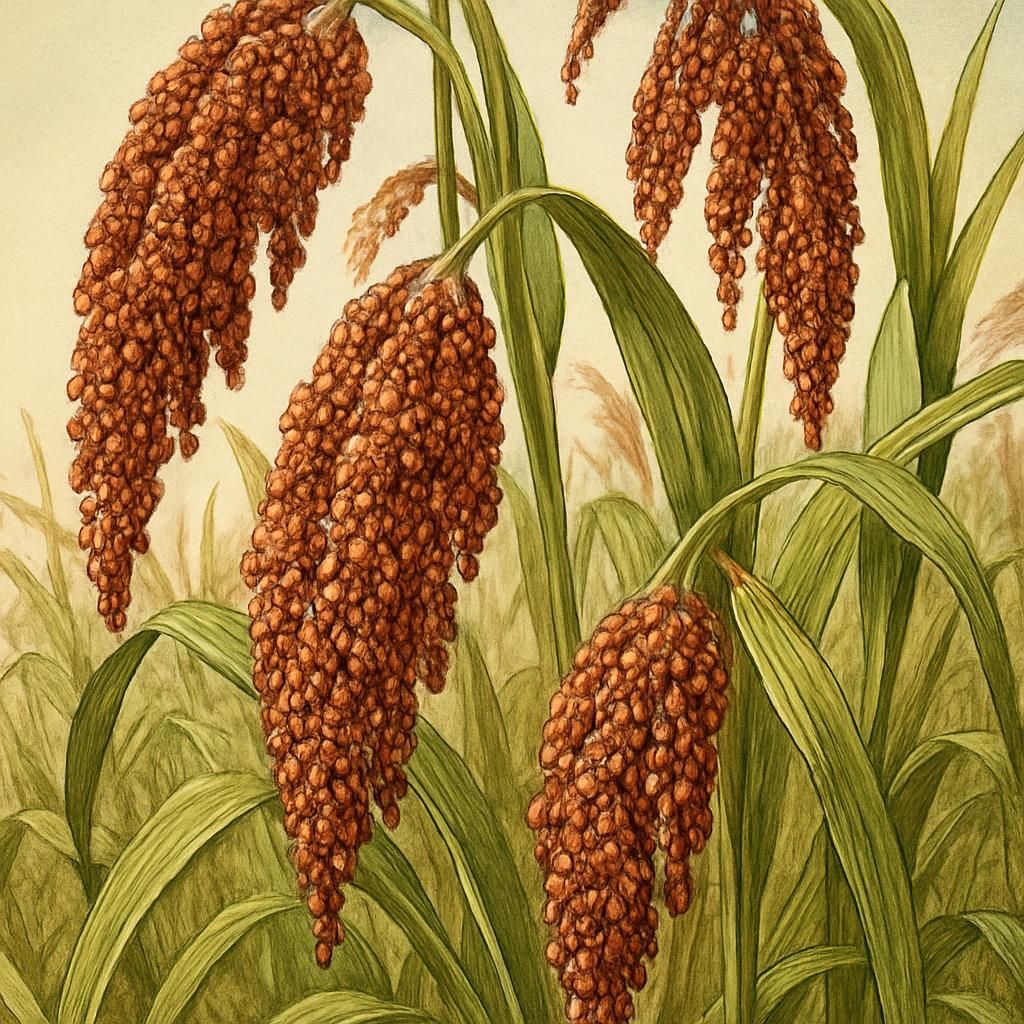
Introduction to Proso Millet (Red Turghai)
Proso Millet (Red Turghai) is a resilient and adaptable grain crop cultivated primarily for its seeds. Originating from East Asia, it has gained popularity across the world for both human consumption and livestock feed. This millet variety is valued for its high drought tolerance and its ability to grow in poor soil conditions where other crops might fail.
Botanical Profile of Proso Millet (Red Turghai)
The scientific name for Proso Millet is Panicum miliaceum. It belongs to the Poaceae family, which is a vast family of grasses. The plant is characterized by thin, fibrous roots and grows to about 1-1.5 meters in height. Its seeds are small, rounded, and covered by a hull which is usually removed during processing.
Proso Millet's quick growth cycle of 60-90 days from seed to harvest makes it an advantageous crop for regions with short growing seasons. The grains are rich in carbohydrates and proteins and are gluten-free, making it a health-conscious choice for consumers.
Soil, pH, and Climate Requirements for Proso Millet (Red Turghai)
Proso Millet thrives in well-drained soils and demonstrates a high degree of tolerance to a range of soil types, including sandy and loamy soils. Its adaptability makes it a suitable crop for both temperate and tropical climates.
| Requirement | Optimal Condition |
|---|---|
| Soil Type | Well-drained, sandy, loamy |
| Soil pH | 6.0 - 7.5 |
| Temperature | 20°C - 30°C (68°F - 86°F) |
| Rainfall | 350 - 650 mm annually |
| Altitude | Up to 2000 meters |
Step-by-Step Planting & Propagation
Site Selection: Choose a site with full sunlight and well-draining soil.
Soil Preparation: Till the soil to a fine tilth and incorporate organic matter to enhance fertility.
Sowing: Direct sowing is recommended. Plant seeds at a depth of 1-2 cm, with a spacing of 10-15 cm between plants and 30-40 cm between rows.
Planting Time: Sow seeds in late spring or early summer when temperatures range from 20-30°C (68-86°F).
Germination: Seeds typically germinate within 7-10 days under optimal conditions.
Care & Maintenance Regimes for Proso Millet (Red Turghai)
Regular care and maintenance are required to achieve optimal growth and yield.
| Task | Schedule |
|---|---|
| Watering | Moderate, avoid waterlogging |
| Fertilizing | Apply balanced NPK fertilizer at planting |
| Pruning | Not required |
Guidelines:
- Watering: Water deeply once a week, more frequently in drought conditions.
- Fertilizing: A balanced NPK (10-10-10) fertilizer applied at sowing will suffice. Additional nitrogen can be applied at the tillering stage to boost growth.
Pests, Diseases & Organic Management
Proso Millet is susceptible to several pests and diseases including Spider Mites and rust fungi.
Common Pests and Diseases:
- Spider Mites: These pests are controlled by increasing humidity and applying neem oil or insecticidal soap.
- Rust Fungi: Rust fungi, prevalent in humid climates, can be managed through crop rotation and using resistant varieties.
For comprehensive pest management strategies, refer to our blog on 7 Summer Pest Traps That Sabotage Small Farm Harvests.
Harvesting, Curing & Optimal Storage
Proso Millet is ready to harvest when the grains appear fully mature, usually when the plants have dried completely. Harvesting is done by cutting the plants at the base and then threshing to separate the grains.
Steps for Harvesting:
- Allow the grain heads to mature and dry on the plant.
- Cut the stalks and allow them to dry for about a week in a well-ventilated area to reduce moisture content.
- Thresh the millet to remove grains.
- Store the cleaned grains in airtight containers to prevent pest infestation and moisture absorption.
Companion Planting for Proso Millet (Red Turghai)
Companion planting enhances growth and reduces pest incidence. Suitable companions include:
- Marigold - Known for its natural pest-repelling properties.
- Nasturtium - Acts as a trap crop to lure harmful insects away.
Integrating diverse crops create a resilient agricultural ecosystem, as discussed in our blog Summer Companion Planting: 10 Organic Pairings to Boost Small Farm Resilience.