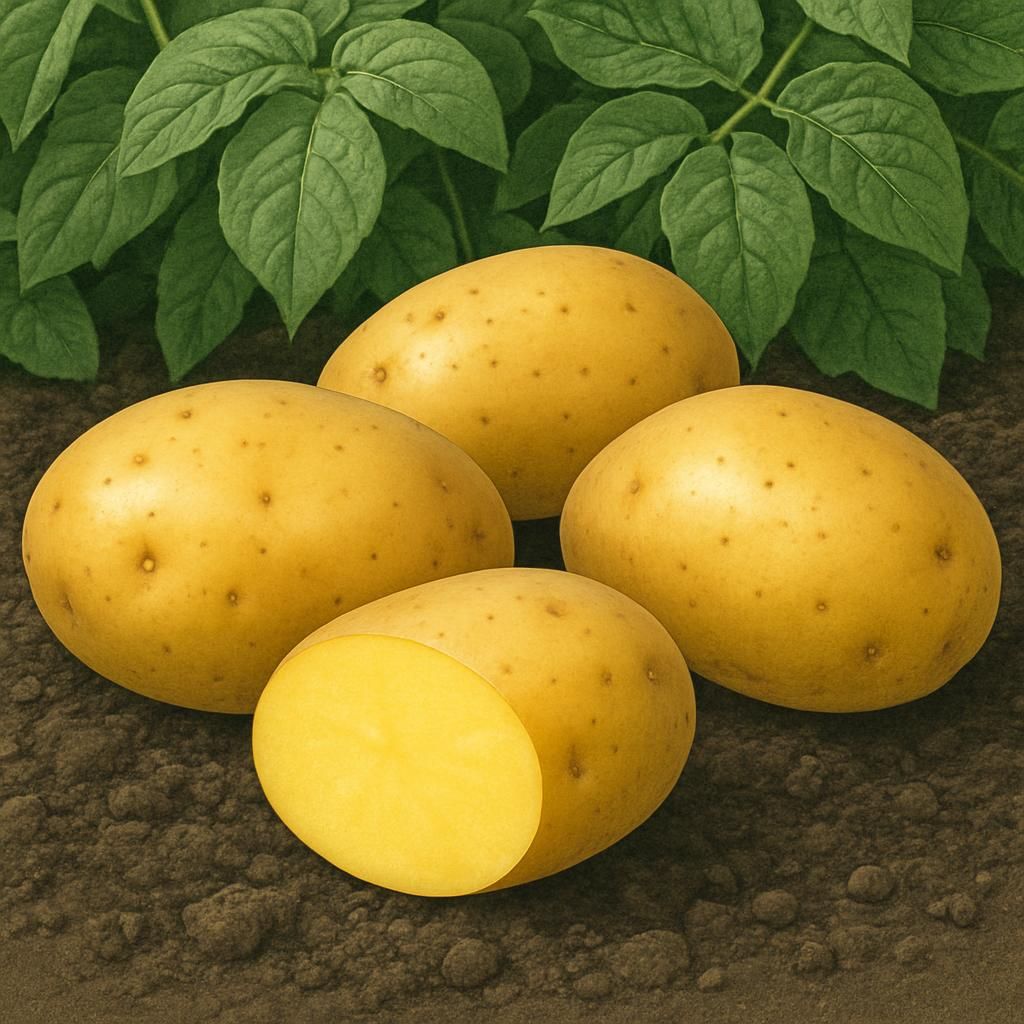
Introduction to Potato (Yukon Gold)
Yukon Gold potatoes are one of the most popular yellow-fleshed varieties grown worldwide. Released by Agriculture Canada in 1980, this cultivar quickly gained favor for its smooth, thin golden skin, shallow eyes, and rich, buttery flavor that requires little added fat. Home gardeners and commercial growers alike appreciate its early-to-mid season maturity (70–90 days), high yields, and excellent storage characteristics. Whether mashed, roasted, fried, or boiled, Yukon Gold consistently delivers superior taste and texture.
This definitive growing guide covers every aspect of successful cultivation, from botanical characteristics and site selection through harvesting and curing. Emphasis is placed on sustainable, organic-compatible practices that reduce chemical inputs while protecting soil health and beneficial insect populations. Following these evidence-based recommendations will help both small-scale and larger producers achieve consistent, high-quality crops.
Botanical Profile of Potato (Yukon Gold)
Yukon Gold belongs to the nightshade family, Solanaceae, and is a tetraploid cultivar of Potato. Plants produce compact, upright vines reaching 60–90 cm in height with dark green, compound leaves. Flowers are typically pale lavender with yellow centers and may set small, round, toxic berries containing true botanical seeds. The primary means of propagation remains vegetative through seed tubers or seed pieces.
The tubers themselves feature smooth, thin yellow skin and bright yellow flesh that retains color after cooking. Eye depth is shallow, reducing waste during preparation. Yukon Gold exhibits moderate resistance to common scab and some tolerance to potato virus Y, although it remains susceptible to late blight and several soil-borne pathogens.
Soil, pH, and Climate Requirements for Potato (Yukon Gold)
Yukon Gold performs best in well-drained, fertile loam or sandy loam soils with good structure. Heavy clay soils should be amended with organic matter or grown in raised beds to prevent waterlogging and tuber rot. The crop is sensitive to soil compaction; avoid working wet ground.
| Parameter | Ideal Range | Notes |
|---|---|---|
| Soil pH | 5.5–6.5 | Slightly acidic; liming raises pH too high |
| Soil Type | Sandy loam to loam | Excellent drainage critical |
| Organic Matter | 3–5 % | Improves structure and moisture retention |
| Soil Temperature at Planting | 7–13 °C (45–55 °F) | Prevents seed-piece decay |
| Air Temperature Range | 15–24 °C (59–75 °F) daytime | Cool nights enhance tuber set |
| Frost Tolerance | Light frost (-2 °C) tolerable | Protect emerging shoots from hard freezes |
| Day Length | 12–16 hours | Long days promote vegetative growth |
Adequate potassium and phosphorus are essential; conduct a soil test and amend according to results. Avoid fresh manure, which can promote scab.
Step-by-Step Planting & Propagation
- Source certified disease-free seed tubers of Yukon Gold at least 4–6 weeks before planting.
- Greensprout tubers by placing them in a bright, cool (10–15 °C) location with indirect light for 2–4 weeks until short, sturdy sprouts form.
- Cut large tubers into pieces each containing at least one strong sprout and 40–60 g of tuber tissue; allow cut surfaces to suberize 24–48 hours.
- Prepare planting trenches or hills 10–15 cm deep, spaced 75–90 cm between rows.
- Plant seed pieces 30 cm apart, 10 cm deep, with eyes facing upward.
- As shoots emerge, begin hilling soil around stems when plants reach 15–20 cm tall; repeat every 2–3 weeks until vines begin to flower.
Care & Maintenance regimes for Potato (Yukon Gold)
Consistent moisture and balanced nutrition are critical during tuber initiation and bulking. Mulch between rows with straw or shredded leaves to suppress weeds, conserve moisture, and moderate soil temperature.
| Growth Stage | Watering Schedule | Fertilizer Application | Pruning / Hilling Notes |
|---|---|---|---|
| Pre-emergence | Maintain even moisture; 2.5 cm/week | Incorporate 4-8-8 at 500 kg/ha pre-plant | Hill lightly after 50 % emergence |
| Vegetative (up to flowering) | 2.5–3.8 cm/week; drip irrigation ideal | Side-dress 10-10-10 at 200 kg/ha | Hill 2–3 times; remove weeds |
| Tuber Bulking | 3.8 cm/week; avoid water stress | Apply potassium sulfate if deficiency | Cease hilling once canopy closes |
| Maturation | Reduce to 1.5 cm/week 2 weeks pre-harvest | No additional N after flowering | Allow natural vine senescence |
Scout weekly for nutrient deficiencies; yellowing older leaves often indicate nitrogen shortage, while marginal leaf scorch suggests potassium deficiency.
Pests, Diseases & Organic Management
Major insect threats include Colorado potato beetle, aphids, and flea beetles. Handpick beetle adults and larvae or apply organic spinosad when thresholds are exceeded. Floating row covers during early growth deter flea beetles. Beneficial insects such as lady beetles and lacewings help control aphids.
Key diseases are late blight, early blight, common scab, and black scurf. Use certified seed, practice 3–4 year rotations away from solanaceous crops, and remove volunteer plants. Copper-based fungicides or Bacillus subtilis products provide organic suppression of foliar blights when applied preventively. Improve soil biology with compost teas and cover crops to reduce soil-borne pathogens.
Harvesting, Curing & Optimal Storage
Yukon Gold reaches maturity 70–90 days after planting when vines begin to yellow and skins set firmly. For new potatoes, harvest 50–60 days after planting while skins are thin. For storage, wait until vines are completely dead or kill them 10–14 days before lifting.
Cure freshly dug tubers in a dark, humid (85–90 % RH) location at 12–15 °C for 10–14 days to heal harvest wounds. Store at 4–7 °C and 90–95 % relative humidity with good ventilation; avoid refrigeration below 4 °C to prevent sugar accumulation. Properly cured Yukon Gold maintains quality for 4–6 months.
Companion Planting for Potato (Yukon Gold)
Compatible companions include beans, peas, cabbage, corn, and marigolds. Legumes fix nitrogen and improve soil structure. Aromatic herbs such as rosemary and thyme mask potato foliage from pests. Avoid planting near tomatoes, peppers, eggplants, or strawberries, which share many pests and diseases.
Stop Treating Tomato Blight Like a Spray Problem: Here Is What Works Better