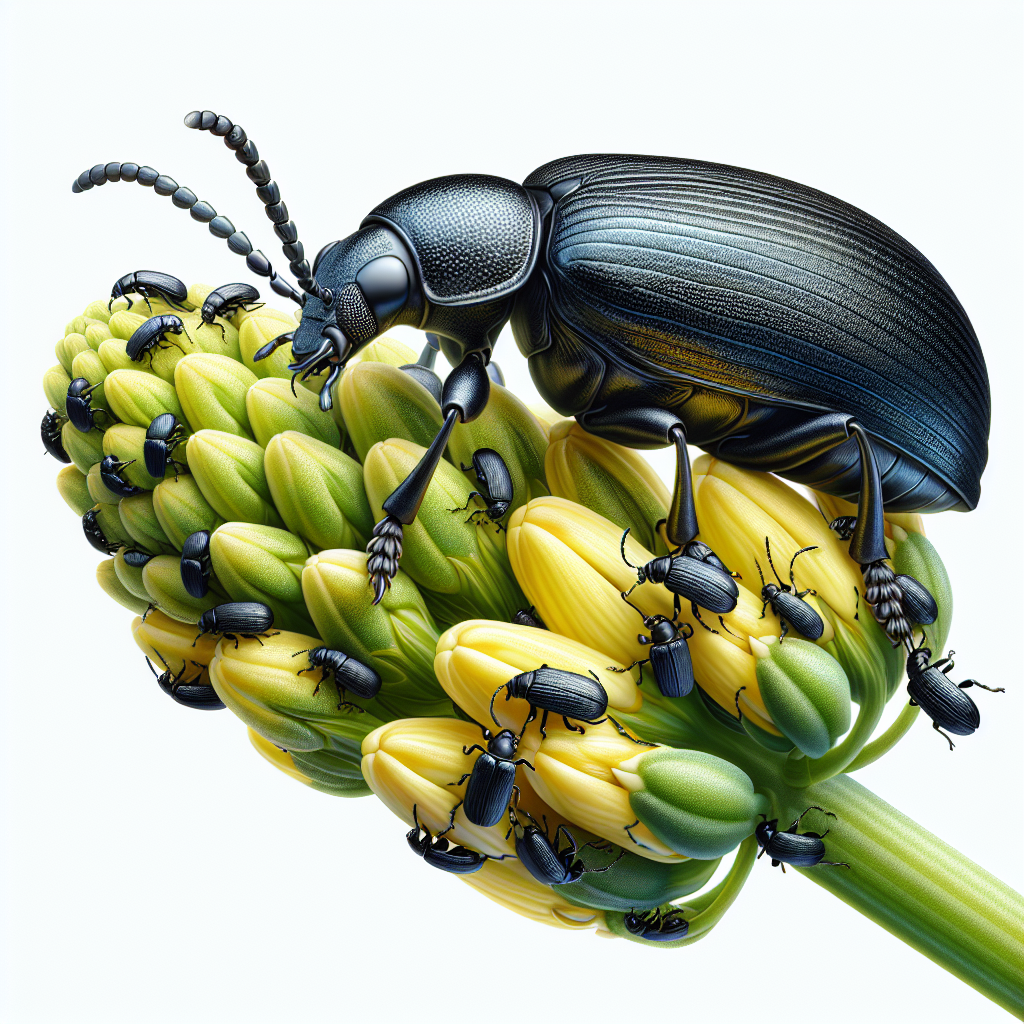
Introduction to Pollen beetle
Pollen beetles, scientifically known as Meligethes aeneus (also referred to as blossom beetles or rape flower beetles), are among the most notorious pests in brassica crops across Europe, North America, and parts of Asia. These tiny insects, measuring just 2-3 mm in length, have a distinctive glossy black or bronze appearance and a blunt-ended body. While they primarily feed on pollen, they cause indirect damage by feeding on buds and open flowers, leading to aborted buds, reduced pod set, and overall yield declines of up to 50% in severe infestations.
Farmers growing oilseed rapeseed or mustard often encounter pollen beetles during early spring when crops are at the green-yellow bud stage. These beetles overwinter as adults in field edges, hedgerows, and woodlands, emerging to invade crops as temperatures rise. Understanding their behavior is crucial for timely intervention. This definitive guide covers identification, lifecycle, triggers, organic controls, prevention, and affected crops, empowering growers to protect their yields sustainably. With integrated pest management (IPM), pollen beetle pressure can be managed without over-relying on chemicals, preserving beneficial insects like pollinators.
Identifying Symptoms & Damage
Spotting pollen beetle damage early is key to preventing economic losses. Adult beetles are attracted to yellow-green tissues, congregating on buds where they chew into the developing flowers. Key symptoms include:
- Clusters of beetles on buds: Look for 5-10 or more shiny black beetles per raceme, especially on the outer edges of fields.
- Bud abortion: Affected buds turn yellow, shrivel, and fail to open, dropping prematurely. This is the hallmark sign, often mistaken for frost damage or nutrient deficiency.
- Flower damage: Open flowers may show petal nibbling, with beetles feeding on pollen inside. Severe cases lead to empty pods or reduced seed fill.
- Pod distortion: Indirectly, heavy feeding reduces pod numbers by 20-30%, stunting overall plant growth.
To diagnose accurately, use a sweep net or beat sheet: Shake plants over a white tray and count beetles. Thresholds vary: >10 beetles per plant at green bud stage, or >4 per plant at yellow bud stage warrant action. Differentiate from similar pests like flea beetles, which create shot-hole leaves rather than bud damage. Scouting twice weekly from bud formation helps track progression.
Yield impacts are crop-stage dependent: Pre-flower damage hits hardest, potentially slashing oilseed rape yields by 0.5-1 ton/ha. In organic systems, symptoms may appear patchy due to natural enemy activity. Always check field margins first, as beetles migrate inward.
Lifecycle and Progression of Pollen beetle
Pollen beetles complete one generation per year, with a lifecycle tightly synced to brassica flowering. Here's the progression:
Overwintering (Autumn-Winter): Adults burrow into soil, leaf litter, or hedgerows, entering diapause below 10°C. They remain dormant until spring.
Adult emergence (March-April): As mean temperatures exceed 9-11°C for several days, adults fly to winter oilseed rape or hedgerows for initial pollen feeding.
Migration to crops (April-May): Drawn by volatiles from green-yellow buds, females lay 200-300 eggs singly inside buds over 20-30 days. Peak migration coincides with crop bud stages 2-5 cm diameter.
Larval stage (May-June): Pale grey larvae (up to 6 mm) emerge after 5-10 days, feeding on pollen and styles for 2-4 weeks. They pupate in soil.
New adult generation (June-July): Summer adults feed briefly on flowering brassicas or volunteers before seeking overwintering sites by August.
Total lifecycle: 40-60 days. Larvae cause minimal direct damage but indicate imminent adult migration. Monitoring flight with yellow water traps (one per ha) predicts influx 7-10 days ahead. In warmer climates, a partial second generation may occur, extending pressure into summer.
Environmental Triggers & Risk Factors
Pollen beetle outbreaks are driven by weather and farm practices:
Temperature thresholds: Emergence at >11°C sustained; migration peaks at 12-15°C. Mild winters reduce mortality, boosting populations.
Crop phenology: Unsynchronized flowering or late-sown varieties prolong exposure.
Field characteristics: Exposed field edges, weedy margins, and proximity to overwintering sites (<100m) increase risk. Small fields (<5 ha) face higher pressure.
Previous crop history: Volunteer brassicas or stubble harbor beetles. Drought-stressed crops emit stronger attractants.
Other factors: Low natural enemies (e.g., from broad-spectrum sprays) and climate change (warmer springs) exacerbate issues. High beetle numbers follow wet springs favoring survival.
Risk assessment: Use degree-day models (base 9°C) from January 1. Scores >200 DD signal scouting. For more on predictive tools, check this Spring Pest Patrol blog.
Organic Control & Treatment Plans
Organic management emphasizes IPM, avoiding broad-spectrum insecticides to protect pollinators. Step-by-step plan:
Monitoring: Scout edges first, using beating trays. Act if thresholds exceeded.
Cultural controls: Plant early-maturing varieties resistant to bud damage. Destroy volunteers and stubble. Use trap crops like mustard strips.
Biological controls: Encourage parasitoids (e.g., Ichneumonids) and predators like ground beetles. Release Tersilochus melanoscelus wasps.
Organic sprays: Neem oil or pyrethrum at early thresholds, evening applications. Insecticidal soaps target adults. Rotate actives.
Physical barriers: Row covers over small areas during bud stage.
Attract-and-kill: Yellow sticky traps baited with pollen lures, placed at edges.
Integrated plan: Week 1 scout; Week 2 cultural tweaks; Threshold hit: spray + boost enemies. Efficacy: 70-90% reduction. Avoid spraying flowers to spare bees. For brassicas like Canola (Rapeseed), combine with companion planting (nasturtium borders repel beetles).
Preventing Pollen beetle in the Future
Long-term prevention builds resilient systems:
Crop rotation: 1:4 years out of brassicas; include cereals like wheat.
Variety selection: Choose beetle-resistant hybrids (e.g., low-glucosinolate).
Habitat management: Mow hedgerows pre-emergence; plant beetle banks (wildflower strips) 50m from crops to intercept migrants.
Soil health: Healthy soils support natural enemies. See Soil Health Mastery blog.
Timing: Sow early to escape peak migration.
Annual IPM cycle reduces populations 50% over 3 years. Monitor overwintering sites post-harvest.
Crops Most Affected by Pollen beetle
Pollen beetles target Brassicaceae family:
Oilseed rape/canola (primary host, 80% damage).
Mustard (brown, white, yellow varieties).
Turnips, swedes (forage).
Vegetable brassicas (kale, cabbage at flowering).
Secondary: Hesperis, wild mustard. Rare on non-brassicas. In rapeseed, losses hit £50-100/ha untreated. Diversify rotations with non-hosts like peas to break cycles.