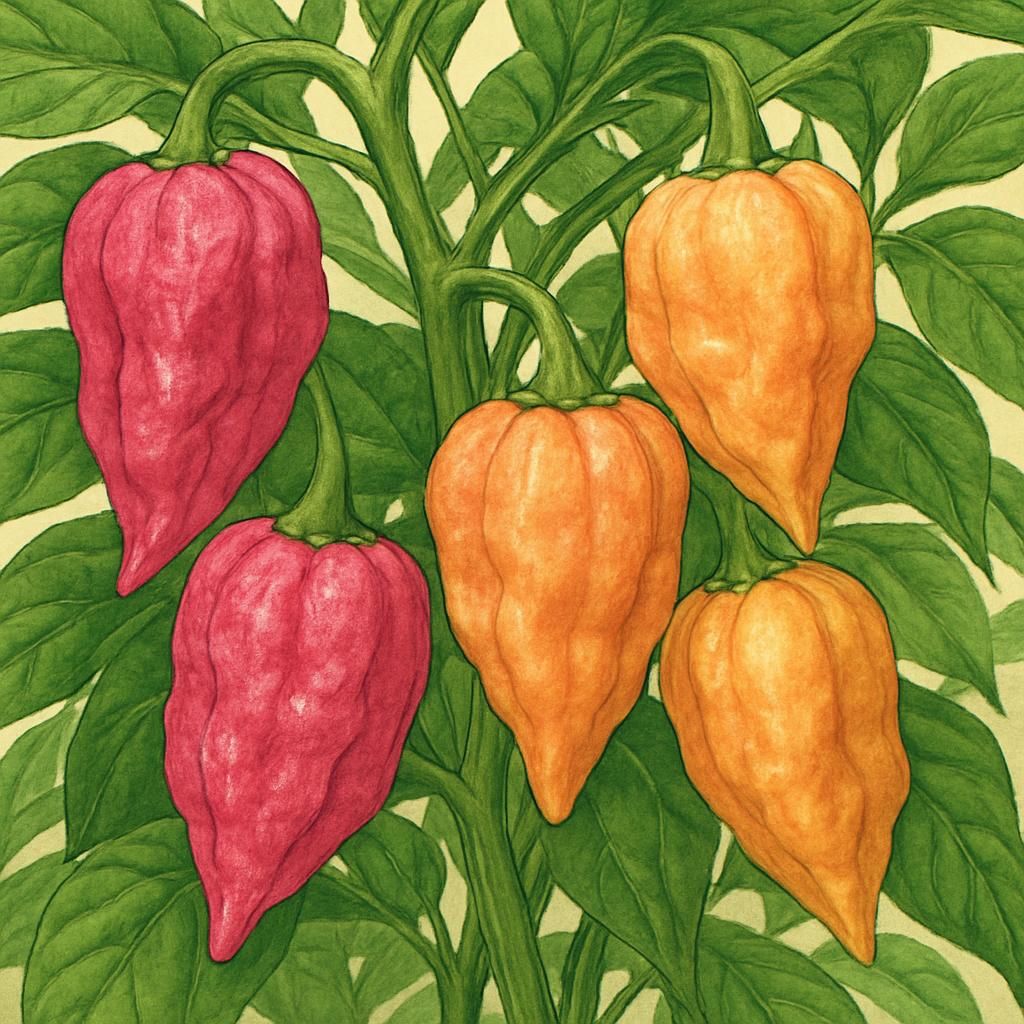
Introduction to Pink Tiger x Peach Ghost
The Pink Tiger x Peach Ghost pepper is a captivating hybrid resulting from the crossbreeding of two spicy titans: the Pink Tiger pepper and the Ghost Pepper. Known for its vibrant color and intense heat, this pepper is not just a feast for the eyes but a fiery sensation for the palate as well. Cultivated by pepper enthusiasts and professional growers alike, this variety offers a unique challenge and reward due to its specific growing needs.
Botanical Profile of Pink Tiger x Peach Ghost
As a member of the Capsicum chinense species, the Pink Tiger x Peach Ghost showcases remarkable characteristics typical of chinense varieties. It is renowned for its vivid hues transitioning from green to shades of pink and peach upon maturation. The peppers are medium-sized with a distinct wrinkled appearance, typical of many super-hot pepper varieties.
Soil, pH, and Climate Requirements for Pink Tiger x Peach Ghost
This hybrid pepper thrives in warm environments with consistent temperatures and plenty of sunlight. Soil must be well-draining and rich in organic matter, enhancing nutrient uptake for optimal growth. Below is a detailed markdown table covering the ideal conditions for cultivating Pink Tiger x Peach Ghost peppers:
| Aspect | Ideal Condition |
|---|---|
| Soil Type | Loamy, well-drained |
| Soil pH | 6.0 - 6.8 |
| Temperature | 70-85°F (21-29°C) |
| Sunlight | Full sun |
| Watering | Moderate, avoid waterlogging |
Step-by-Step Planting & Propagation
- Seed Preparation: Start with high-quality seeds from a reputable supplier. Soak seeds in warm water for 6-8 hours before planting to encourage germination.
- Sowing: Begin sowing seeds indoors 8-10 weeks before the last expected frost. Plant seeds 1/4 inch deep in seed-starting trays filled with a quality seed-starting mix.
- Transplanting: Once seedlings develop true leaves and the outdoor temperature stabilizes, harden them gradually before transplanting them outdoors. Maintain a planting distance of 18-24 inches apart.
- Propagation by Cuttings: For asexually reproducing the plant, take 4-6 inch cuttings from healthy plants in mid-summer. Root them in water or soil with frequent misting.
Care & Maintenance regimes for Pink Tiger x Peach Ghost
Providing proper care is crucial for the successful cultivation of Pink Tiger x Peach Ghost peppers. Here is a structured table detailing the maintenance schedules:
| Task | Frequency |
|---|---|
| Watering | 1-2 times per week (more often in extreme heat) |
| Fertilizing | Every 3 weeks using a balanced NPK fertilizer |
| Pruning | Regularly, especially removal of dead leaves to encourage air circulation |
Pests, Diseases & Organic Management
Common pests such as spider mites, aphids, and caterpillars can pose a threat. Implementing strategies like introducing beneficial insects (ladybugs and parasitic wasps) can help in biological control. Common diseases include powdery mildew and bacterial leaf spots, which can be managed through proper watering techniques and organic fungicides.
For additional strategies to protect your peppers, consider reading Crop Diseases Under the Microscope: 9 Organic Fixes for Small Farm Resilience.
Harvesting, Curing & Optimal Storage
The Pink Tiger x Peach Ghost peppers are typically ready for harvest about 95-120 days after germination. Harvest when the peppers reach the desired color—typically a vivid pink or peach hue. Use sharp scissors or a knife to cut the pepper from the plant, preserving the branch.
Cure the peppers by air-drying them in a warm, dry place to reduce their moisture content. Store cured peppers in airtight containers in a cool, dark environment to maintain flavor and heat.
Companion Planting for Pink Tiger x Peach Ghost
Implementing companion planting can optimize the growth of your peppers by naturally managing pests and enhancing soil nutrients. Plants such as basil (Thai Basil), marigold, and borage are known to be beneficial companions, repelling harmful pests and attracting beneficial pollinators.
For more insight into strategic pairings, visit Summer Companion Planting: 10 Organic Pairings to Boost Small Farm Resilience.