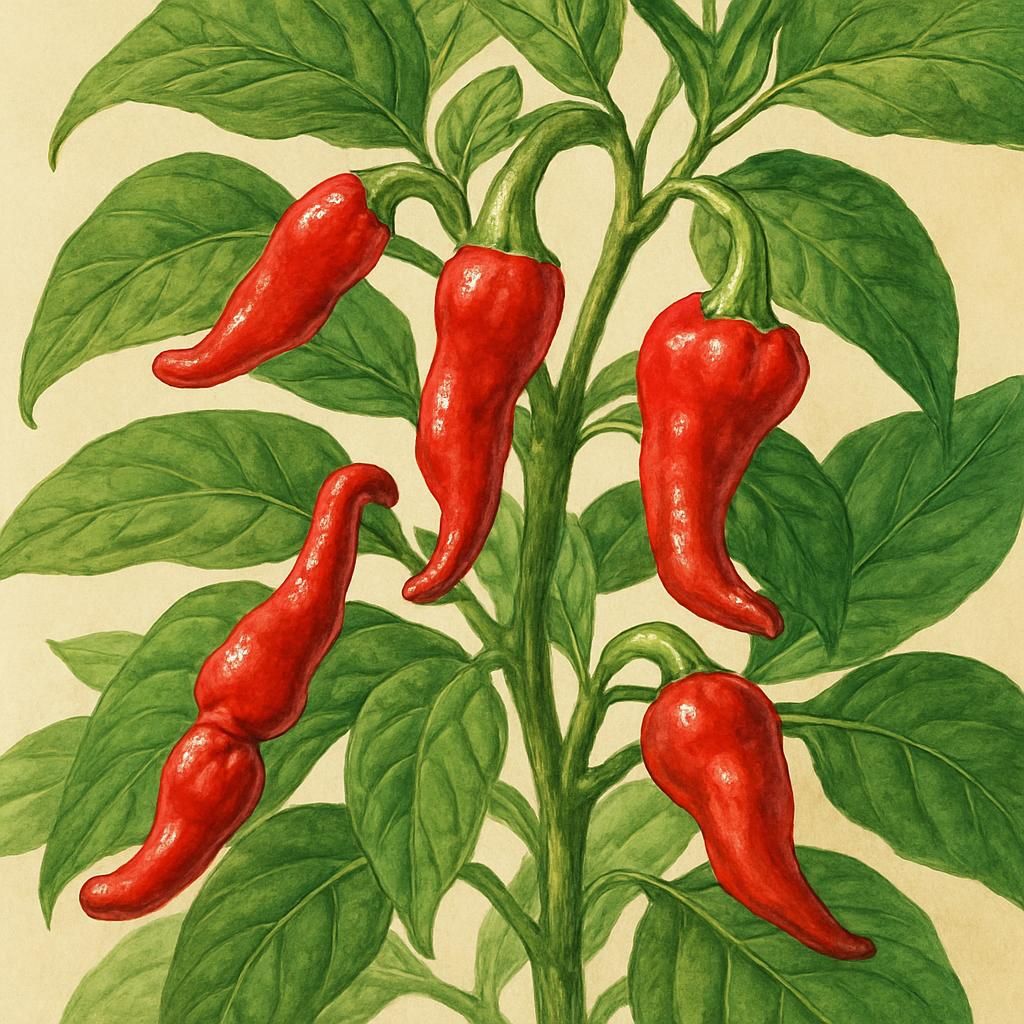
Introduction to Peter Pepper (Red)
The Peter Pepper (Red) is renowned not just for its humorous appearance but also for its robust flavor. This heirloom chili pepper offers a mild to moderate heat level, making it a favorite for those who prefer a balance of spice and flavor. Besides its culinary uses, Peter Pepper serves as a conversation piece in any garden.
Botanical Profile of Peter Pepper (Red)
Botanically classified as Capsicum annuum var. annuum, the Peter Pepper belongs to the Solanaceae family. The plant is bushy with vibrant green leaves and produces elongated, wrinkled fruits that mature from a bright green to vivid red. Each fruit typically reaches 3-4 inches in length, featuring a distinctive appearance that contributes to its name.
Soil, pH, and Climate Requirements for Peter Pepper (Red)
Peter Pepper plants thrive in well-draining, fertile soil. They require warm climates to produce abundantly and are sensitive to frost.
| Characteristic | Ideal Condition |
|---|---|
| Soil Type | Loamy, well-draining |
| Soil pH | 6.0 - 6.8 |
| Temperature Range | 70°F - 85°F (21°C - 29°C) |
| Light Requirement | Full sun (6-8 hours daily) |
Step-by-Step Planting & Propagation
Seed Selection: Start with high-quality seeds from a reliable supplier. It is crucial to ensure that the seeds are fresh for optimal germination.
Sowing: Begin sowing seeds indoors approximately 8-10 weeks before the last expected frost date. Plant seeds 1/4 inch deep in seed-starting trays filled with rich, well-draining potting mix.
Germination: Maintain a warm environment with temperatures between 78°F-80°F (25°C-27°C). Keep the soil consistently moist using a spray bottle, ensuring not to overwater.
Transplanting: Once seedlings develop two to three sets of true leaves, harden them off by gradually introducing them to outdoor conditions. Transplant them to the garden after the danger of frost has passed.
Spacing: Space transplants 18-24 inches apart in rows that are 30-36 inches apart to provide ample room for growth and airflow.
Care & Maintenance Regimes for Peter Pepper (Red)
| Task | Schedule |
|---|---|
| Watering | Weekly, or as needed; ensure consistent moisture but avoid waterlogging |
| Fertilization | Every 4-6 weeks with a balanced, water-soluble fertilizer |
| Pruning | As needed to remove dead or diseased foliage, and to encourage bushier growth |
- Watering: Deeply water the plants about once a week. Increase frequency during dry spells but be careful of waterlogging.
- Fertilization: Use a balanced fertilizer or one high in phosphorus to promote fruiting. Avoid excessive nitrogen as it can lead to lush foliage with fewer fruits.
- Pruning: Regularly inspect for and remove yellowing leaves or damaged stems to boost plant vitality.
Pests, Diseases & Organic Management
Peter Pepper plants, like other peppers, may face challenges from pests and diseases. Spider Mites and aphids can quickly infest plants. Bacterial leaf spot and viruses like the tobacco mosaic virus pose additional threats.
Integrated Pest Management (IPM): Regularly inspect plants for pests. Use insecticidal soaps or neem oil to mitigate small infestations. Encourage natural predators like ladybugs.
Diseases: Ensure good air circulation and avoid overhead watering to prevent fungal diseases. Rotate crops annually and eliminate plant debris to minimize disease risk.
For comprehensive strategies, refer to Crop Diseases Under the Microscope: 9 Organic Fixes for Small Farm Resilience.
Harvesting, Curing & Optimal Storage
- Harvesting: Peter Peppers are ready for harvest when they reach full size and are a vibrant red. This typically occurs 75-90 days after planting.
- Curing: To extend shelf life, allow harvested peppers to cure for 1-2 weeks in a dry, well-ventilated area.
- Storage: Store cured peppers in a cool, dry place. Refrigerate for fresh use, or dry/freeze for long-term storage.
Companion Planting for Peter Pepper (Red)
Companion planting can enhance growth and pest resistance:
- Best Companions: Tomato, Basil, and Marigold help deter undesirable insects.
- Avoid Planting with: Fennel and kohlrabi, as they can hinder pepper growth.
For effective pairings, see Summer Companion Planting: 10 Organic Pairings to Boost Small Farm Resilience.
By following these guidelines, growing Peter Pepper (Red) can be both rewarding and manageable, offering unique aesthetic and culinary value to any garden.