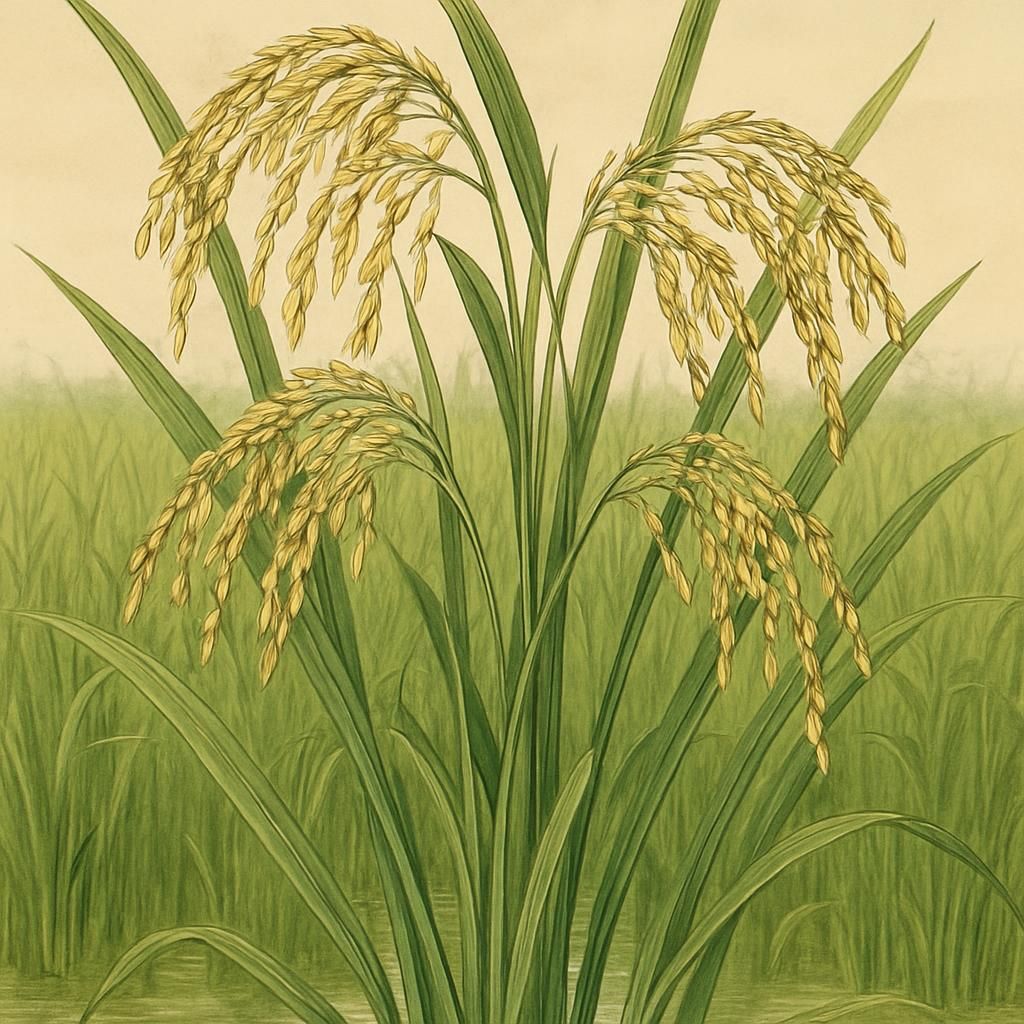
Introduction to Newbonnet Rice
Newbonnet Rice is a variety of rice renowned for its high yield and adaptability to various environmental conditions. Originating from improved breeding programs, it is primarily cultivated in regions with long warm seasons. Known for its robust growing capabilities, Newbonnet Rice provides a staple food source for many cultures worldwide.
Botanical Profile of Newbonnet Rice
Newbonnet Rice belongs to the species Oryza sativa, under the family Poaceae. It is a long-grained rice variety characterized by its semi-dwarf stature and its ability to resist lodging, making it ideal for regions prone to winds and storms.
Soil, pH, and Climate Requirements for Newbonnet Rice
Newbonnet Rice is versatile and can be grown under diverse environmental conditions. However, to maximize yields, specific soil and climate requirements should be met:
| Requirement | Ideal Condition |
|---|---|
| Soil Type | Clay loam, silty loam |
| Soil pH | 5.5 - 6.5 |
| Temperature | 25°C - 35°C (growing phase) |
| Rainfall | 75-100 cm during growing |
| Sunshine Hours | 8-10 hours/day |
Step-by-Step Planting & Propagation
- Seed Selection: Select quality seeds free from pests and diseases.
- Nursery Preparation: Prepare a nursery bed with fine soil. Soak seeds in water for 24 hours before sowing.
- Transplanting: After 20-25 days, transplant seedlings to the main field with a spacing of approximately 20 cm between plants and 30 cm between rows.
- Direct Seeding: Alternatively, direct seeding can be used in areas with assured water supply.
Care & Maintenance Regimes for Newbonnet Rice
| Activity | Frequency |
|---|---|
| Watering | Maintain standing water 2-4cm AZ |
| Fertilizer | NPK: 120-60-40 kg/ha; split application at tillering, panicle initiation |
| Weeding | Twice before tillering, then as needed |
Pests, Diseases & Organic Management
Newbonnet Rice is susceptible to pests like Spider Mites and diseases such as blast and brown spot. Regular monitoring and integrated pest management (IPM) practices are essential. Organic strategies include:
- Use of neem-based biopesticides.
- Introducing natural predators like ladybugs for mite control.
- Practicing crop rotation with legumes.
- Applying recommended fungicides when necessary.
Harvesting, Curing & Optimal Storage
Harvest Newbonnet Rice when the grain moisture content reaches 20%. Mechanized harvesting or hand harvesting followed by threshing is commonly practiced. It is crucial to dry grains to 14% moisture for storage.
Curing: Post-harvest curing for about two weeks enhances grain quality.
Storage: Store in sanitized, aerated warehouses to prevent pest infestation and fungal growth.
Companion Planting for Newbonnet Rice
Companion planting enhances growth and ward off pests. Good companions include:
- Clover: Improves soil fertility through nitrogen fixation.
- Marigold: Deters nematodes and attracts beneficial insects.
For further insights into companion planting strategies, explore Summer Companion Planting: 10 Organic Pairings to Boost Small Farm Resilience.
For more comprehensive details on rice cultivation, you may refer to the Rice wiki page.
Additional Resources
Explore Crop Rotation Realities: 6 Organic Patterns That Deliver for Small Farms to enhance your farming practice.