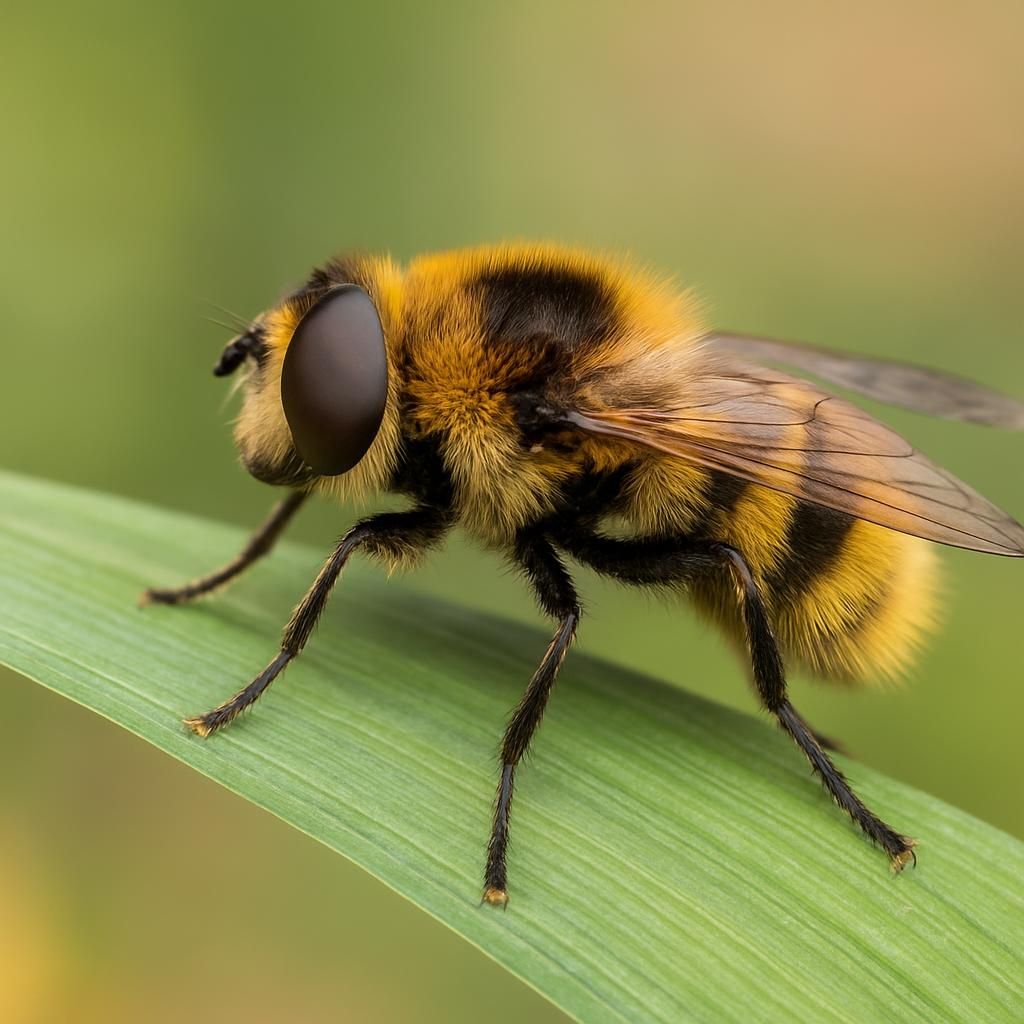
Introduction to Narcissus bulb fly
The Narcissus bulb fly (Merodon equestris) is one of the most damaging pests of daffodils, narcissus, and related bulb crops worldwide. The adult fly mimics a small bumblebee, making it easy to overlook until significant damage appears. Larvae feed inside bulbs, hollowing them out and introducing secondary fungal and bacterial rots that can destroy entire plantings.
This pest is especially problematic in commercial bulb production, home gardens, and cut-flower operations. Because symptoms often remain hidden until bulbs fail to emerge or produce weak foliage, early diagnosis and integrated management are essential.
Identifying Symptoms & Damage
Early detection relies on observing above-ground decline combined with careful bulb inspection. Infected bulbs may produce stunted, yellowing, or absent foliage. When lifted, damaged bulbs feel soft, show entry holes near the basal plate, and contain brown, decaying tissue filled with frass.
Secondary infections by Fusarium wilt or bacterial soft rots frequently follow larval feeding, accelerating bulb collapse. In heavy infestations, entire rows or beds may fail to flower or produce only a few weak leaves before dying back prematurely.
Lifecycle and Progression of Narcissus bulb fly (MUST INCLUDE A MARKDOWN TABLE OF LIFECYCLE STAGES)
The fly completes one generation per year in most temperate regions. Adults emerge in spring and early summer, mate, and females deposit eggs at the soil line near bulbs. Larvae hatch, bore into the bulb, and feed through summer and autumn before overwintering as mature larvae or pupae inside the bulb or soil.
| Stage | Timing | Description | Key Diagnostic Features |
|---|---|---|---|
| Adult | April–July | Bee-like fly, 10–14 mm, black with yellow bands, hovers near flowers | Resembles small bumblebee; visits narcissus |
| Egg | May–August | Tiny white eggs laid at soil surface near bulb necks | Hard to see; 1–3 eggs per site |
| Larva | June–October | Creamy-white, legless maggot up to 20 mm; tunnels through bulb scales | Brown frass, hollowed bulb center |
| Pupa | October–March | Dark brown puparium formed inside bulb or adjacent soil | Overwinters in protected location |
| Adult emergence | Next spring | New generation exits soil or bulb to restart cycle | Peak flight coincides with bloom |
Environmental Triggers & Risk Factors
Warm, moist springs favor adult activity and egg-laying. Poorly drained soils and dense plantings increase larval survival by keeping bulbs soft and accessible. Overcrowded beds and failure to lift and inspect bulbs annually allow populations to build rapidly over multiple seasons.
Bulbs left in the ground for more than two years without division are at highest risk. Sites with history of the pest or adjacent to untreated narcissus plantings experience recurring pressure.
Organic Control & Treatment Plans (MUST INCLUDE A MARKDOWN TABLE OF TREATMENT OPTIONS AND FREQUENCIES)
Integrated organic programs emphasize sanitation, biological agents, and targeted soil treatments. Remove and destroy heavily infested bulbs at lifting time. Apply beneficial nematodes or entomopathogenic fungi to soil around remaining bulbs in autumn and early spring.
| Treatment Option | Active Ingredient / Organism | Application Timing | Frequency | Notes |
|---|---|---|---|---|
| Sanitation & rogueing | Manual removal of infested bulbs | At lifting (summer) | Annual | Destroy all soft or tunneled bulbs |
| Beneficial nematodes | Steinernema feltiae or S. carpocapsae | Soil drench, autumn & spring | 2 applications per season | Apply when soil >12 °C |
| Entomopathogenic fungi | Beauveria bassiana | Soil drench or spray | Every 14–21 days | Best in moist conditions |
| Floating row covers | Fine mesh barrier | During adult flight | Continuous for 6–8 weeks | Prevents egg-laying |
| Crop rotation & fallow | Non-host cover crops | Post-harvest | 2–3 years | Break host continuity |
Preventing Narcissus bulb fly in the Future
Lift and divide bulbs every 2–3 years; inspect and discard any showing damage. Replant only firm, healthy bulbs in well-drained beds amended with organic matter. Rotate narcissus plantings with non-host crops such as Garlic or Onion for at least two seasons.
Use floating row covers during peak adult flight periods and maintain strict sanitation by removing spent foliage promptly. Monitor new plantings closely for the first two years after introduction.
Crops Most Affected by Narcissus bulb fly
Primary hosts are members of the Amaryllidaceae family, especially Narcissus species and cultivars. Other susceptible bulbs include Hyacinthus, Galanthus, and some Allium species. While not a threat to vegetables, the pest can spread from ornamental borders into nearby Garlic or Onion plantings if bulbs are left untreated.
Stop Treating Tomato Blight Like a Spray Problem: Here Is What Works Better