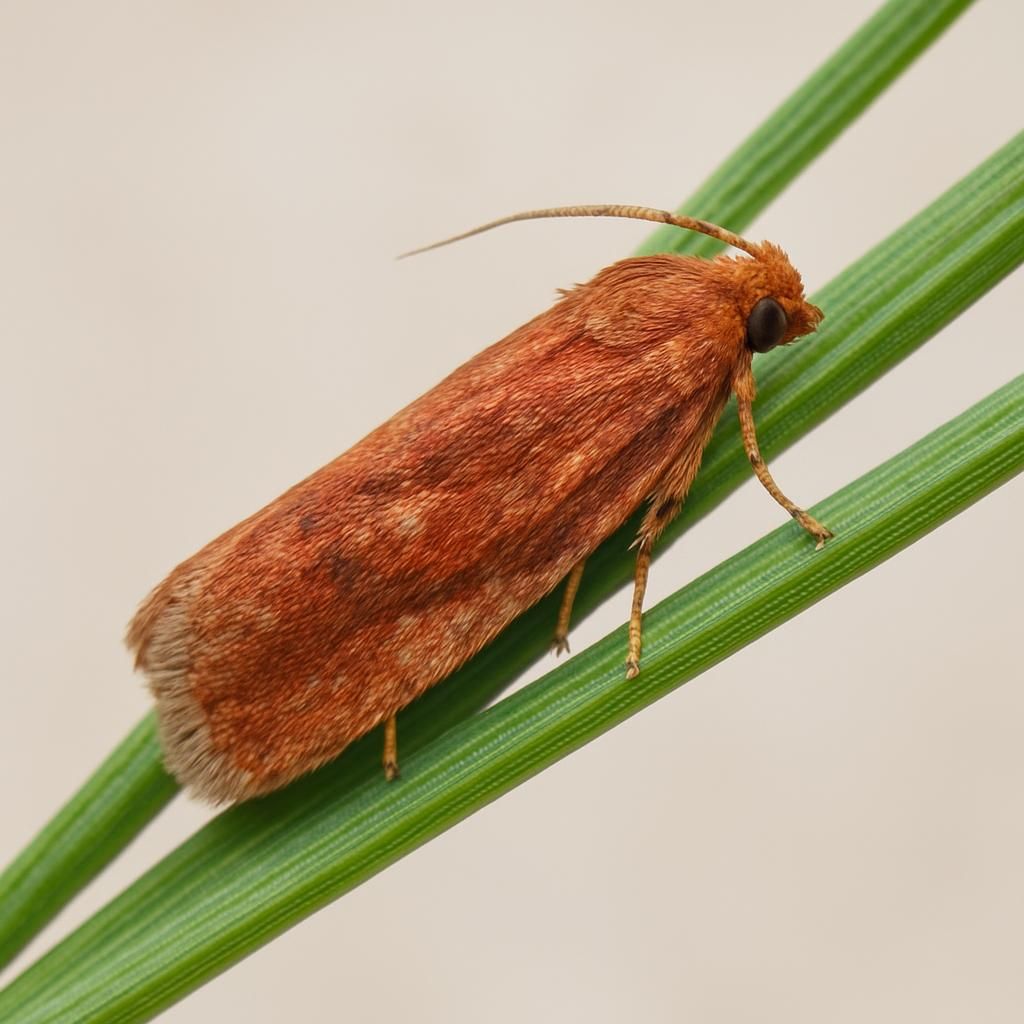
Introduction to Nantucket pine tip moth
The Nantucket pine tip moth (Rhyacionia frustrana) ranks among the most economically important shoot-infesting insects of loblolly, shortleaf, and Virginia pines in the southeastern and eastern United States. First described from Nantucket Island, Massachusetts, the moth has expanded its range with extensive pine planting programs. Larval feeding destroys terminal buds and elongating shoots, leading to loss of apical dominance, multiple leaders, and reduced timber quality. In Christmas tree and ornamental settings the same damage produces unsightly, bushy trees that fail to meet market standards. Because the pest completes up to five generations per year in the Deep South, timely intervention is essential.
Identifying Symptoms & Damage
Early detection relies on recognizing characteristic damage rather than locating the small adult moths. Newly hatched larvae bore into needle fascicles or directly into succulent shoot tissue, producing resin droplets and frass at entry holes. Within days the shoot tip wilts, turns brown, and dies, creating a “flagged” appearance. Examination of affected terminals reveals a small, cream-colored larva (up to 9 mm) inside a silk-lined tunnel. Repeated attacks result in forked or flat-topped crowns and shortened internodes. In severe infestations, height growth can be reduced by 30–50 % during the first five years after planting.
Lifecycle and Progression of Nantucket pine tip moth (MUST INCLUDE A MARKDOWN TABLE OF LIFECYCLE STAGES)
The species overwinters as pupae inside damaged shoots. Adults emerge in early spring and lay eggs on needle sheaths or expanding buds. Larvae progress through five instars before pupating. Generation time varies with latitude and temperature, ranging from 35 days in Georgia to 60 days in Pennsylvania.
| Stage | Duration (days) | Key Characteristics | Optimal Temperature (°C) |
|---|---|---|---|
| Egg | 5–10 | Oval, translucent, laid singly on needles | 18–28 |
| Larva (5 instars) | 15–30 | Cream to pink body, brown head capsule | 20–30 |
| Pupa | 7–14 | Brown pupa inside silk-lined shoot chamber | 18–26 |
| Adult | 7–10 | Small gray-brown moth, 6–8 mm wingspan | 15–25 |
Environmental Triggers & Risk Factors
Warm spring temperatures accelerate adult emergence and egg hatch, while prolonged drought stresses pines and increases susceptibility. Plantations established on former agricultural fields with low organic matter suffer higher infestation levels. Open-grown, fast-growing trees with lush terminal flushes attract more ovipositing females. Proximity to mature pine stands provides a reservoir of overwintering pupae. Sites with poor drainage or compacted soils that slow tree growth also favor the pest.
Organic Control & Treatment Plans (MUST INCLUDE A MARKDOWN TABLE OF TREATMENT OPTIONS AND FREQUENCIES)
Organic management emphasizes monitoring with pheromone traps to time interventions and the use of approved biological or botanical products. Bacillus thuringiensis (Bt) and spinosad provide effective larval control when applied to expanding shoots. Horticultural oils and insecticidal soaps suppress eggs and early instars. Repeated applications are required because of overlapping generations.
| Treatment Option | Active Ingredient | Application Frequency | Notes |
|---|---|---|---|
| Bacillus thuringiensis | Bt kurstaki | Every 7–10 days during shoot expansion | Target early instars; UV degrades quickly |
| Spinosad | Spinosad | 2–3 applications per generation | Systemic uptake minimal; good coverage essential |
| Horticultural oil | Mineral oil | At 50 % egg hatch and 10 days later | Suffocates eggs and neonates |
| Beneficial nematodes | Steinernema carpocapsae | Soil drench around base in fall | Targets overwintering pupae |
| Pheromone mating disruption | (Z)-9-dodecenyl acetate | One dispenser per 0.4 ha, replace seasonally | Reduces mating success; best in large blocks |
Preventing Nantucket pine tip moth in the Future
Select planting sites with moderate fertility and good drainage to promote steady rather than flush growth. Choose genetically improved pine families that exhibit faster bud set and shorter susceptibility windows. Maintain a 10 m buffer of non-host vegetation between new plantings and mature pine stands. Scout weekly from bud break through midsummer and prune out flagged terminals before larvae complete development. Encourage natural enemies by planting flowering understory species that support parasitic wasps. Avoid late-season nitrogen fertilization that prolongs succulent growth.
Crops Most Affected by Nantucket pine tip moth
The pest primarily attacks species within the genus Pinus. Most severe damage occurs on Loblolly Pine and shortleaf pine plantations, but Virginia pine, slash pine, and longleaf pine seedlings are also susceptible. In ornamental landscapes, Scots pine and eastern white pine frequently show tip moth injury. Although the insect does not attack broadleaf crops such as Tomato or Corn, young pine windbreaks surrounding these fields can serve as reservoirs. Related tip moths such as the pitch pine tip moth (Rhyacionia rigidana) and subtropical pine tip moth (Rhyacionia subtropica) cause similar damage and should be monitored concurrently.
For additional reading on seasonal pest dynamics, consult the blog post Fall Pest Siege: 9 Organic Defenses to Shield Small Farms from Invading Armies.