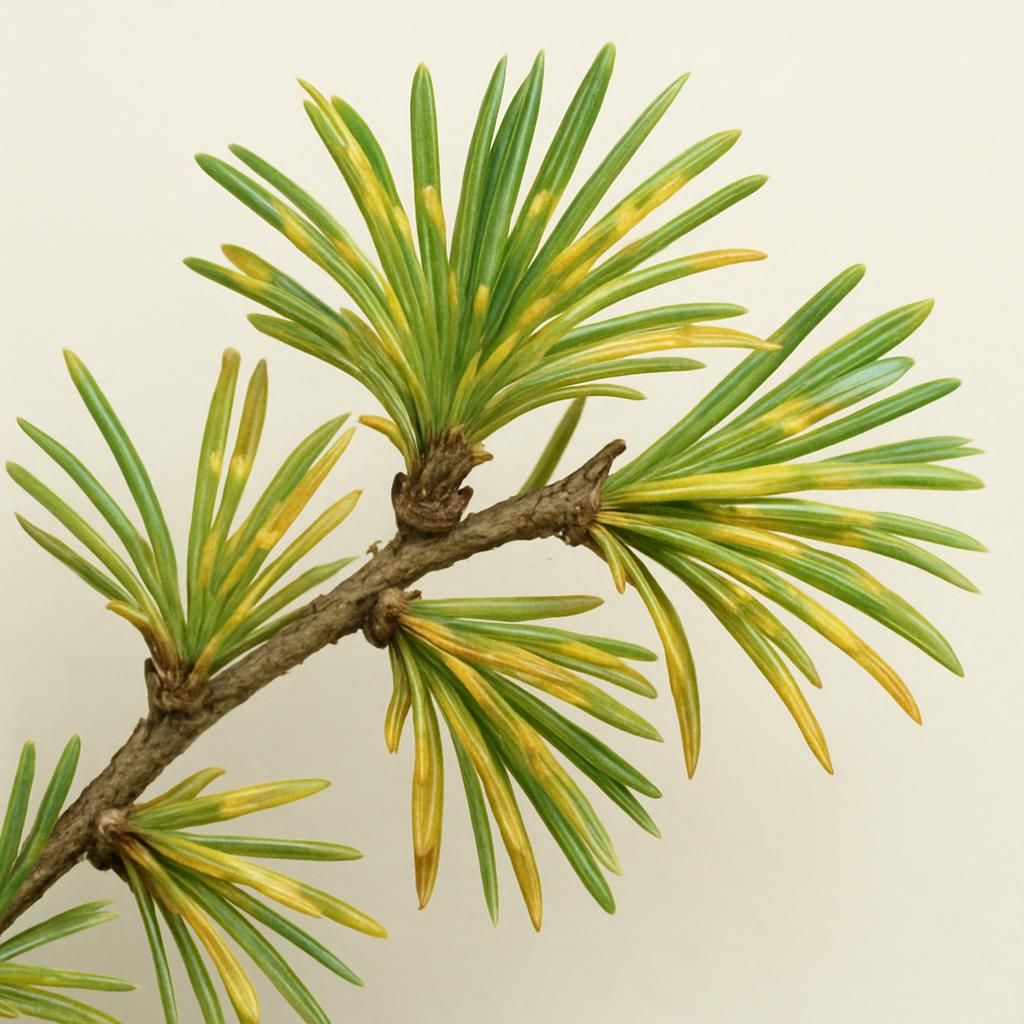
Introduction to Meria laricis
Meria laricis is an ascomycete fungus responsible for larch needle cast, a disease that has become increasingly problematic in both commercial forestry plantations and landscape settings. The pathogen infects current-year needles of various Larix species, leading to premature browning, casting, and repeated defoliation that weakens trees over multiple seasons. While rarely fatal in a single year, chronic infections reduce photosynthetic capacity, slow diameter growth, and predispose trees to secondary pests and environmental stress.
Accurate diagnosis and timely management are essential because the disease spreads rapidly under favorable weather conditions and can persist in fallen needles for extended periods. Professional arborists and forest managers rely on integrated approaches that combine sanitation, resistant planting stock, and carefully timed fungicide applications. This guide provides a definitive diagnostic framework, lifecycle details, and evidence-based treatment recommendations suitable for both small-scale growers and large-scale forestry operations.
Identifying Symptoms & Damage
Initial symptoms appear in late spring or early summer as small, water-soaked spots on current-season needles. These lesions quickly expand into distinct yellow to tan bands that girdle the needle, often accompanied by a narrow brown margin. Within two to three weeks the entire needle turns reddish-brown and is cast prematurely, leaving only the newest growth at branch tips.
On heavily infected trees, lower and inner branches show the most severe defoliation, creating a "lion’s tail" appearance with bare older shoots and tufts of green at the ends. Repeated annual infections cause progressive thinning of the crown, reduced leader growth, and dieback of small twigs. Resin exudation or secondary cankers may appear when trees are stressed by drought or poor site conditions.
Lifecycle and Progression of Meria laricis
The pathogen overwinters as mycelium and immature fruiting bodies within cast needles on the forest floor or beneath the canopy. In spring, as temperatures rise and needles begin to emerge, sexual spores (ascospores) are forcibly discharged during rain events and carried by wind to newly expanding foliage. Infection occurs through stomata, followed by a latent period of 3–5 weeks before visible symptoms develop.
| Stage | Timing | Key Processes | Environmental Conditions |\n|------------------------|-------------------------|----------------------------------------------------|-------------------------------------------|\n| Overwintering | Late fall–early spring | Mycelium and pseudothecia survive in cast needles | Cool, moist leaf litter |\n| Spore Release | April–June | Ascospores ejected during rain; wind dispersal | 10–18 °C, prolonged leaf wetness |\n| Primary Infection | May–July | Germ tubes enter stomata of current-year needles | High humidity, frequent rainfall |\n| Symptom Expression | 3–5 weeks post-infection| Needle banding, chlorosis, premature casting | Warm days, cool nights |\n| Secondary Spread | Summer–early fall | Conidia produced on lesions; local splash dispersal| Moderate temperatures, dew formation |\n| Needle Cast & Survival | Autumn | Infected needles abscise and fall to litter layer | Cool, wet weather accelerates cast |
Secondary conidial cycles can intensify local epidemics when summer rainfall is above average. Because fruiting bodies continue to mature on fallen needles for up to two years, sanitation is critical for long-term control.
Environmental Triggers & Risk Factors
Meria laricis epidemics are strongly correlated with extended periods of leaf wetness (>6 hours) and moderate temperatures (12–20 °C) during needle flush. Sites with poor air circulation—dense plantings, sheltered valleys, or windbreaks—retain humidity and favor infection. Acidic soils (pH <5.5) and compacted root zones reduce tree vigor, increasing susceptibility. Provenance studies show that European larch (Larix decidua) and certain hybrid clones are more susceptible than Japanese larch (Larix kaempferi) or selected resistant hybrids.
Climate change projections indicate longer growing seasons and increased spring rainfall in many temperate regions, potentially expanding the geographic range and severity of outbreaks. Monitoring weather-based disease models that integrate leaf-wetness duration and temperature can help time protective sprays more accurately.
Organic Control & Treatment Plans
Organic management emphasizes sanitation and cultural practices first, followed by approved biological or low-risk fungicides when infection pressure is high. Remove and destroy all cast needles in autumn and again in early spring before bud break. Improve airflow by selective thinning and avoid overhead irrigation. When disease history or weather forecasts indicate high risk, apply protective treatments at the following intervals:
| Treatment Option | Active Ingredient / Product | Application Frequency | Notes / Restrictions |\n|-----------------------------------|--------------------------------------|----------------------------------------|---------------------------------------------------|\n| Copper hydroxide (organic) | Fixed copper formulations | 7–14 days during needle flush | Begin at 50 % bud break; discontinue at full elongation |\n| Bacillus subtilis (biological) | Serenade ASO or similar | 7–10 days during wet periods | Compatible with beneficial insects |\n| Potassium bicarbonate | 1–2 % solution | Every 10–14 days | Provides eradicant and protectant activity |\n| Neem oil (clarified hydrophobic) | 0.5–1 % emulsion | 10–14 days | Avoid during temperatures >30 °C |\n| Horticultural oil | 1–2 % dormant or summer rate | Once pre-flush + once post-flush | Improves coverage of copper; check phytotoxicity |
Rotate products to reduce resistance risk and always follow label rates. Combine treatments with rigorous sanitation for best results.
Preventing Meria laricis in the Future
Long-term prevention begins with site selection and planting design. Choose well-drained soils and orient rows to maximize prevailing winds. Plant resistant or tolerant larch provenances and maintain adequate spacing (minimum 3 m between trees) to promote rapid drying of foliage. Implement a three-year crop rotation away from larch where feasible, or interplant with non-host conifers such as Pine or Spruce to break the disease cycle.
Mulch planting beds with 5–8 cm of organic material to suppress needle splash and maintain soil moisture without waterlogging. Monitor trees weekly during spring growth using a hand lens to detect early lesions. Record weather data and maintain a spray diary to refine future timing. Healthy, vigorously growing trees are far less likely to suffer severe defoliation even when spores are present.
Crops Most Affected by Meria laricis
While the primary host is larch, the disease has been reported on several other conifer genera under high inoculum pressure. The most susceptible species include:
- European larch (Larix decidua)
- Japanese larch (Larix kaempferi)
- Hybrid larch (Larix × eurolepis)
- Tamarack (Larix laricina)
- Occasional reports on Douglas-fir and certain spruce species in mixed stands.
Landscape plantings near infected forestry blocks or Christmas tree farms are at elevated risk. Early detection and prompt removal of infected material remain the most effective strategies for protecting both timber and ornamental plantings.