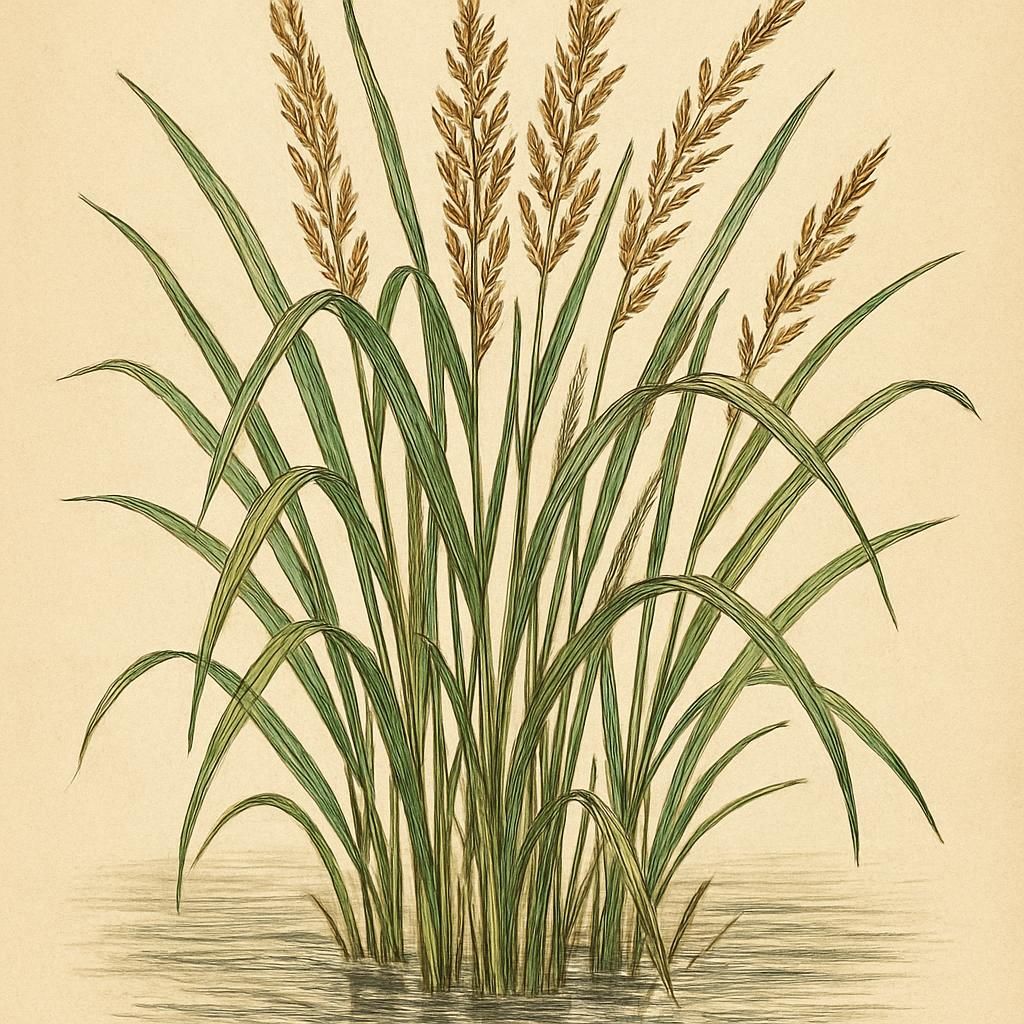
Introduction to Manchurian Wild Rice (Zizania latifolia)
Manchurian Wild Rice, scientifically known as Zizania latifolia, is a plant belonging to the grass family. It is primarily cultivated for its edible stems and seeds. This plant holds both economic and cultural value in Asian countries, especially China and Japan, where it is utilized in a variety of culinary dishes. Its unique habitat requirement of shallow water or very wet soil distinguishes it greatly from other traditional crops.
Botanical Profile of Manchurian Wild Rice (Zizania latifolia)
Zizania latifolia is a tall, perennial grass that can reach heights of up to 2 meters under optimal conditions. The plant has long, sheath-like leaves and produces flowers in spikelets much like common rice. Unlike typical rice, the flowers of Manchurian Wild Rice are susceptible to wind pollination, leading to a long grain seed that is harvested for consumption.
Soil, pH, and Climate Requirements for Manchurian Wild Rice (Zizania latifolia)
Manchurian Wild Rice's optimal growing conditions are quite specific, requiring a distinctive balance of soil moisture, pH, and temperature.
| Condition | Ideal Range |
|---|---|
| Soil Type | Clay-loam, loam, silty clay-loam |
| Soil pH | 5.0 - 7.0 |
| Temperature | 16°C - 24°C |
| Precipitation | 1000 - 1300 mm annually, evenly distributed |
| Elevation | 0 - 500 meters |
The plant requires consistently wet conditions and does well in shallow water. The soil should be rich in organic matter to support nutrient availability.
Step-by-Step Planting & Propagation
- Seed Preparation: Begin by soaking seeds in water for 24 hours to ensure rapid germination.
- Soil Preparation: Prepare a wet bed similar to a rice paddy, ensuring the soil is well-draining yet retains moisture.
- Sowing: Sow seeds directly in shallow water or in moist soil. Space seeds approximately 10 cm apart in rows spaced 30 cm apart.
- Germination: Germination takes about 7-10 days under ideal conditions.
- Thinning: Once seedlings reach a height of 5-10 cm, thin them to ensure proper spacing for growth.
Care & Maintenance Regimes for Manchurian Wild Rice (Zizania latifolia)
Proper care is crucial for optimal growth and yield.
| Task | Schedule |
|---|---|
| Watering | Ensure 2-5 cm of water |
| Fertilizing | Every 6-8 weeks, use a balanced N-P-K fertilizer |
| Pruning | Remove weak stems as needed |
Water levels should be maintained consistently. Fertilization should correspond with growth stages, focusing initially on nitrogen to promote plant growth and phosphorus and potassium as the plants begin to flower.
Pests, Diseases & Organic Management
Manchurian Wild Rice is susceptible to pests such as Spider Mites and diseases like bacterial leaf blight. Pest management focuses on maintaining healthy plant growth by ensuring proper water and soil conditions. Use floating row covers to protect from pests and biological pesticides when necessary.
For disease management, ensure proper crop rotation and remove any infected plant material to prevent spread. For more organic management strategies, refer to Crop Diseases Under the Microscope: 9 Organic Fixes for Small Farm Resilience.
Harvesting, Curing & Optimal Storage
Harvest mature grains when the seeds have reached a dry, firm stage. Use traditional rice harvesting techniques, thresh to separate the seeds, and then dry them thoroughly.
For storage, keep seeds in a cool, dry place with minimal exposure to air in sealed containers. Edible stems should be stored in refrigeration to maintain crispness.
Companion Planting for Manchurian Wild Rice (Zizania latifolia)
Utilize companion planting to enhance growth and reduce pest pressure by pairing with crops such as Lychee, which can provide shade and help maintain humidity levels. Companion planting with marigold can help deter insect infestations.
For more information on companion planting, read Spring Companion Planting: 8 Organic Pairings to Maximize Small Farm Yields.