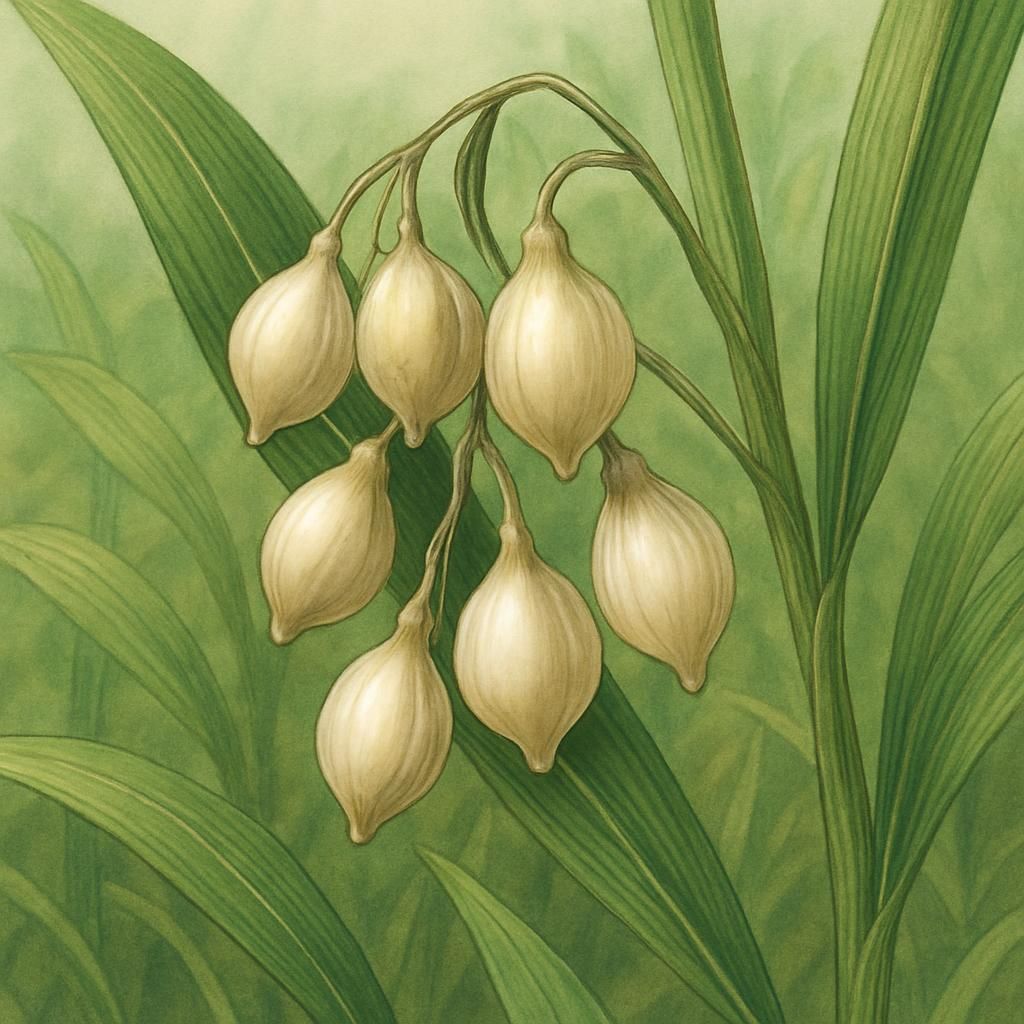
Introduction to Job’s Tears (Adlay)
Job’s Tears, scientifically known as Coix lacryma-jobi, is an intriguing crop primarily cultivated in Asia. Known for its distinct tear-shaped seeds, it is used not only as a cereal grain but also for ornamental and medicinal purposes. This ancient grain offers numerous health benefits, including antioxidant and anti-inflammatory properties, making it a favored choice among health enthusiasts.
Botanical Profile of Job’s Tears (Adlay)
Job’s Tears is a tropical plant belonging to the Poaceae family. It is characterized by its broad, corn-like leaves and its hard, glossy seeds that resemble beads. These seeds come in a variety of colors, ranging from pale gray to black, and are often utilized in jewelry-making.
Soil, pH, and Climate Requirements for Job’s Tears (Adlay)
Job’s Tears thrives in warm, tropical climates and is relatively tolerant to different soil types, although well-drained loamy soil is ideal.
| Condition | Optimal Range |
|---|---|
| Soil Type | Loamy, Well-drained |
| Soil pH | 5.5 - 7.0 |
| Temperature | 21 - 27°C (70 - 80°F) |
| Rainfall | 1000 - 1500 mm annually |
Step-by-Step Planting & Propagation
- Seed Selection: Choose healthy, uniform seeds for planting.
- Soil Preparation: Loosen the soil to a depth of about 12 inches, ensuring good drainage. Amend the soil with organic compost to enhance fertility.
- Sowing: Plant seeds about 1 inch deep in rows, spaced approximately 12-18 inches apart to allow adequate room for growth.
- Watering: Perform initial watering post-planting; keep the soil consistently moist but not waterlogged.
- Germination: Seeds typically germinate within 10-14 days under optimal conditions.
Care & Maintenance Regimes for Job’s Tears (Adlay)
| Care Regime | Details |
|---|---|
| Watering | Regular, ensure soil remains moist |
| Fertilizer | Balanced NPK every 2 months |
| Pruning | Remove dead or yellow leaves regularly |
Ensure regular monitoring for pest infections. Although Job’s Tears is relatively hardy, early detection of pests like Spider Mites can prevent crop damage.
Pests, Diseases & Organic Management
Common pests include Spider Mites and stem borers. Implementing integrated pest management strategies like rotating crops and using neem oil can effectively manage these pests. Additionally, diseases like rust and leaf spots can be controlled through the use of resistant varieties and maintaining optimal plant health.
Harvesting, Curing & Optimal Storage
Job’s Tears reach maturity approximately 120-150 days post-sowing. Harvest when seeds turn hard and glossy. Post-harvest, dry the seeds thoroughly to prevent mold during storage. Store in a cool, dry place in airtight containers to maintain quality.
Companion Planting for Job’s Tears (Adlay)
Job’s Tears benefit from companion plants such as Soybeans and Lychee, which enhance soil nitrogen levels and improve plant health. Avoid planting near crops with high pest affinity to reduce competition for nutrients and minimize pest infestation.