Introduction to hickory
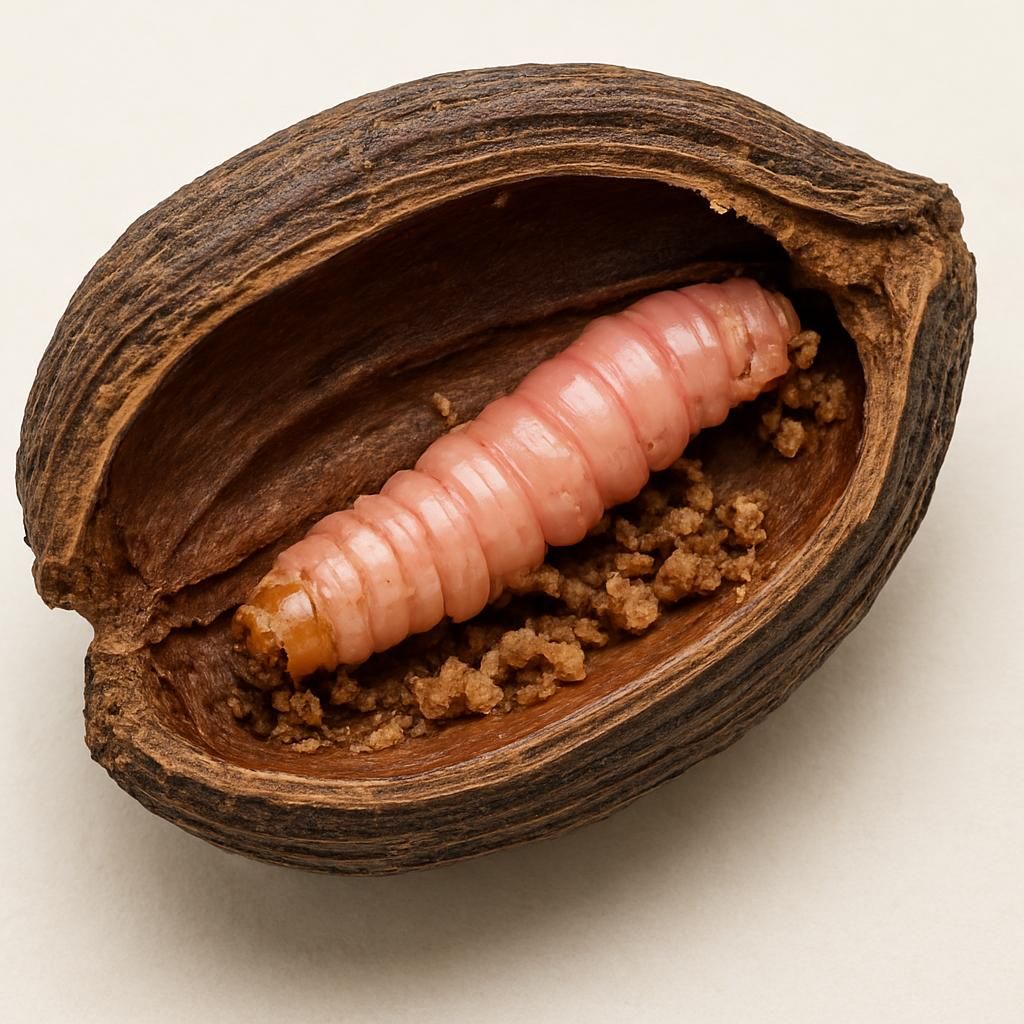
The hickory shuckworm (Cydia caryana) is a primary insect pest affecting Pecan and hickory nut production across North America. Larvae feed inside the shuck, causing premature nut drop, shriveled kernels, and reduced market value. This pest is especially problematic in commercial orchards and backyard plantings where sanitation and monitoring are inconsistent. Effective control relies on understanding its lifecycle and combining cultural, biological, and targeted chemical strategies.
Identifying Symptoms & Damage
Early symptoms appear as small entry holes or frass on the shuck surface beginning in mid-summer. As larvae develop, shucks become discolored, split prematurely, and adhere tightly to the shell. In heavy infestations, up to 50% of nuts may drop before maturity or show blackened, shriveled kernels at harvest. Secondary fungal infections often follow, leading to further quality loss. Regular scouting of the canopy and dropped nuts is essential for early detection.
Lifecycle and Progression of hickory (MUST INCLUDE A MARKDOWN TABLE OF LIFECYCLE STAGES)
The hickory shuckworm completes 2–4 generations per year depending on climate. Adults emerge from overwintering pupae in spring and lay eggs on developing nuts. Larvae bore into the shuck, feed for 2–3 weeks, then pupate. Multiple overlapping generations occur through late summer and fall.
| Stage | Duration | Key Characteristics | Timing (Temperate Zones) |
|---|---|---|---|
| Egg | 4–7 days | Tiny, flattened, laid singly on shucks | May–August |
| Larva | 14–21 days | Cream to pinkish, 8–10 mm, feeds inside shuck | June–September |
| Pupa | 7–14 days | Brown, enclosed in silk within shuck or soil | July–October |
| Adult | 7–10 days | Small gray-brown moth, 8–10 mm wingspan | April–October |
| Overwintering | 5–7 months | Pupae in soil or fallen shucks | October–April |
Environmental Triggers & Risk Factors
Warm, humid summers accelerate multiple generations and increase damage. Orchards with poor sanitation, dense canopies, or nearby unmanaged hickory trees experience higher pressure. Heavy rainfall during adult flight periods can suppress populations, while drought stress makes trees more susceptible to secondary infections. Soil type and temperature also influence overwintering pupal survival.
Organic Control & Treatment Plans (MUST INCLUDE A MARKDOWN TABLE OF TREATMENT OPTIONS AND FREQUENCIES)
Organic management integrates sanitation, beneficial insects, and approved sprays. Remove and destroy fallen shucks and nuts immediately after harvest. Encourage natural enemies such as parasitic wasps and lacewings. Apply approved products only when monitoring indicates economic thresholds are reached.
| Treatment Option | Active Ingredient / Method | Frequency / Timing | Notes |
|---|---|---|---|
| Sanitation | Remove fallen shucks and nuts | Weekly from August through October | Most effective cultural practice |
| Beneficial Insects | Trichogramma wasps, lacewings | Release at first adult flight | Monitor with pheromone traps |
| Kaolin Clay | Surround WP | Every 7–10 days during egg-laying | Creates physical barrier on shucks |
| Spinosad | Entrust or Success | At 10–15% shuck entry | Target young larvae; follow label rates |
| Bacillus thuringiensis (Bt) | Dipel, Javelin | Weekly during larval hatch | Effective on early instars only |
| Horticultural Oil | 1–2% dormant or summer oil | Early spring and post-harvest | Smothers overwintering stages |
Preventing hickory in the Future
Select resistant Pecan cultivars where available and maintain proper tree spacing for airflow. Implement a strict sanitation program every season and monitor with pheromone traps starting in April. Avoid planting new orchards near unmanaged hickory or pecan stands. Consistent cultural practices reduce the need for chemical intervention over time.
Crops Most Affected by hickory
Primary hosts include pecan and various hickory species. Secondary hosts may include Walnut and Hazelnut in mixed plantings, though damage is typically lighter. Monitoring should focus on nut-bearing Carya species throughout the growing season.