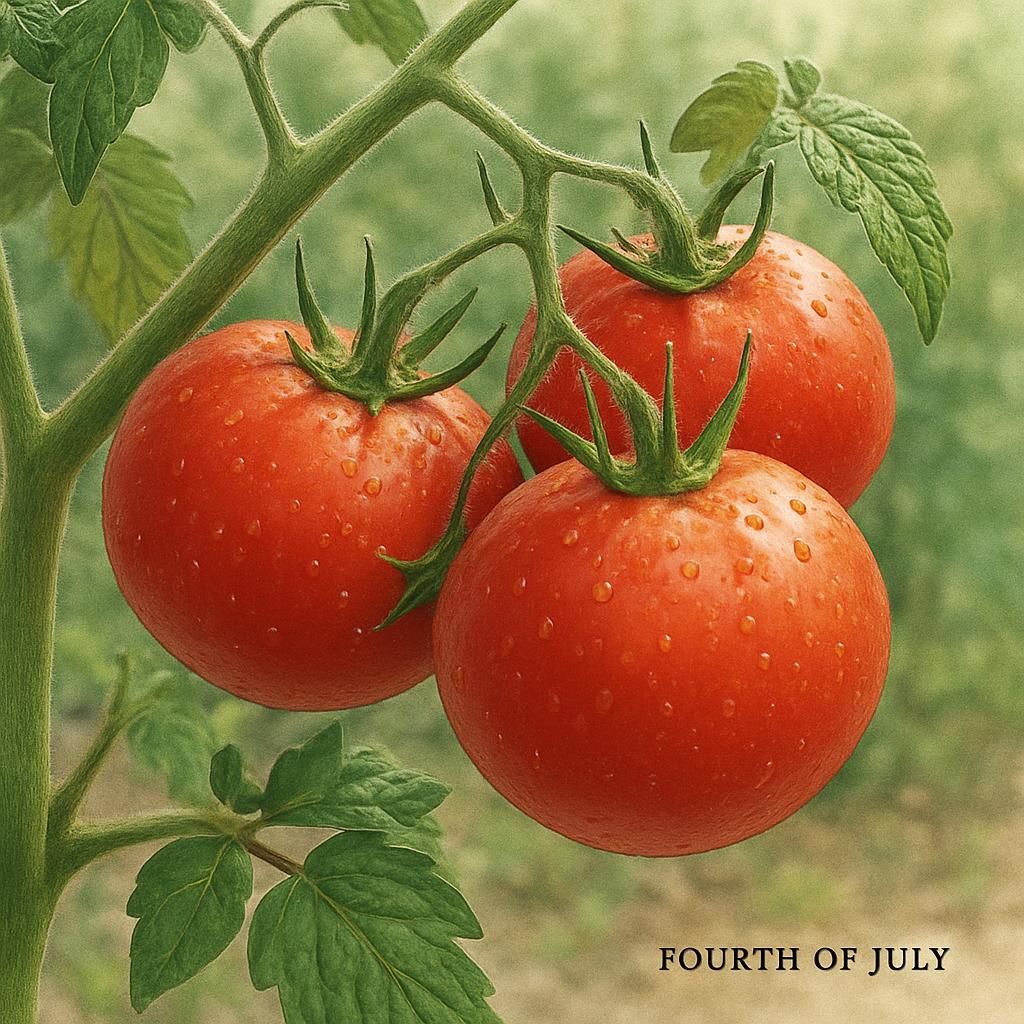
Introduction to Fourth of July Tomato
The Fourth of July Tomato is a high-performing indeterminate hybrid developed to deliver ripe, flavorful fruit by early summer. Gardeners prize this variety for its ability to set fruit in cooler temperatures and produce continuous yields through the season. With its vigorous vines and heavy clusters, it offers both home cooks and small-scale growers an early, dependable tomato harvest.
Botanical Profile of Fourth of July Tomato
Fourth of July Tomato belongs to the nightshade family, Solanaceae. Its plants exhibit classic indeterminate growth, sending out long, sprawling vines that require sturdy support. The foliage is medium-green and slightly serrated, while the flowers are bright yellow and self-pollinating. Fruits are round to slightly oblate, typically 4–6 ounces, with smooth red skin and a balanced sweet-acidic flavor.
Soil, pH, and Climate Requirements for Fourth of July Tomato (MUST INCLUDE A MARKDOWN TABLE OF IDEAL CONDITIONS)
Successful cultivation begins with well-drained, fertile soil enriched with organic matter. The variety performs best in full sun with consistent warmth.
| Parameter | Ideal Range |\n|--------------------|------------------------------| | Soil Type | Loamy, well-drained | | pH | 6.2–6.8 | | Temperature (Day) | 70–85 °F (21–29 °C) | | Temperature (Night)| 60–70 °F (15–21 °C) | | Spacing | 24–36 inches between plants | | Sun Exposure | 8+ hours direct sunlight |
Step-by-Step Planting & Propagation
Start seeds indoors 6–8 weeks before the last expected frost. Sow ¼ inch deep in sterile seed-starting mix and maintain 70–75 °F soil temperature. Transplant hardened seedlings outdoors once nighttime lows remain above 55 °F. Space plants 24–36 inches apart in rows 4–5 feet wide and install cages or trellises at planting time.
Care & Maintenance regimes for Fourth of July Tomato (MUST INCLUDE A MARKDOWN TABLE OF WATER, FERTILIZER, AND PRUNING SCHEDULES)
Consistent moisture and balanced nutrition keep vines productive. Use the following schedule for optimal results.
| Week | Watering Schedule | Fertilizer Application | Pruning Action |
|---|---|---|---|
| 1–2 | 1 inch/week, keep soil moist | None; transplant with compost tea | Remove lower leaves touching soil |
| 3–6 | 1–1.5 inches/week | Side-dress with 5-10-10 NPK monthly | Sucker removal every 7–10 days |
| 7–10 | Increase to 2 inches in heat | Switch to high-potassium formula | Continue sucker and leaf pruning |
| 11–harvest | Maintain even moisture | Light compost tea every 3 weeks | Remove diseased foliage promptly |
Pests, Diseases & Organic Management
Common challenges include aphids, hornworms, and fungal issues such as early blight. Scout weekly and apply neem oil or insecticidal soap for soft-bodied insects. Use copper-based sprays preventively against fungal pathogens. Mulch heavily and practice crop rotation to reduce soil-borne disease pressure.
Harvesting, Curing & Optimal Storage
Pick fruits at the breaker stage when color first shows for best flavor and longer shelf life. Allow green tomatoes to ripen indoors at 65–70 °F. Store ripe tomatoes at room temperature away from direct sun; avoid refrigeration to preserve taste and texture.
Companion Planting for Fourth of July Tomato
Pair Fourth of July Tomato with basil to deter pests and improve flavor. Marigold planted nearby repels nematodes and attracts beneficial insects. Avoid planting near fennel or walnuts, which can inhibit tomato growth.
For more on timing your harvest for peak market value, see The Overlooked Art of Seasonal Harvest Timing for Small Farm Profit.