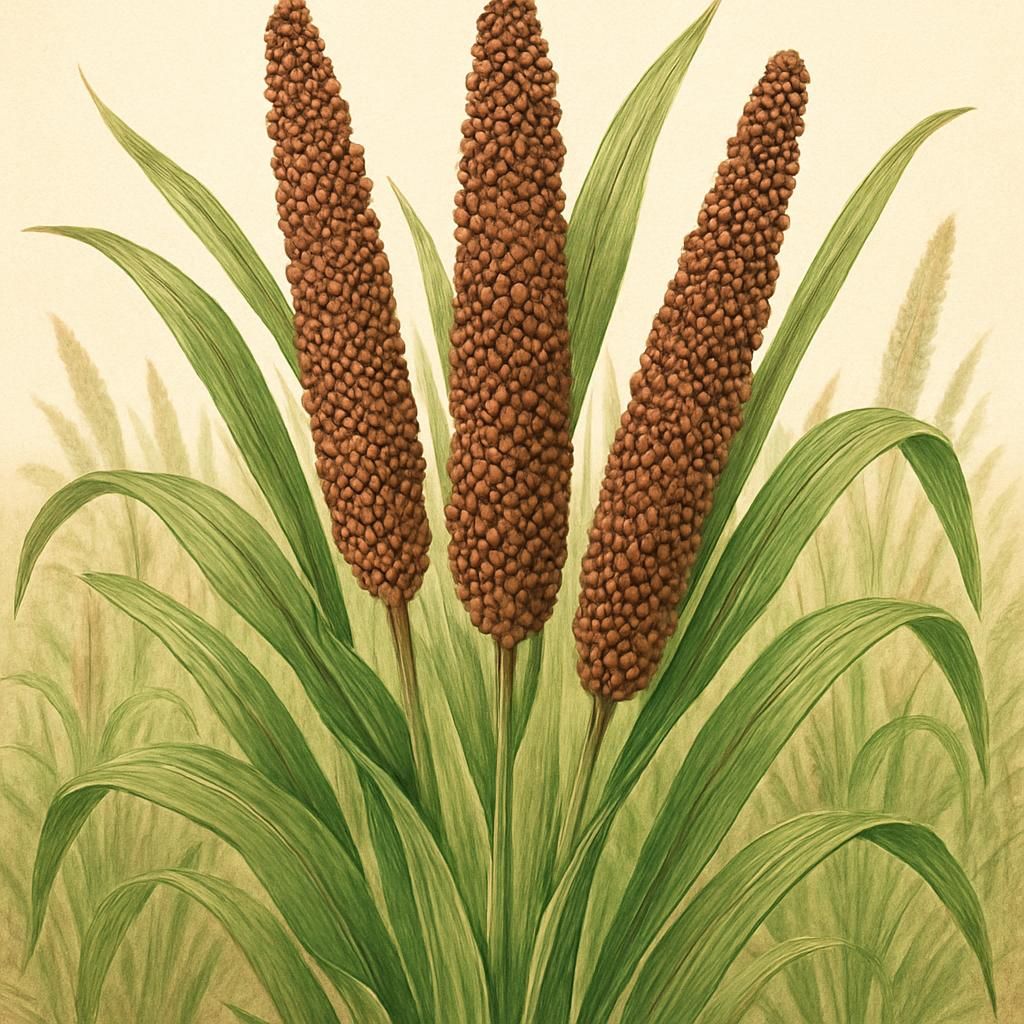
Introduction to Finger Millet (Indaf 5)
Finger Millet, also known as Ragi, is an ancient grain renowned for its nutritional profile and resilience in unfavorable climatic conditions. Indaf 5 is a popular variety developed for improved yield and resistance to common pests and diseases, making it ideal for cultivation in semi-arid zones.
Botanical Profile of Finger Millet (Indaf 5)
Belonging to the Poaceae family, Finger Millet has a scientific name, Eleusine coracana. It is an annual cereal that features a robust root system and can withstand droughts. Typically, it grows to about 1 to 1.5 meters in height, exhibiting finger-like panicles that give the crop its name.
Soil, pH, and Climate Requirements for Finger Millet (Indaf 5)
Finger Millet thrives in a range of soil types but prefers well-drained, loamy soils. It is adaptable to various pH levels and requires minimal rainfall.
| Requirement | Optimal Condition |
|---|---|
| Soil Type | Well-drained loam |
| Soil pH | 5.0 - 7.5 |
| Climate | Semi-arid |
| Rainfall | 500-800 mm |
Step-by-Step Planting & Propagation
- Preparation: Select a field with previous legume crops to enrich soil nitrogen levels. Plow and level the field to ensure fine tilth.
- Sowing: Best sown from late spring to early summer; use seeds or transplants.
- Spacing: Maintain a spacing of 30 cm between rows and 10 cm between plants.
- Depth: Sow seeds at a depth of 2-3 cm.
- Irrigation: Initial irrigation followed by strategic irrigation can maximize growth rates.
- Weed Control: Employ shallow cultivations when weeds emerge.
Care & Maintenance Regimes for Finger Millet (Indaf 5)
Proper care regimes are essential for maximizing yield potential.
| Care Activity | Frequency/Details |
|---|---|
| Watering | Every 15-20 days |
| Fertilization | 60 kg N/ha, 30 kg P/ha |
| Pruning | Not applicable |
Pests, Diseases & Organic Management
Finger Millet (Indaf 5) has a good resistance to pests, but it is still vulnerable to Spider Mites and Powdery Mildew. Organic remedies like neem oil sprays and regular monitoring can help manage these issues effectively.
For an in-depth understanding of managing plant health, you can explore Crop Diseases Under the Microscope: 9 Organic Fixes for Small Farm Resilience.
Harvesting, Curing & Optimal Storage
Harvesting occurs when panicles turn brown, usually 3-4 months post-sowing. The steps to harvesting include cutting, drying, threshing, and further drying the threshed grains for longer storage. Proper storage conditions include low humidity and controlled temperatures.
Companion Planting for Finger Millet (Indaf 5)
Optimal companion plants include Soybeans and Pigeon Pea, which enrich the soil and offer natural pest deterrents through diverse root systems and allelopathic chemicals.
To learn about other effective crop pairings, read Summer Companion Planting: 10 Organic Pairings to Boost Small Farm Resilience.