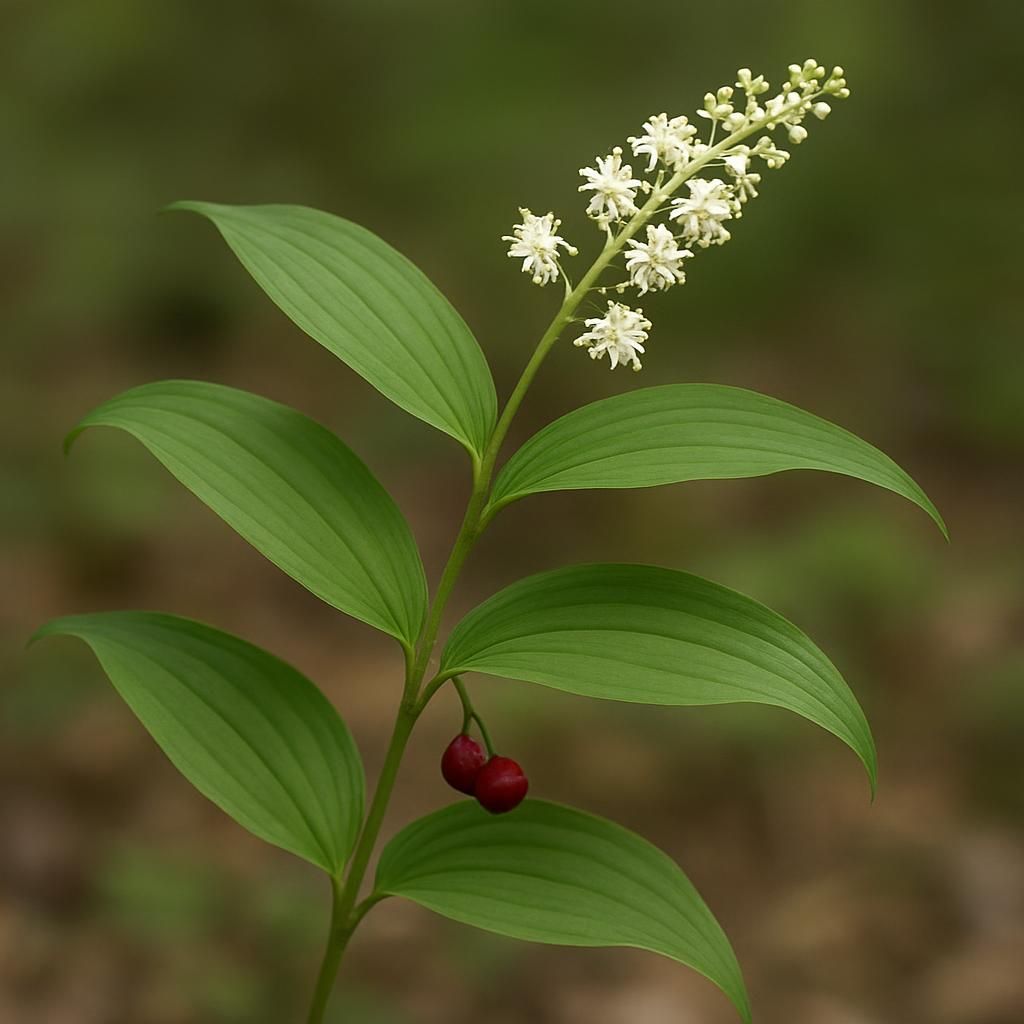
Introduction to False Solomon's Seal
False Solomon's Seal (Maianthemum racemosum), also known as Solomon's plume, is a graceful native perennial that brings woodland elegance to shade gardens and naturalized landscapes. Unlike true Solomon's seal, its flowers appear in terminal clusters at the ends of arching stems rather than along the leaf axils. Growers appreciate its dual ornamental value—delicate white spring blossoms followed by speckled red berries in autumn—while supporting native pollinators and wildlife. This guide delivers professional-grade advice for establishing and maintaining productive stands in both small-scale and commercial woodland plantings.
Botanical Profile of False Solomon's Seal
False Solomon's Seal belongs to the asparagus family (Asparagaceae) and is native across much of North America from Canada to northern Mexico. Plants produce unbranched, zig-zagging stems 60–90 cm tall with alternate, elliptical leaves. In late spring, terminal racemes of small, star-shaped white flowers appear, emitting a sweet fragrance that attracts native bees and flies. Following pollination, plants develop clusters of berries that transition from green to mottled red to deep ruby by fall. Rhizomatous spread allows gradual colony formation, making it excellent for groundcover in moist shade.
Soil, pH, and Climate Requirements for False Solomon's Seal (MUST INCLUDE A MARKDOWN TABLE OF IDEAL CONDITIONS)
False Solomon's Seal performs best in rich, loamy woodland soils with consistent moisture and excellent drainage. It tolerates a range of light levels from deep shade to dappled morning sun but declines in hot, dry exposures.
| Parameter | Ideal Range | Notes |
|---|---|---|
| Soil Type | Loamy, humus-rich | Incorporate leaf mold or aged compost |
| Soil pH | 5.5–7.0 | Slightly acidic to neutral |
| Temperature Range | 15–24 °C daytime | Hardy to USDA Zone 3 (-40 °C) |
| Moisture | Consistently moist | Avoid waterlogging; mulch to retain moisture |
| Light | Partial to full shade | Tolerates morning sun in cool climates |
| Spacing | 30–45 cm | Allow for rhizomatous spread |
Step-by-Step Planting & Propagation
- Site Selection: Choose a sheltered woodland edge or north-facing border with protection from drying winds.
- Soil Preparation: Amend native soil with 5–8 cm of leaf mold or well-rotted compost to improve structure and fertility.
- Rhizome Division (preferred): In early spring or fall, lift established clumps and divide rhizomes into 8–10 cm sections, each with at least one bud. Replant immediately at original depth.
- Seed Propagation: Collect ripe berries in fall, clean seeds, and sow immediately in moist seed trays. Provide 60–90 days of cold stratification at 4 °C before germination in spring.
- Container Planting: Use deep pots with drainage holes; transplant seedlings or divisions when roots fill the container.
- Watering In: Thoroughly soak planting holes and maintain even moisture for the first 6–8 weeks.
Care & Maintenance regimes for False Solomon's Seal (MUST INCLUDE A MARKDOWN TABLE OF WATER, FERTILIZER, AND PRUNING SCHEDULES)
Established plantings require minimal intervention beyond seasonal mulching and monitoring for moisture stress. Apply a 5 cm layer of shredded leaves or bark mulch annually to suppress weeds and maintain soil humidity.
| Season | Watering Schedule | Fertilizer Application | Pruning & Cleanup |
|---|---|---|---|
| Spring | 2.5 cm/week if rainfall insufficient | Apply 2–3 cm aged compost around base | Remove winter-damaged foliage |
| Summer | Maintain consistent moisture | Optional light fish-emulsion feed (1:10) in June | Deadhead spent flowers if desired |
| Autumn | Reduce frequency as plants senesce | Top-dress with leaf mold | Cut back stems to 5 cm after berry drop |
| Winter | Minimal; ensure mulch layer | None | Leave dried stems for winter interest and wildlife habitat |
Pests, Diseases & Organic Management
False Solomon's Seal is generally resilient but can encounter occasional issues. Aphids may cluster on tender spring growth; dislodge with a strong water spray or apply insecticidal soap. Slugs and snails can damage young shoots in damp seasons—use beer traps or iron-phosphate baits. Fungal leaf spots occasionally appear in overly crowded or poorly ventilated plantings; improve air circulation and remove affected foliage. Avoid chemical fungicides; instead, maintain proper spacing and remove debris at season's end.
Harvesting, Curing & Optimal Storage
While primarily grown for ornamental and ecological value, rhizomes can be harvested for propagation or limited medicinal use after 3–4 years. Dig carefully in early spring or late fall when plants are dormant. Rinse soil, divide into viable sections, and cure at 15–18 °C with 60–70 % humidity for 7–10 days. Store cured rhizomes in slightly moist sphagnum moss inside perforated plastic bags at 2–5 °C for up to six months. Berries are primarily for wildlife; they are mildly toxic to humans and should not be consumed.
Companion Planting for False Solomon's Seal
Pair False Solomon's Seal with other shade-tolerant natives to create resilient woodland communities. Compatible species include Wild Ginger (Asarum canadense), Foamflower (Tiarella cordifolia), and Jack-in-the-Pulpit (Arisaema triphyllum). These companions enhance biodiversity, improve soil structure through varied root depths, and provide continuous seasonal interest while reducing pest pressure through habitat diversity.