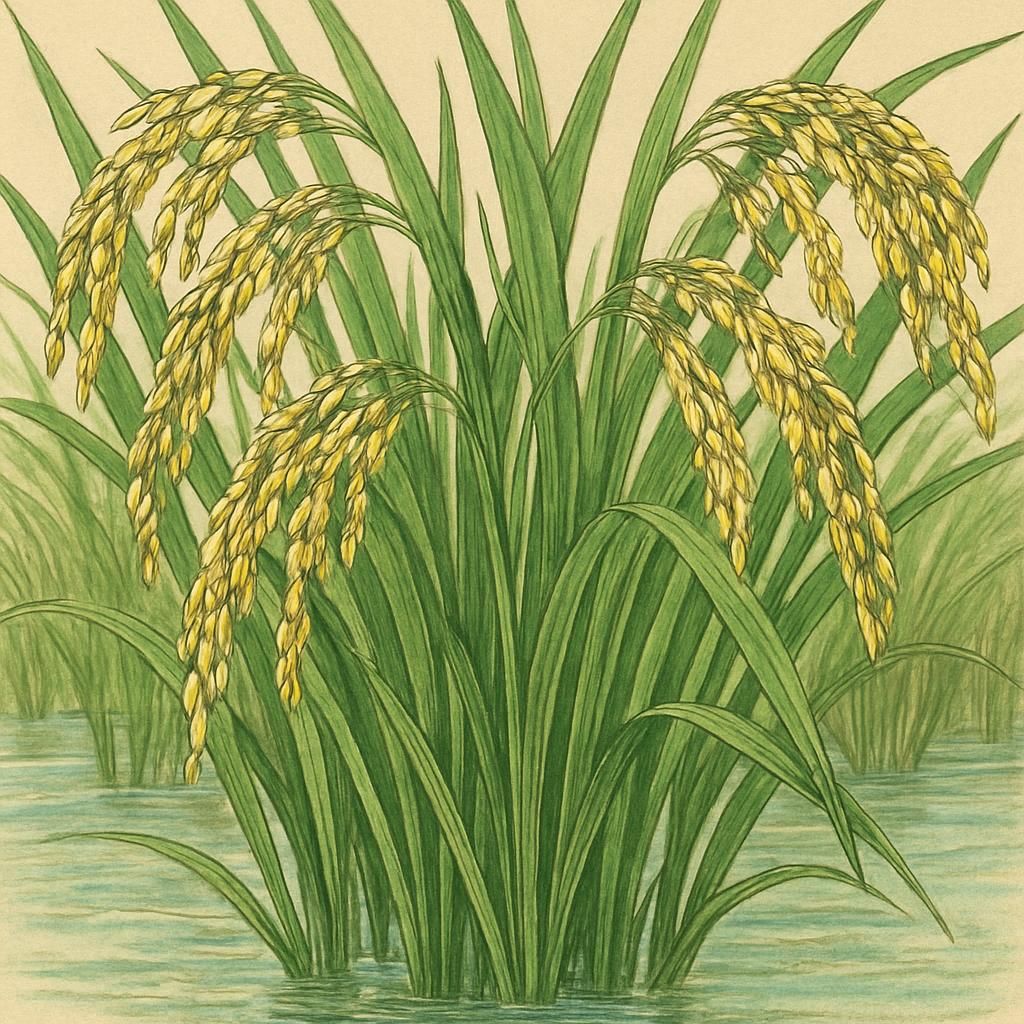
Introduction to Deepwater Rice (Bao)
Deepwater Rice, commonly known as Bao, is a distinctive variety of rice that has adapted to grow in waterlogged and flood-prone areas. This crop is an essential staple in Asian countries, providing a significant portion of calories and nutrition for millions of people. Its cultivation is best suited for regions with seasonal water fluctuations, where other types of rice might struggle.
Botanical Profile of Deepwater Rice (Bao)
Belonging to the species Oryza sativa, Deepwater Rice is a part of the Poaceae family. This variety has adapted to submerge up to four meters under water, thanks to its elongated stems that allow it to "stretch" towards the water's surface.
Soil, pH, and Climate Requirements for Deepwater Rice (Bao)
Deepwater Rice thrives in specific conditions that can be characterized by its ability to withstand and prosper in flooded environments. The ideal conditions are detailed in the table below:
| Factor | Ideal Range |
|---|---|
| Soil Type | Clayey loam, Silty loam |
| Soil pH | 5.0 - 6.5 |
| Temperature | 20°C - 35°C |
| Annual Rainfall | 1200mm - 2500mm |
These requirements make Deepwater Rice a resilient crop in tropical and subtropical regions, where heavy rainfall is common.
Step-by-Step Planting & Propagation
- Seed Selection: Choose healthy, disease-free seeds for planting. Test seeds for viability by placing them in water; healthy seeds will sink.
- Nursery Preparation: Sow seeds in a well-prepared nursery bed and transplant the seedlings once they reach 4-6 inches in height.
- Land Preparation: Plow fields to incorporate organic matter, which improves soil fertility and water retention.
- Transplanting: Perform transplanting 25-30 days after sowing, spacing seedlings 20 cm apart.
- Flood Management: After transplanting, regulate water levels to encourage robust growth.
Care & Maintenance regimes for Deepwater Rice (Bao)
Proper care involves managing water levels, fertilizing appropriately, and mitigating pests and diseases. The table below outlines the suggested regimes.
| Aspect | Schedule/Frequency |
|---|---|
| Water | 10-30 cm depth, maintained continuously |
| Fertilizer | Nitrogen, Phosphorus, Potassium every 4 weeks |
| Pruning | Not applicable |
Maintaining these practices ensures the health and productivity of the crop.
Pests, Diseases & Organic Management
Deepwater Rice is susceptible to a variety of pests and diseases. Common threats include Spider Mites and Leaf blights. To combat these naturally, encourage the presence of beneficial insects and use neem oil or other organic pesticides. For more detailed pest management techniques, consider reading this blog post on organic defenses.
Harvesting, Curing & Optimal Storage
Deepwater Rice is typically ready for harvest 150-180 days post-transplantation. The grain should be harvested at the correct moisture content (around 20%). Post-harvest, curing the rice by sun drying for 2-3 days ensures longer shelf life. Store the dried grains in a cool, dry place to prevent sprouting and mold development.
Companion Planting for Deepwater Rice (Bao)
Companion planting can enhance the growing environment of Deepwater Rice. Suitable companions include legumes, which fix nitrogen in the soil, improving fertility. For more strategic planting techniques, check out our guide on summer companion planting.