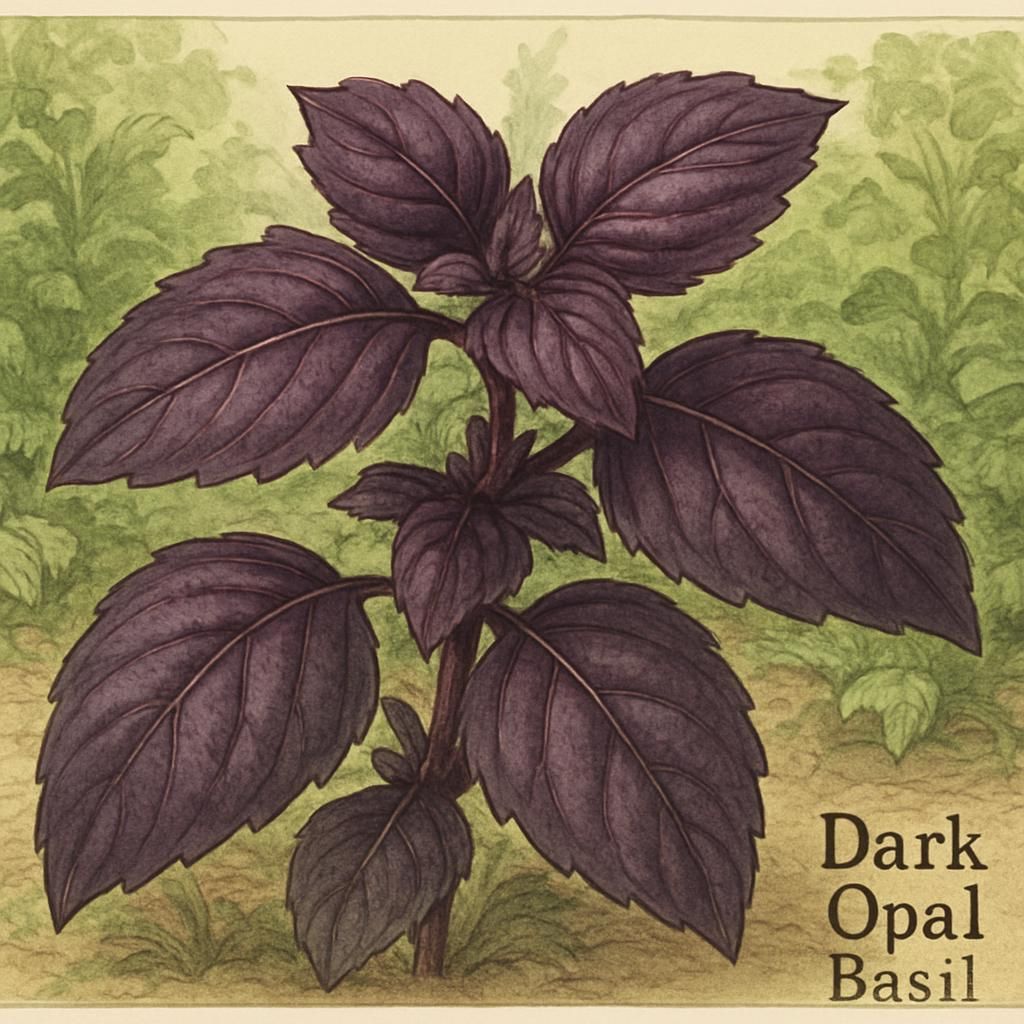
Introduction to Dark Opal Basil
Dark Opal Basil is a popular variety of basil cherished for its unique aesthetic and culinary uses. This variety stands out due to its captivating deep purple leaves, making it both a flavorful addition to culinary creations and a decorative plant in gardens. Originating from a cross-breeding of two types of basil, it brings with it a rich aromatic scent typical of basil plants, but with an added visual appeal.
Botanical Profile of Dark Opal Basil
The botanical identity of Dark Opal Basil is showcased by its scientific name, Ocimum basilicum 'Dark Opal'. It belongs to the Lamiaceae family, known for a plethora of aromatic herbs. The cultivar was developed in the United States during the 1950s and 1960s and received the All American Selection award in 1962 for its dramatic foliage.
Soil, pH, and Climate Requirements for Dark Opal Basil
Dark Opal Basil thrives best in well-draining soil rich in organic matter. Here's a structured overview of its ideal growing conditions:
| Requirement | Ideal Condition |
|---|---|
| Soil Type | Well-drained, loamy soils |
| Soil pH | 6.0 - 7.5 |
| Climate | Warm, Mediterranean-like |
| Temperature | 60-75°F (15-24°C) |
| Sunlight | Full sun (6-8 hours daily) |
For those interested in understanding the broader climate needs of basil, including the challenges small farms face with weather, explore The Truth About Weather Patterns and Small Farm Resilience.
Step-by-Step Planting & Propagation
- Seed Starting: Begin by sowing seeds indoors 6-8 weeks before the last expected frost date. Use seed trays filled with a quality soilless mix.
- Germination: Place the trays in a warm location (around 70°F/21°C) to promote germination, which typically occurs in 5-10 days.
- Transplanting: Once seedlings have 2-3 sets of true leaves, transplant them to individual pots. Harden off seedlings before planting outside.
- Spacing: Space plants about 10-12 inches apart to ensure adequate airflow and growth space.
- In-Ground Planting: Ensure the bed is enriched with organic compost before planting outdoors after the last frost.
Care & Maintenance Regimes for Dark Opal Basil
Maintaining Dark Opal Basil involves consistent watering, fertilization, and pruning. Below is a care schedule:
| Care Aspect | Schedule & Details |
|---|---|
| Watering | Moderate, 1 inch per week; avoid overhead watering to prevent mold |
| Fertilization | Monthly during the growing season with a balanced fertilizer |
| Pruning | Pinch off new blooms to promote leaf growth; prune regularly to encourage bushiness |
Pests, Diseases & Organic Management
Dark Opal Basil is susceptible to several pests and diseases. Major pests include Spider mites, aphids, and slugs, while diseases often involve downy mildew and Fusarium wilt.
To manage pests and diseases organically, practices such as crop rotation, companion planting, and use of neem oil can be beneficial. Explore strategies for managing basil economically at The Economics of Basil: A Brutal Breakdown.
Harvesting, Curing & Optimal Storage
Harvest leaves regularly to encourage continued growth. Cutting branches just above a pair of leaves can prevent stem die-back. Store harvested basil in a damp paper towel placed inside a loosely sealed bag in the refrigerator for short-term use. For long-term storage, freezing or making pesto is effective.
Companion Planting for Dark Opal Basil
Companion planting with crops like Tomato and Peppers provides mutual benefits, promoting pest resistance and enhancing growth. Avoid planting near rue and sage, which can inhibit basil growth.
Utilize insights on companion planting for yield maximization from Spring Companion Planting: 8 Organic Pairings to Maximize Small Farm Yields.