Introduction to Coffee (Robusta)
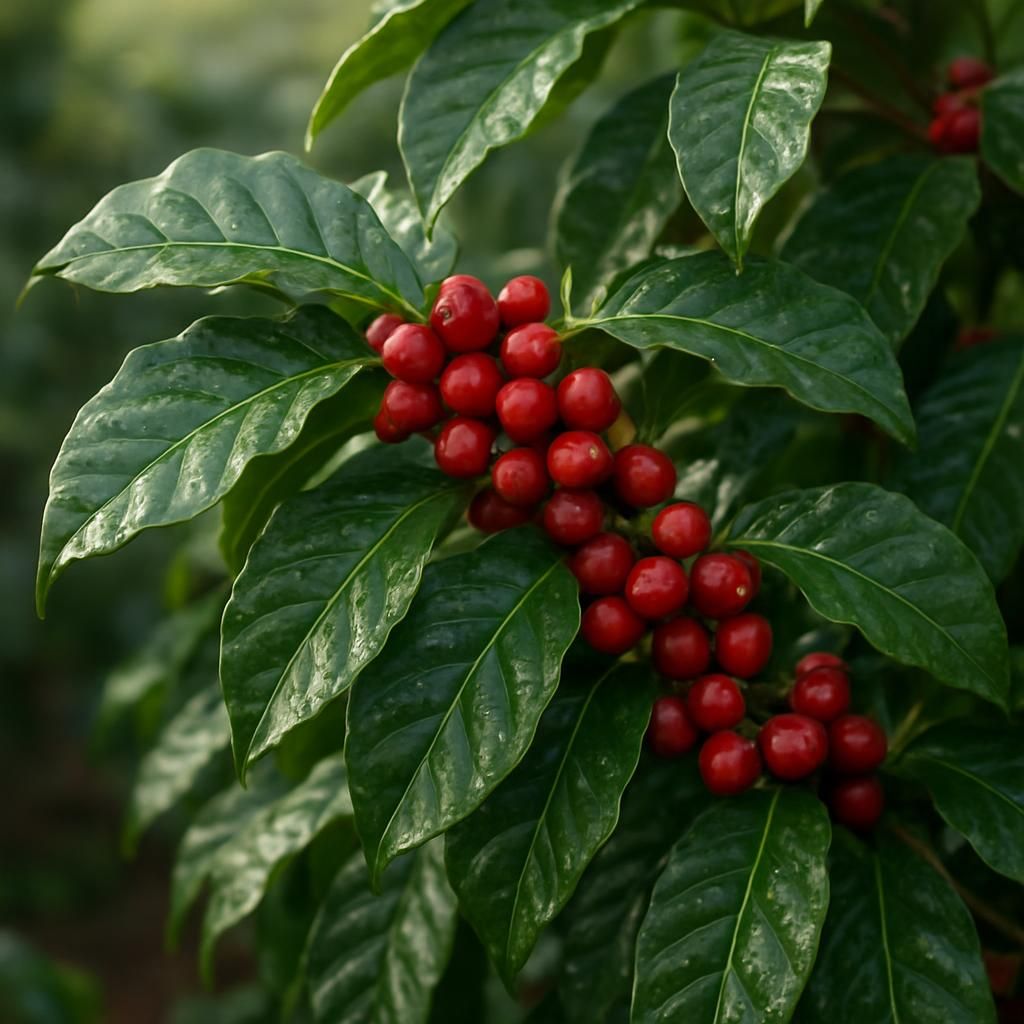
Robusta coffee (Coffea canephora) accounts for approximately 40% of global coffee production and serves as the backbone of many commercial espresso and instant coffee products. Native to central and western Africa, it offers higher yields, greater resistance to pests and diseases, and stronger caffeine content than Arabica varieties. Commercial growers value its adaptability to lower altitudes and warmer climates, where Arabica struggles. The plant forms an upright shrub or small tree reaching 4–8 meters, with glossy leaves and clusters of white flowers that develop into round cherries containing two seeds.
Modern production focuses on both large estates and smallholder systems in countries including Vietnam, Indonesia, Brazil, India, and Uganda. Robusta’s tolerance to heat, drought, and many soil-borne pathogens makes it increasingly relevant under climate change scenarios. Quality-focused producers now apply selective harvesting and controlled fermentation to improve cup profiles beyond traditional commodity grades.
Botanical Profile of Coffee (Robusta)
Coffea canephora belongs to the Rubiaceae family. Plants are diploid (2n=22) and exhibit significant genetic diversity across wild populations in the Congo basin and surrounding regions. The species is characterized by a shallow, fibrous root system, opposite elliptic leaves with prominent veins, and axillary inflorescences producing 30–50 flowers each. Cherries ripen from green to bright red over 9–11 months, containing two flat seeds with a distinct center cut.
Robusta exhibits strong self-incompatibility, requiring cross-pollination by wind or insects for optimal fruit set. Vegetative propagation through cuttings or grafting preserves desirable traits such as yield, bean size, and disease resistance. Commercial clones such as BP 42, BP 358, and SA 13 dominate large-scale plantings in Southeast Asia and Africa.
Soil, pH, and Climate Requirements for Coffee (Robusta)
Successful Robusta cultivation depends on matching site conditions to the crop’s physiological needs. The species performs best on deep, well-aerated soils with good water-holding capacity and moderate fertility. Avoid heavy clays or compacted soils that restrict root development. Organic matter content above 3% supports microbial activity and nutrient cycling.
| Parameter | Ideal Range | Notes |
|---|---|---|
| Soil Type | Sandy loam to clay loam | Well-drained, deep profiles preferred |
| Soil pH | 5.0–6.5 | Slightly acidic; liming if below 4.8 |
| Temperature | 20–30 °C (day), 15–20 °C (night) | Avoid prolonged exposure above 34 °C |
| Annual Rainfall | 1500–3000 mm | Even distribution; supplemental irrigation in dry periods |
| Altitude | 0–800 m a.s.l. | Higher elevations possible with shade |
| Relative Humidity | 70–85 % | Supports flowering and bean development |
| Sunlight | Full sun to 30 % shade | Shade trees reduce heat stress |
Step-by-Step Planting & Propagation
Select healthy, disease-free planting material from certified nurseries or clonal gardens. Prepare land by clearing competing vegetation and incorporating 20–30 t/ha well-decomposed compost or manure. Mark planting holes 2.5–3 m apart in rows spaced 3–3.5 m, allowing 1100–1300 plants per hectare. Dig holes 60 cm × 60 cm × 60 cm and backfill with topsoil mixed with 5 kg compost and 200 g rock phosphate.
Plant at the onset of the rainy season. Set seedlings or cuttings so the root collar sits at soil level. Water thoroughly and apply a 10 cm mulch layer of dried leaves or rice straw to conserve moisture and suppress weeds. Install temporary shade nets or interplant with fast-growing legumes such as Gliricidia for the first 12–18 months.
Care & Maintenance regimes for Coffee (Robusta)
Consistent agronomic practices drive both yield and bean quality. Weed control is critical during the first two years; thereafter, maintain a 1 m weed-free circle around each stem. Mulch replenishment twice yearly reduces soil temperature fluctuations and improves water-use efficiency.
| Operation | Frequency | Details |
|---|---|---|
| Irrigation | Every 7–10 days in dry season | 20–30 L per plant; drip systems preferred |
| Fertilizer (N-P-K) | 3 applications/year | Year 1: 100 g N, 40 g P₂O₅, 80 g K₂O; increase to 300-120-240 g by year 4 |
| Organic Manure | Once per year | 10–15 kg well-rotted compost or cattle manure per plant |
| Pruning | Annual after harvest | Remove suckers, dead wood, and crossing branches; maintain 4–6 stems |
| Mulch Renewal | Twice yearly | 10 cm layer of organic material; keep 20 cm from stem |
Foliar micronutrient sprays (zinc, boron, magnesium) at flowering and fruit set correct common deficiencies observed in acid soils.
Pests, Diseases & Organic Management
Robusta faces fewer disease pressures than Arabica but remains susceptible to several key threats. Coffee leaf rust (Hemileia vastatrix) occurs but causes less damage than on Arabica. Root-knot nematodes and mealybugs can reduce vigor in sandy soils. The coffee berry borer (Hypothenemus hampei) is the most economically important insect pest worldwide.
Integrated management begins with cultural practices: sanitation, removal of fallen cherries, and pruning for better airflow. Release of parasitoids such as Cephalonomia stephanoderis provides biological control of berry borer. Neem-based sprays and pheromone traps offer additional organic options. For nematodes, interplanting with antagonistic marigold or sunn hemp and applying 2 t/ha neem cake reduces populations. Maintain soil organic matter above 4 % to support beneficial microbes that suppress soil-borne pathogens.
Harvesting, Curing & Optimal Storage
Robusta cherries ripen unevenly; selective hand-picking every 10–14 days yields the highest quality. Mechanical harvesting is used on large flat estates but requires subsequent flotation and density sorting. Target moisture content at harvest is 55–60 %.
Post-harvest processing includes dry (natural) and wet methods. For dry processing, spread cherries in 5–8 cm layers on raised beds, turning frequently for 10–14 days until moisture reaches 11–12 %. Wet processing involves depulping within 24 hours, 24–36 hour fermentation, and washing before drying. Store parchment coffee at 10–12 % moisture in jute or GrainPro bags at 18–22 °C and <65 % RH. Avoid direct sunlight and strong odors. Properly cured and stored Robusta maintains cup quality for 12–18 months.
Companion Planting for Coffee (Robusta)
Strategic companion planting improves soil fertility, pest regulation, and microclimate. Leguminous shade trees such as Gliricidia and Pigeon pea fix nitrogen and provide light shade during establishment. Inter-row planting of Banana offers temporary shade and additional income while coffee matures. Marigold borders repel nematodes and attract beneficial insects.
Avoid planting competitive grasses or shallow-rooted crops within 1.5 m of coffee stems. Sesame and Coriander serve as trap crops for certain sucking insects while providing marketable produce. Rotate companion species every 4–5 years to prevent pest buildup and maintain biodiversity within the coffee system.