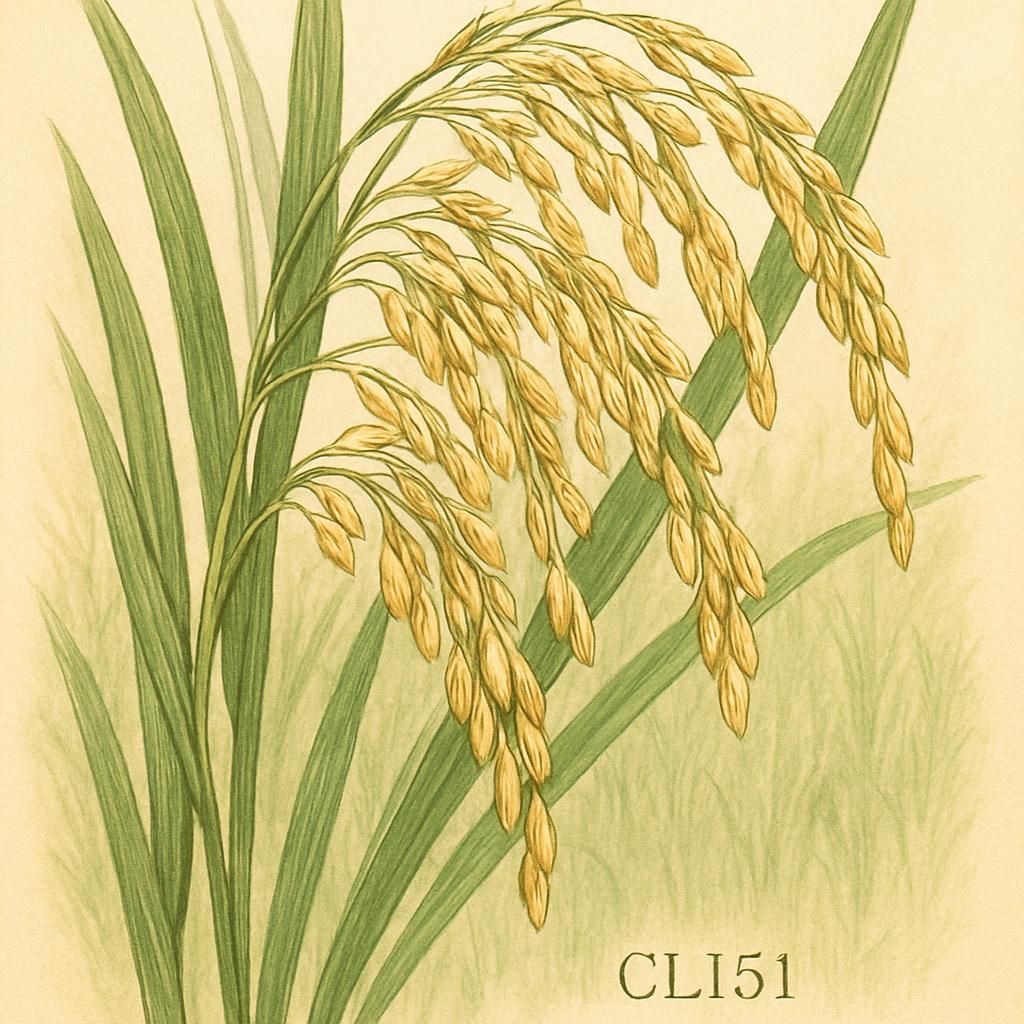
Introduction to CL151 Rice
CL151 Rice is a variety of rice specifically bred to offer higher yields and resistance to common rice herbicides. Originating from the LSU AgCenter in Louisiana, this semi-dwarf, long-grain variety has quickly gained popularity among American rice farmers. Recognized for its strength, CL151 has proven its value in both quality and quantity, making it a staple for large and small-scale producers.
Botanical Profile of CL151 Rice
Belonging to the species Oryza sativa, CL151 Rice is a semi-dwarf plant, meaning it has a shorter stature which helps prevent lodging – a common issue where plants fall over. The grain type is long and slender, typically measuring between 7mm to 9mm. This plant completes its growth cycle in approximately 120-130 days from seed to harvest, a suitable duration for most temperate regions.
Soil, pH, and Climate Requirements for CL151 Rice
CL151 thrives in a specific set of environmental conditions that allow for optimal growth and yield. Below is a table outlining these necessary conditions:
| Factor | Ideal Conditions |
|---|---|
| Soil Type | Silty clay or clay loam |
| Soil Drainage | Poorly drained |
| Soil pH | 4.5 - 6.5 |
| Temperature Range | 20°C - 35°C (68°F - 95°F) |
| Rainfall | 600-900 mm during growth cycle |
Step-by-Step Planting & Propagation
- Seed Preparation: Purchase high-quality CL151 seeds for the best results. Soak seeds in water for 12-24 hours to enhance germination.
- Land Preparation: Plow the field thoroughly, ensuring that it is level since uniform water depth is crucial for rice growth. Create levees to retain water if necessary.
- Direct Seeding: Spread seeds uniformly onto the prepared field. Direct seeding is preferred for CL151 due to its precise control over plant density.
- Water Management: Flood the field immediately after seeding to germinate the seeds. Maintain 5-10 cm of standing water throughout the growing period.
- Weed Management: Use the recommended herbicide compatible with CL151 to control weed growth. Follow label instructions carefully for timing and application technique.
Care & Maintenance regimes for CL151 Rice
To ensure a bountiful harvest, follow these care and maintenance schedules:
| Task | Recommendations |
|---|---|
| Watering | Maintain 5-10 cm water level; reduce pre-harvest |
| Fertilization | Apply NPK 10:10:10 pre-planting; top dress N twice during growth |
| Weeding | Herbicide application at 3-4 leaf stage |
| Pest Management | Monitor for spider mites, adjust treatments as necessary |
Pests, Diseases & Organic Management
CL151 is generally resistant to many common diseases; however, some pests and diseases can still pose a threat. Notably, spider mites and rice blast disease can affect crops under severe conditions.
Management Strategies:
- Spider Mites: Regular monitoring and maintaining humidity can prevent infestations.
- Blast: Fungicide applications are optional but organic solutions include neem oil sprays.
- Implement crop rotation practices and maintain field sanitation to minimize disease occurrence.
Organic management strategies can further be explored in the crop diseases under the microscope: 9 organic fixes for small farm resilience blog post.
Harvesting, Curing & Optimal Storage
Rice harvesting is mainly mechanical. Aim to harvest when grains have reached physiological maturity, typically 25-30% grain moisture content. Post-harvest, dry the grains to 12-14% moisture content for storage.
Cure grains by maintaining them in air-tight containers at a cool, stable temperature to minimize pest damage and maintain quality. Long-term storage should maintain a dry, cool environment, ideally below 20°C.
Companion Planting for CL151 Rice
Integrating companion planting into rice fields can increase biodiversity and yield stability. Suitable companion plants include windbreaks like Sesame and Pigeon Pea.
Such companions not only provide a habitat for pollinators and predatory insects but also enhance soil structure, offering additional nitrogen fixation.
Learn more about implementing effective companion plant strategies in the spring companion planting: 8 organic pairings to maximize small farm yields blog post.