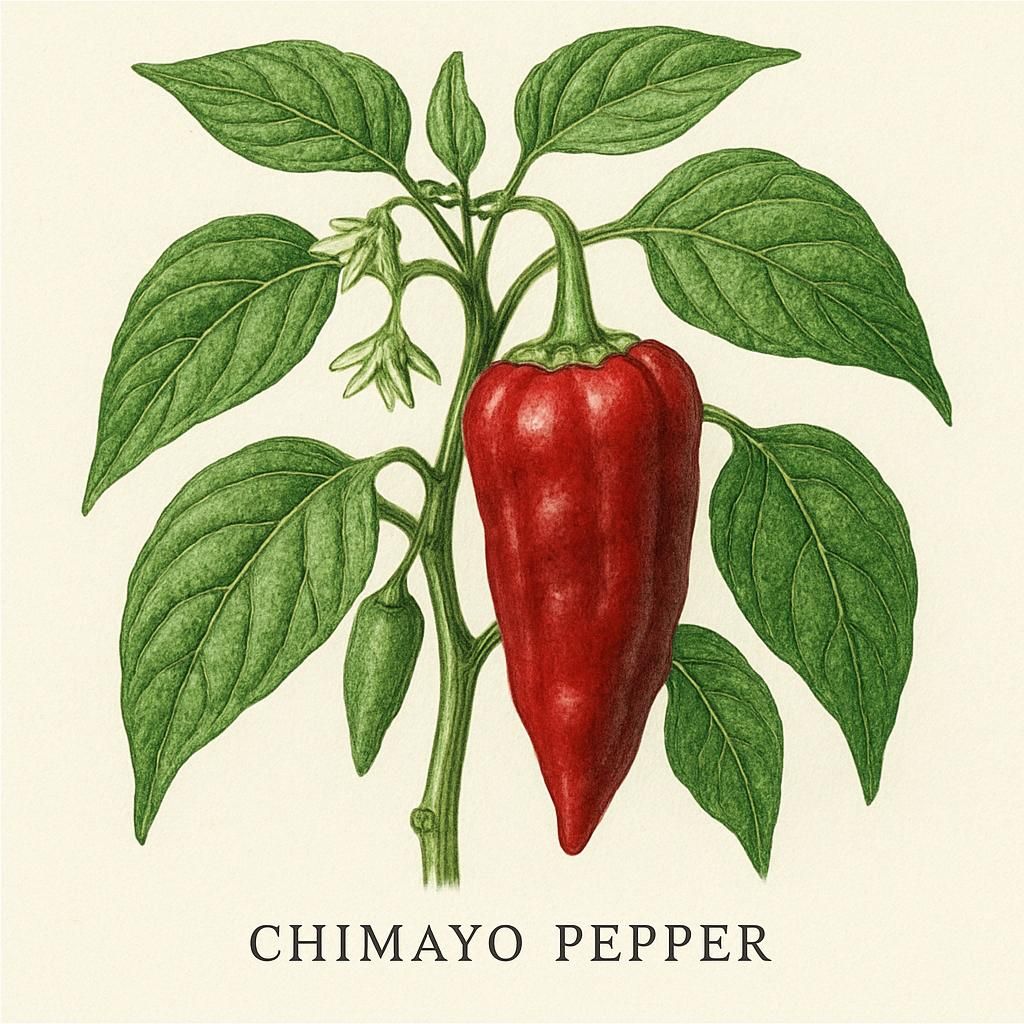
Introduction to Chimayo Pepper
The Chimayo Pepper, originating from Chimayó, New Mexico, stands out among chili varieties due to its cultural significance and unique flavor profile. Known for its sweet and earthy taste with medium-level heat, it plays a pivotal role in Southwest American cuisine. This heirloom pepper is prominent for its use in producing a distinctive red chili powder that flavors salsas, stews, and many local dishes.
Botanical Profile of Chimayo Pepper
Scientific Name: Capsicum annuum
Common Name: Chimayo Pepper
Origin: Chimayó, New Mexico, USA
Plant Type: Annual
Portion Used: Fruit
Size: 12 to 24 inches in height
Fruit Characteristics: Shrink-wrapped red pods, 3-4 inches long
Heat Level: Moderate, 4,000 to 6,000 Scoville Heat Units (SHU)
Soil, pH, and Climate Requirements for Chimayo Pepper
Chimayo Peppers thrive best in warm climates typical of their native region. The pepper's resilience makes it adaptable, but optimal production requires specific conditions.
| Factor | Ideal Range |
|---|---|
| Soil Type | Well-drained, sandy or loamy soil |
| Soil pH | 6.2 to 7.0 |
| Temperature | 70°F to 90°F (21°C to 32°C) |
| Sunlight | Full sun (6-8 hours per day) |
| Watering | Moderate, avoid waterlogging |
| Humidity | Medium, avoid excessively dry or wet |
Step-by-Step Planting & Propagation
- Start Indoors: In cooler climates, start seeds indoors 8-10 weeks before the last frost. Use seed trays and grow lights to simulate warmer conditions.
- Transplant Outdoors: Once the temperature consistently remains above 60°F, transplant seedlings outdoors. Ensure the location receives full sun and well-drained soil.
- Spacing: Plant seedling 18-24 inches apart to ensure ample growth space.
- Direct Sowing: In regions with longer growing seasons, sow seeds directly outdoors after the last frost.
- Watering: Water deeply at the base, ensuring the soil remains moist but not waterlogged.
Care & Maintenance regimes for Chimayo Pepper
Regular care and maintenance ensure the Chimayo Pepper plant remains healthy and productive.
| Care Aspect | Frequency |
|---|---|
| Watering | Weekly or as needed to maintain moisture |
| Fertilizing | Once every 3-4 weeks with balanced fertilizer |
| Pruning | Prune lower leaves to improve air circulation |
| Weeding | Regularly to minimize competition for nutrients |
Pests, Diseases & Organic Management
Chimayo Peppers face similar pest issues to other chili varieties. Common pests include Spider Mites, aphids, and whiteflies. Diseases might range from root rot to Powdery Mildew.
Organic Management:
- Neem Oil: Regular neem oil applications can control mites and aphids.
- Companion Planting: Use marigolds or nasturtiums to deter insects naturally.
- Clean Practices: Ensure plants are well-spaced and pruned to promote air circulation and reduce disease risks.
Harvesting, Curing & Optimal Storage
Harvest Chimayo Peppers when they are firm, approximately 75-80 days after planting.
- Harvest Timing: Pods should turn a vibrant red.
- Curing: Air-dry peppers until they become leathery (typically a week).
- Storage: Store dried peppers in a sealed container, placed in a cool, dry place. When producing chili powder, roast and then grind the peppers to retain flavor and potency.
Companion Planting for Chimayo Pepper
Companion planting enhances growth and prevents pest infestations. Beneficial companions include:
- Lycopersicon esculentum: Enhance growth through shared natural defenses.
- Basil and Marigold: Repel harmful insects and improve soil quality.
Explore more on strategic planting techniques in our companion planting guide: Summer Companion Planting: 10 Organic Pairings to Boost Small Farm Resilience.
To delve into small farm resilience strategies and disease management, check our article: Crop Diseases Under the Microscope: 9 Organic Fixes for Small Farm Resilience.