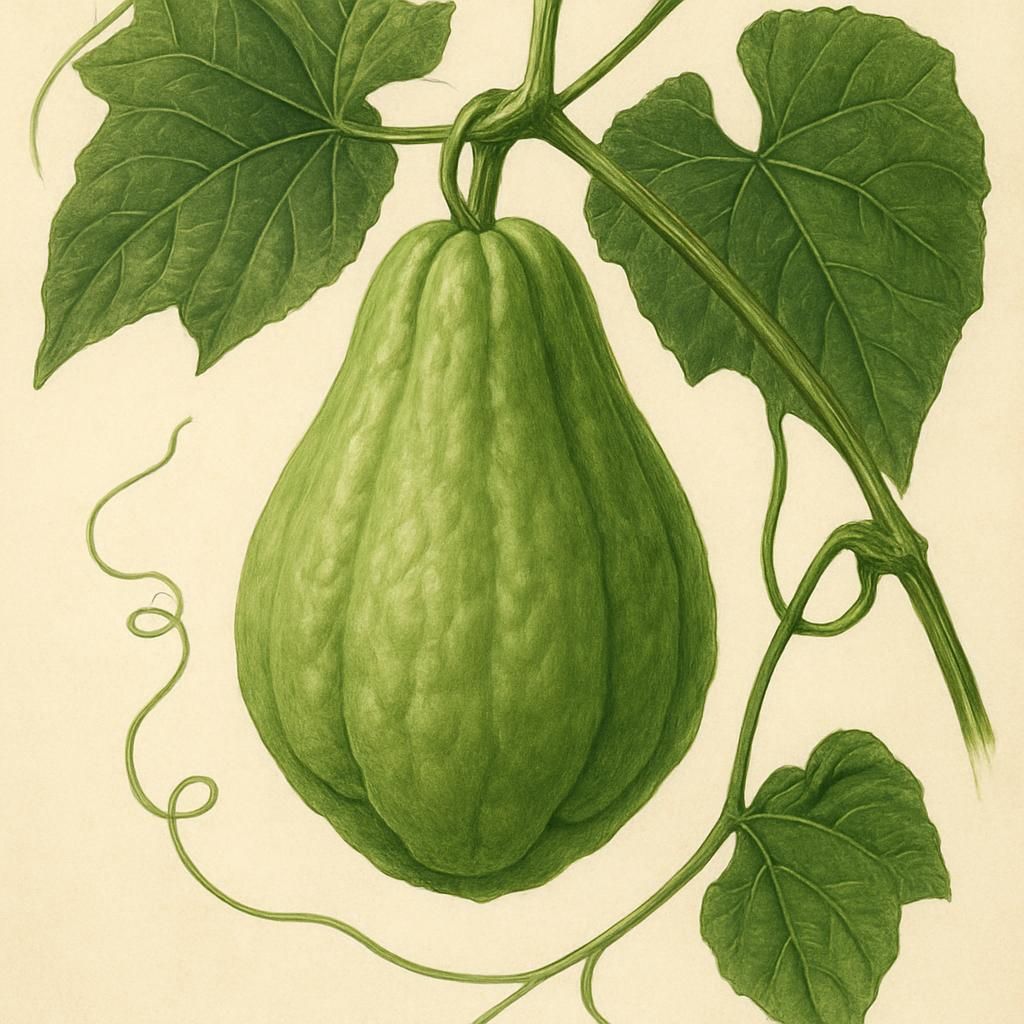
Introduction to Chayote (Mirliton)
Chayote, also commonly referred to as Mirliton, is an edible plant belonging to the gourd family, Cucurbitaceae. It is widely cultivated in tropical and subtropical regions primarily for its fruit, vegetable-like characteristics, and edible roots and young shoots. Known for its mild flavor and versatile culinary applications, Chayote is a staple in cuisines around the world, from stews and salads to casseroles and desserts.
Botanical Profile of Chayote (Mirliton)
The Chayote plant is a vigorous vine that can grow rapidly under the right conditions, reaching heights of up to 12 meters. It features broad, deeply veined leaves and tendrils that support its climbing nature. The plant produces a pale green, pear-shaped fruit with a wrinkled appearance, which can weigh between 150-500 grams. Each fruit contains a single large seed, which is also edible.
Soil, pH, and Climate Requirements for Chayote (Mirliton)
Chayote thrives in well-drained, fertile soils and prefers a tropical climate. The plant is sensitive to frost and requires warm temperatures to grow optimally.
| Condition | Ideal Range |
|---|---|
| Soil Type | Loamy, well-drained |
| Soil pH | 5.5 - 6.5 |
| Temperature | 20-30°C (68-86°F) |
| Rainfall | 1500-2000 mm/year |
Step-by-Step Planting & Propagation
Chayote is usually propagated through its fruits or tuberous roots.
- Seed Selection: Choose a mature, plump Chayote fruit. Let it sprout by storing it in a cool, dry place until the seed inside starts to germinate.
- Planting: Prepare holes about 5-10 cm deeper than the fruit. Plant the sprouted fruit horizontally with the sprout facing upwards.
- Spacing: Space plants 3-5 meters apart to accommodate vines.
- Support: Install trellises or supports as the vine grows vigorously.
- Irrigation: Water regularly to maintain moist soil, particularly during dry spells.
Care & Maintenance Regimes for Chayote (Mirliton)
Consistent care and maintenance are crucial for healthy Chayote production.
| Care Activity | Frequency |
|---|---|
| Watering | 2-3 times per week |
| Fertilizing | Every 4-6 weeks |
| Pruning | Once vines reach 2-3 m |
Pests, Diseases & Organic Management
Chayote can be affected by pests such as Spider Mites and diseases like powdery mildew. Regular monitoring and organic pest control measures are recommended.
- Pests: Use neem oil or insecticidal soap against spider mites.
- Diseases: Implement crop rotation and fungicides for mildew prevention.
Harvesting, Curing & Optimal Storage
Chayote fruits are typically ready for harvest 4-6 months after planting.
- Harvesting: Pick tender fruits by hand when they are mature but still young and soft.
- Curing: Allow harvested fruits to cure in a shaded, ventilated area for several days to harden their skin.
- Storage: Store in a cool, dry place. Refrigeration can extend their shelf life up to a month.
Companion Planting for Chayote (Mirliton)
Chayote benefits from companion planting with nitrogen-fixing plants such as beans and shallow-rooted crops like lettuce. Avoid planting near Tomato as they compete for the same nutrients.
Consider reading more about small farm practices in the article The Truth About Weather Patterns and Small Farm Resilience and explore advanced organic pest management in Crop Diseases Under the Microscope: 9 Organic Fixes for Small Farm Resilience.