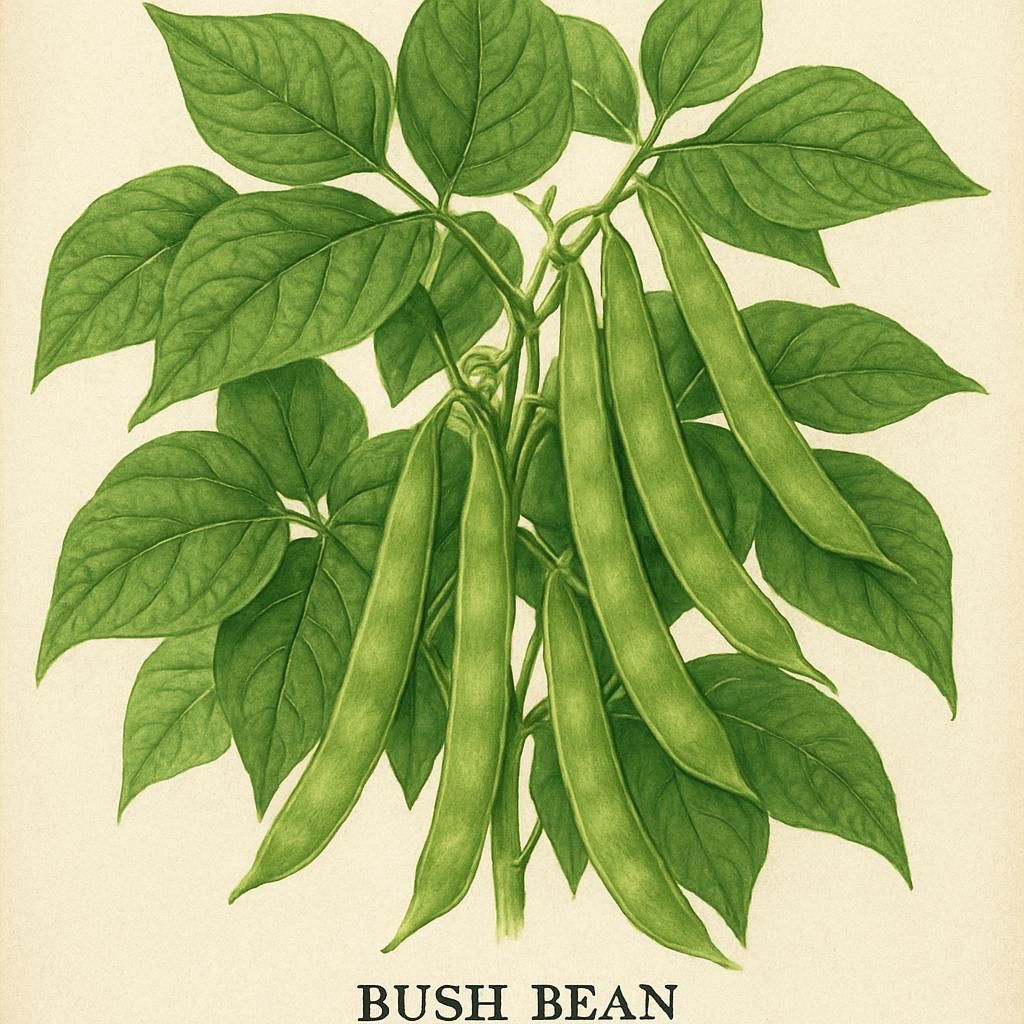
Introduction to Bush Bean (Roma II)
Bush Bean (Roma II), also known as the Italian flat bean, is a versatile and easy-to-grow crop renowned for its smooth, tender, flat pods that are free from strings. This variety of bush bean is favored by gardeners for its excellent taste and ability to produce reliable yields with minimal maintenance. Perfect for gardeners new to growing beans, Roma II offers the advantage of compact growth, requiring less support than pole varieties, while still providing an abundant harvest.
Botanical Profile of Bush Bean (Roma II)
The Phaseolus vulgaris 'Roma II' is a cultivar of the common bean, characterized by its bushy growth habit and robust flat pods. Typically, these beans grow to a height of 18-20 inches, making them manageable in smaller garden spaces. The plant's life cycle includes flowering, with the blooms eventually giving way to pods that are ready for harvest in about 60-70 days from sowing. Bush beans are determinate plants, meaning they produce all their beans within a relatively short period, making them ideal for both home consumption and successive planting schedules.
Soil, pH, and Climate Requirements for Bush Bean (Roma II)
The success of growing Bush Bean (Roma II) significantly hinges on optimal soil and climate conditions. Here is a brief table outlining the ideal conditions for growing Roma II:
| Aspect | Ideal Condition |
|---|---|
| Soil Type | Well-drained, sandy loam |
| Soil pH | 6.0-7.0 |
| Temperature | 70-80°F (21-27°C) |
| Sunlight | Full sun |
| Rainfall | Moderate (avoid waterlogging) |
Step-by-Step Planting & Propagation
Site Preparation: Choose a sunny spot in your garden with good air circulation. Prepare the soil by tilling it and incorporating well-rotted compost to improve drainage and nutrient content.
Sowing Seeds: Direct sowing is recommended. Plant seeds 1-1.5 inches deep, spaced 3-4 inches apart in rows that are about 18-24 inches apart.
Watering: Initially, water gently to promote germination, and ensure consistent moisture until seedlings are established.
Thinning: Once seeds have sprouted and seedlings are about 2 inches tall, thin out the weaker plants, maintaining the recommended spacing.
Succession Planting: To ensure continued production, plant new seeds every 2-3 weeks during the growing season.
Care & Maintenance Regimes for Bush Bean (Roma II)
Regular care and maintenance ensure a healthy and productive Roma II crop. The following table outlines essential maintenance schedules:
| Aspect | Schedule/Frequency |
|---|---|
| Watering | 1-2 times per week, increase during dry spells |
| Fertilizer | Side-dress with a balanced fertilizer at flowering |
| Weeding | Regularly, to prevent competition for nutrients |
| Support | Rarely needed, due to compact growth |
Pests, Diseases & Organic Management
Despite their resilience, Bush Bean (Roma II) can be susceptible to several pests and diseases, including Spider Mites, aphids, and bean rust. Integrated pest management and organic controls are vital:
- Aphids: Encourage natural predators such as ladybugs and lacewings.
- Bean Rust: Use disease-resistant varieties and practice crop rotation.
- Spider Mites: Maintain humidity and apply insecticidal soaps if needed.
For more organic pest control techniques, consider reading 7 Summer Pest Traps That Sabotage Small Farm Harvests.
Harvesting, Curing & Optimal Storage
Bush Bean (Roma II) should be harvested when pods are firm but not overripe, generally about 60 days after planting. Regular harvesting encourages further pod formation. After harvesting, wash and dry beans before storing them in a cool, dry place. They can be stored for up to a week in the refrigerator.
Companion Planting for Bush Bean (Roma II)
Companion planting is a beneficial practice that can enhance the growth of Roma II. It is well paired with nitrogen-fixing plants and aromatic herbs that repel pests. Good companions include:
- Corn for shade and support
- Cucumber to deter beetles
- Basil and Marigold: Improve growth and deter pests
For extensive guidance on effective pairings, visit Summer Companion Planting: 10 Organic Pairings to Boost Small Farm Resilience.