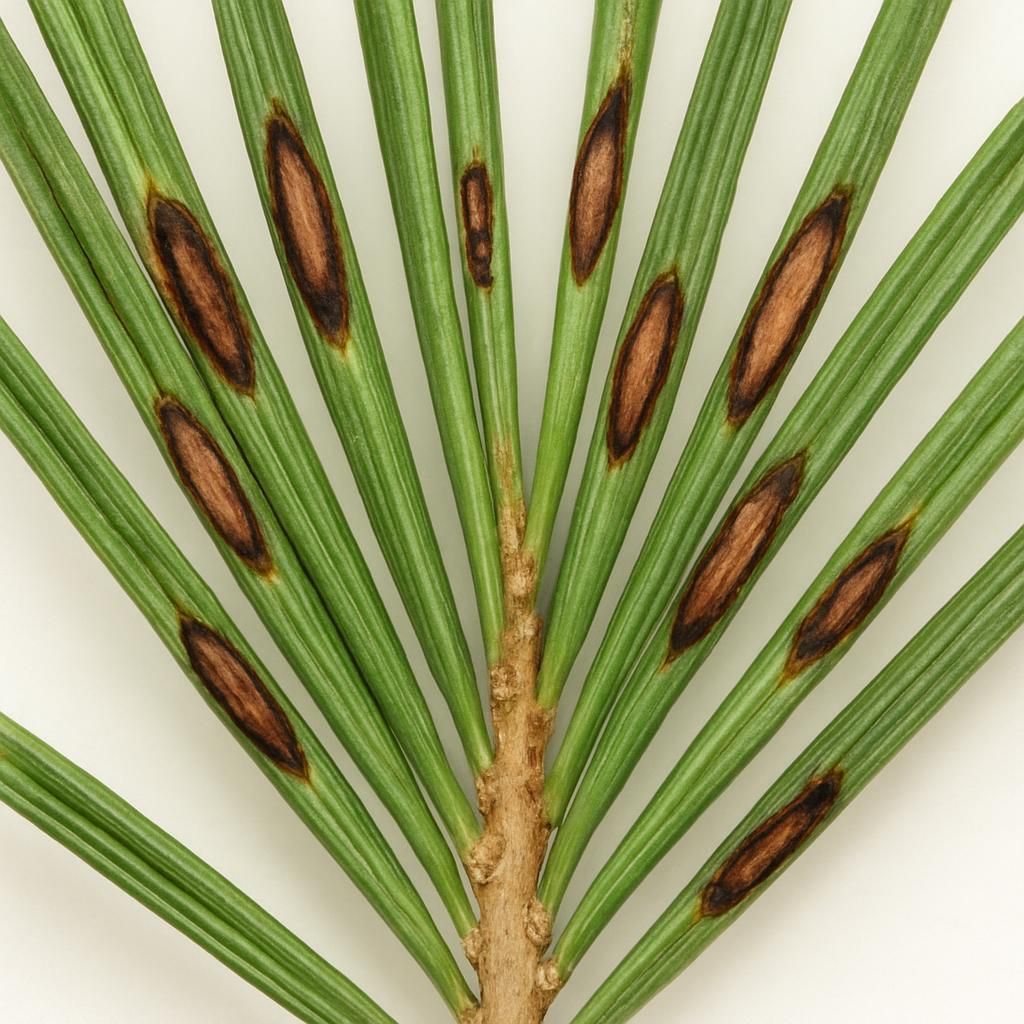
Introduction to brown spot needle blight
Brown spot needle blight, caused by the fungus Lecanosticta acicola, is a significant foliar disease of pines that leads to needle necrosis, defoliation, and long-term growth suppression in both nursery and plantation settings. The pathogen thrives in warm, humid environments and spreads rapidly through splashing rain and wind-driven spores. Early recognition and integrated management are essential to prevent widespread losses in commercial forestry and ornamental plantings.
Identifying Symptoms & Damage
Initial symptoms appear as small, yellow-green spots on current-year needles that rapidly turn brown with distinct dark margins. As infection advances, spots coalesce into larger necrotic bands, often accompanied by resinous exudates. Severely affected trees exhibit premature needle drop, resulting in thin crowns, reduced photosynthetic capacity, and heightened susceptibility to secondary stressors such as drought or bark beetles.
Lifecycle and Progression of brown spot needle blight
The disease cycle begins with overwintering fruiting bodies (acervuli) on fallen or retained needles that release conidia during spring rains. These spores infect newly emerging needles through stomata under prolonged leaf wetness. Multiple infection cycles occur throughout the growing season, with peak sporulation in late summer and early fall.
| Lifecycle Stage | Timing | Key Events | Environmental Conditions |
|---|---|---|---|
| Overwintering | Late fall–early spring | Acervuli form on infected needles | Cool, moist weather preserves fruiting bodies |
| Primary Infection | Spring (bud break–June) | Conidia released by rain splash infect new needles | 15–25 °C with >12 h leaf wetness |
| Secondary Spread | Summer–early fall | Repeated cycles of sporulation and infection | Warm, humid periods with frequent rainfall |
| Needle Abscission | Late summer–fall | Infected needles turn brown and drop | Prolonged high humidity accelerates defoliation |
| Fruiting Body Maturation | Fall–winter | New acervuli develop on retained and fallen needles | Mild winters favor overwinter survival |
Environmental Triggers & Risk Factors
High relative humidity (>80 %), frequent rainfall, and temperatures between 18–28 °C create optimal conditions for spore germination and infection. Dense planting, poor air circulation, and overhead irrigation increase leaf wetness duration and disease pressure. Young seedlings and trees stressed by transplant shock or nutrient deficiency are particularly vulnerable.
Organic Control & Treatment Plans
Organic management emphasizes cultural sanitation, resistant cultivars, and approved biological or copper-based products applied at precise intervals.
| Treatment Option | Active Ingredient / Method | Application Frequency | Notes |
|---|---|---|---|
| Needle Sanitation | Raking and removal of fallen needles | Once in late fall + mid-spring | Reduces overwintering inoculum by 60–80 % |
| Copper Hydroxide Spray | 2–3 lb metallic copper/acre | Every 14–21 days from bud break through July | Apply before rain events; rotate with other products |
| Bacillus subtilis (Serenade) | 2–4 qt/100 gal | Every 7–14 days during wet periods | OMRI-listed; best used preventively |
| Potassium Bicarbonate | 2–5 lb/100 gal | Every 10–14 days | Provides contact suppression; avoid phytotoxicity on tender growth |
| Resistant Pine Selection | Plant Pinus palustris or resistant P. elliottii stock | At establishment | Long-term genetic resistance reduces future sprays |
Preventing brown spot needle blight in the Future
Establish plantations with adequate spacing (minimum 2.5 m between trees) to promote airflow and rapid needle drying. Implement a three-year crop rotation away from susceptible pines where feasible, and avoid overhead irrigation during peak infection periods. Regular scouting from bud break through September allows timely intervention before epidemics develop. Mulching with organic materials and balanced fertility programs strengthen tree defenses against infection.
Crops Most Affected by brown spot needle blight
While the disease is host-specific to conifers, related foliar pathogens affect many broadleaf species. Notable susceptible hosts include Pine species and other conifers; analogous leaf spot issues occur on Tomato and Potato under similar environmental conditions. See Crop Diseases Under the Microscope: 9 Organic Fixes for Small Farm Resilience for broader management insights applicable across cropping systems.