Introduction to Borg 9 Pepper
The Borg 9 Pepper, a formidable cultivar in the Capsicum chinense family, is celebrated for its extreme heat and fruity undertones. A hybrid bred from the Ghost Pepper, it garners much interest from spice aficionados and serious gardeners alike. Ideal for spicing up recipes or creating hot sauces, this pepper demands respect with its intensity.
Botanical Profile of Borg 9 Pepper
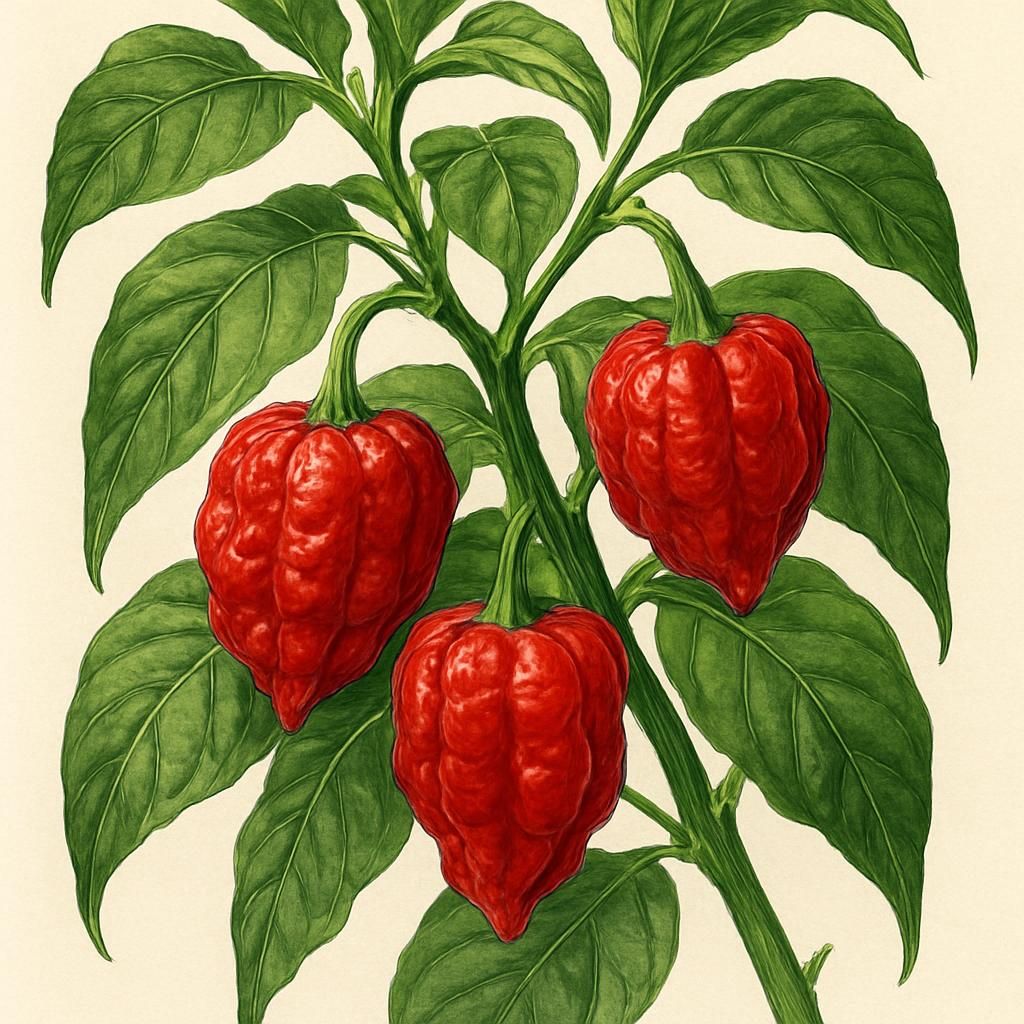
The Borg 9 Pepper plant belongs to the Solanaceae family and is botanically identified as Capsicum chinense 'Borg 9'. This cultivar typically produces red, wrinkled pods that are similar in appearance to the Ghost Pepper. The plant can reach up to 90 cm in height and has a bushy growth habit with bright green foliage. The peppers mature from green to a vibrant red, signifying their ripeness and height of their heat potential.
Soil, pH, and Climate Requirements for Borg 9 Pepper
Successfully cultivating Borg 9 Peppers requires specific environmental conditions. Below is a table detailing the ideal conditions for growth:
| Factor | Ideal Conditions |
|---|---|
| Soil Type | Well-draining, loamy soil |
| Soil pH | 6.0 to 7.0 |
| Temperature | 23°C to 30°C (73°F to 86°F) |
| Humidity | Moderate |
| Sunlight | Full sun, at least 6-8 hours per day |
Step-by-Step Planting & Propagation
- Seed Starting: Begin by sowing seeds indoors about 8-10 weeks before the last expected frost date.
- Use a seed-starting mix and maintain a temperature of around 27°C (80°F) for optimal germination.
- Transplanting: Once the threat of frost has passed and seedlings have reached 8-10 cm, transplant them outdoors.
- Ensure a spacing of at least 45-60 cm between plants to allow for adequate growth.
- Watering: Water regularly to maintain soil moisture but avoid waterlogging.
- Support: As plants grow, consider staking them to support the weight of the peppers and protect against wind damage.
Care & Maintenance Regimes for Borg 9 Pepper
Effective care and maintenance ensure the Borg 9 Pepper thrives and produces abundant fruits. Here's a useful table outlining the essential care schedule:
| Task | Frequency | Details |
|---|---|---|
| Water | Weekly in dry spells | Keep soil consistently moist |
| Fertilizer | Every 4-6 weeks | Use a balanced fertilizer |
| Pruning | As needed | Remove unhealthy leaves and excess branches to improve air circulation |
Pests, Diseases & Organic Management
Borg 9 Peppers can encounter several pests and diseases. Notable pests include Spider Mites, which often attack the undersides of leaves. Regular monitoring and use of insecticidal soaps or neem oil can provide control. Powdery mildew and mosaic viruses are common diseases, where pruning infected parts and maintaining good airflow can mitigate their spread. For a detailed strategy on organic pest management, refer to the Crop Diseases Under the Microscope: 9 Organic Fixes for Small Farm Resilience blog post.
Harvesting, Curing & Optimal Storage
The Borg 9 Peppers are ready to harvest when they turn a striking red. Use gloves when handling to avoid skin irritation. After harvesting, peppers can be air-dried in a warm, dry location or used fresh. For long-term storage, drying or freezing is recommended to preserve their vibrant heat.
Companion Planting for Borg 9 Pepper
Companion planting can enhance the growth and flavor of Borg 9 Peppers. Beneficial companions include Basil, which can enhance growth, and Marigold, which helps deter common pests. Avoid planting with beans, as they may compete for essential nutrients.