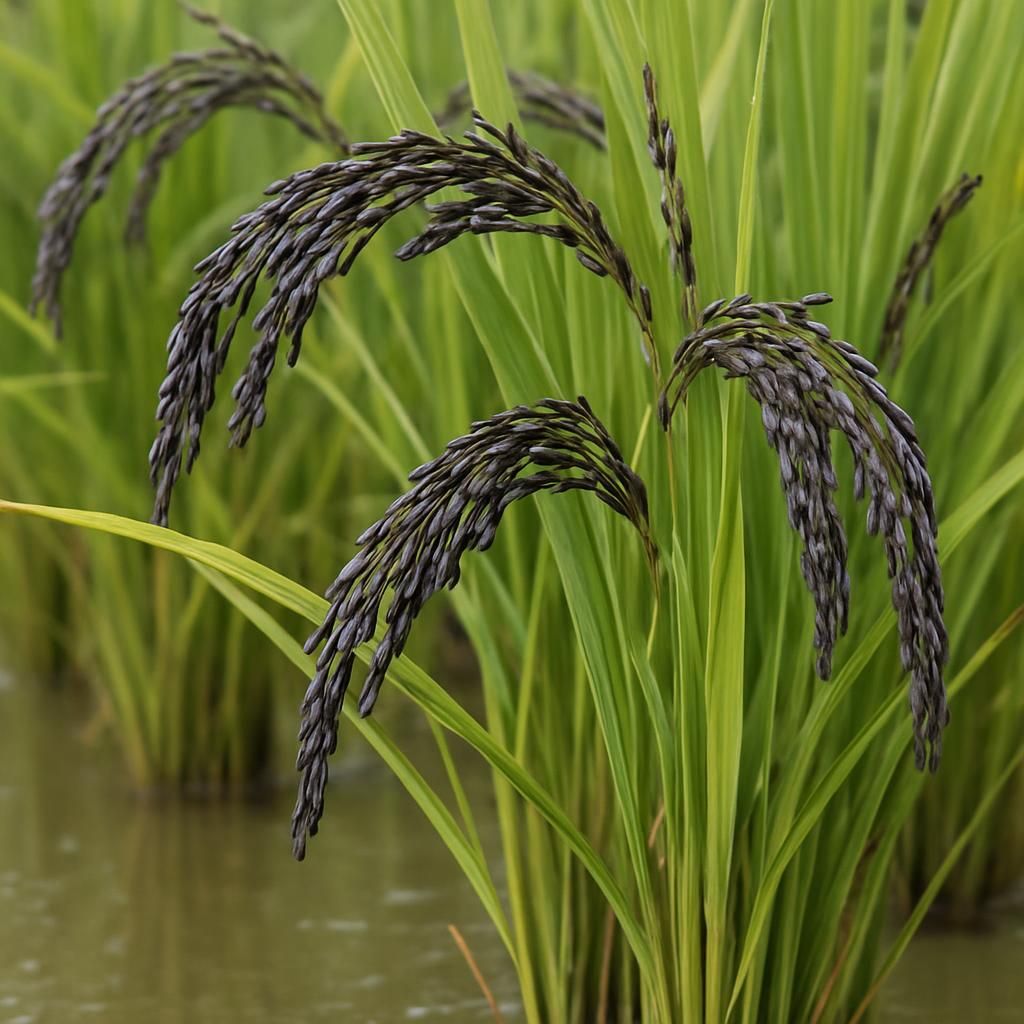
Introduction to Black Rice (Forbidden Rice - Zizania)
Black Rice, often referred to as Forbidden Rice, is a variety of rice with a deep black hue that turns a rich purple upon cooking. Traditionally consumed by Chinese royalty for its health benefits, this ancient grain has gained popularity worldwide due to its high antioxidant content and rich, nutty flavor. Its cultivation requires close attention to soil, water, and environmental conditions.
Botanical Profile of Black Rice (Forbidden Rice - Zizania)
Zizania, a genus commonly referred to as wild rice, comprises four species, some of which have been cultivated as a grain for thousands of years. Black Rice is part of this genus and shares similarities with other rice species like Rice in terms of growth habits and nutritional benefits.
Soil, pH, and Climate Requirements for Black Rice (Forbidden Rice - Zizania)
To cultivate Black Rice successfully, certain soil, pH, and climate conditions must be met.
| Condition | Ideal Specification |
|---|---|
| Soil Type | Loamy, well-drained |
| Soil pH | 6.0 - 7.0 |
| Temperature | 20°C - 30°C |
| Humidity | High |
Step-by-Step Planting \& Propagation
- Seed Selection: Choose high-quality Black Rice seeds from a reputable source.
- Land Preparation: Till the soil to a depth of 6 inches and remove any weeds.
- Sowing: Sow seeds 1 inch deep in well-prepared soil during the early spring.
- Spacing: Space plants 6 inches apart to allow sufficient growth.
- Water Management: Flood the fields with a water depth of 3 inches shortly after planting.
Care \& Maintenance Regimes for Black Rice (Forbidden Rice - Zizania)
Proper care and maintenance are crucial for maximizing the yield of Black Rice.
| Task | Frequency | Notes |
|---|---|---|
| Watering | Weekly | Maintain flooded conditions with 3-inch depth |
| Fertilizing | Bi-monthly | Use nitrogen-rich fertilizers |
| Weeding | As needed | Remove weeds manually to prevent competition |
| Pest Control | As required | Monitor and manage pests using organic methods |
Pests, Diseases \& Organic Management
Black Rice is prone to pests like Spider Mites and diseases such as fungal infections. Organic management practices include crop rotation and introducing natural predators to control pest populations. Regular monitoring is essential, and any signs of pest infestation should be addressed immediately to prevent widespread damage.
Harvesting, Curing \& Optimal Storage
Black Rice is typically harvested once the grains have matured and turned a blackish hue. Harvest when the plants are mostly dry to prevent spoilage. After harvesting:
- Drying: Spread rice to dry under the sun for 2-3 days.
- Curing: Store grains in a cool, dry place for a few weeks to stabilize moisture content.
- Storage: Keep in airtight containers at room temperature to maintain freshness for up to a year.
Companion Planting for Black Rice (Forbidden Rice - Zizania)
Companion planting can enhance Black Rice growth by reducing pests and improving soil fertility. Compatible companions include legumes such as Soybeans, which fix nitrogen in the soil. Avoid planting near crops prone to similar diseases, like other Rice varieties.
For more insights on planting strategies and overcoming common agricultural challenges, explore "The Truth About Weather Patterns and Small Farm Resilience."(/blog/the-truth-about-weather-patterns-and-small-farm-resilience)