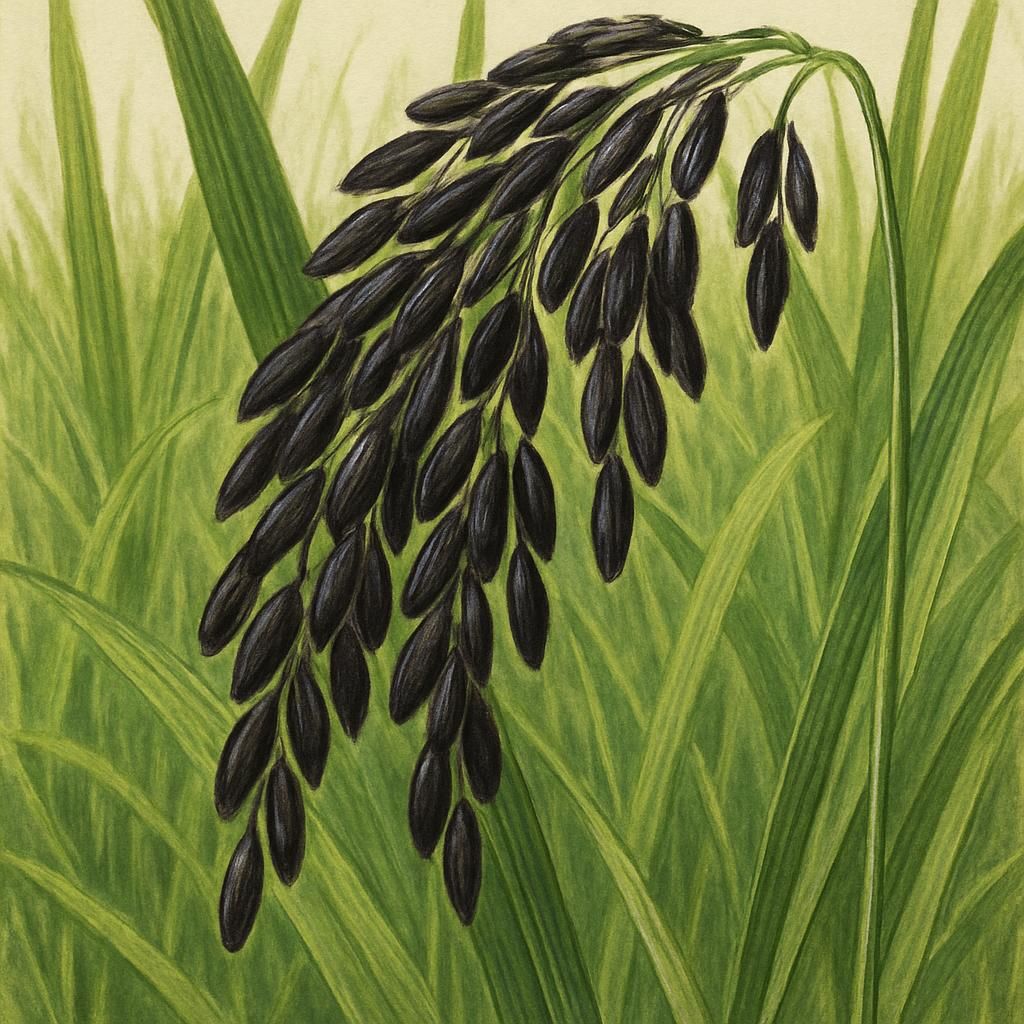
Introduction to Black Nunia Rice
Black Nunia Rice, with its strikingly dark grains, is not only a visual delight but also a powerhouse of nutrition. Cultivated predominantly in Southeast Asia, this variety is cherished for its rich anthocyanin content—a potent antioxidant.
Botanical Profile of Black Nunia Rice
Scientifically known as Oryza sativa Black Nunia, this rice variety is part of the grass family Poaceae. Distinguished by its long, slender, and dark-hued grains, the plant itself can reach up to 1 meter in height. Its flowering structure, known as a panicle, allows for efficient reproduction and grain development.
Soil, pH, and Climate Requirements for Black Nunia Rice
Being a tropical plant, Black Nunia Rice requires specific conditions for optimal growth. Here is a summary of ideal conditions:
| Parameter | Ideal Conditions |
|---|---|
| Soil Type | Loamy, well-drained, high in organic matter |
| pH | 5.5 - 6.5 |
| Temperature | 24°C - 30°C |
| Rainfall | 1500 - 2000 mm annually |
Step-by-Step Planting & Propagation
- Seed Selection: Start by selecting healthy, untreated seeds. Soak them in water for 24 hours to encourage germination.
- Site Preparation: Ensure the field is plowed and leveled, removing weeds and rocks that can hinder rice growth.
- Planting: Sow pre-germinated seeds into the prepared paddy. Traditional methods involve broadcasting seeds evenly.
- Spacing: Maintain spacing of about 20 cm between plants for adequate growth.
- Water Management: Maintain a layer of water about 2-3 cm deep in the paddy to support root development.
- Fertilization: Apply organic fertilizers initially and follow up with nitrogen-based fertilizers to boost growth.
Care & Maintenance regimes for Black Nunia Rice
Proper care throughout the growth cycle is essential.
| Regime | Frequency | Details |
|---|---|---|
| Watering | Maintain 2-3 cm water depth | Essential during the active vegetative stage |
| Fertilization | Every 3 weeks | Use nitrogen-rich and organic fertilizers |
| Pruning | Not applicable |
Pests, Diseases & Organic Management
Black Nunia Rice is susceptible to various pests and diseases. Common issues include Spider Mites and fungal diseases like blast. Organic management strategies are key:
- Spider Mites: Introduce predatory mites or use neem oil sprays.
- Blast Disease: Rotate with non-host crops such as Lychee and apply biocontrol agents.
For further organic pest management techniques, refer to our complimentary guide, 7 Summer Pest Traps That Sabotage Small Farm Harvests.
Harvesting, Curing & Optimal Storage
- Harvesting: Rice is ready for harvest when grains turn from black to a slight purple hue. Hand-harvest or use a combine harvester for larger operations.
- Curing: Post-harvest drying is crucial. Spread grains on a clean, aerated surface for 3-4 days.
- Storage: Store dried grains in a cool, dry place, preferably in airtight containers to maintain freshness.
Companion Planting for Black Nunia Rice
Companion planting enhances growth and pest resistance. Optimal companions include marigolds, which deter nematodes, and clover, which enhances soil nitrogen levels.
Explore comprehensive companion planting strategies by reading our article, Summer Companion Planting: 10 Organic Pairings to Boost Small Farm Resilience.